
Catalogue Search | MBRL


Are you sure you want to remove the book from the shelf?

{{itemTitle}}
134
result(s) for
"Watt, James (1736-1819)"
Sort by:
James Watt
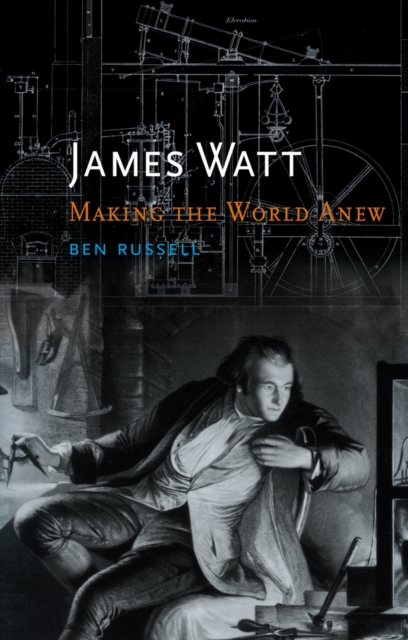
Scottish inventor and mechanical engineer James Watt (1736-1819) is best known for his pioneering work on the steam engine that became fundamental to the incredible changes and developments wrought by the Industrial Revolution. But in this new biography, Ben Russell tells a much bigger, richer story, peering over Watt's shoulder to more fully explore the processes he used and how his ephemeral ideas were transformed into tangible artifacts. Over the course of the book, Russell reveals as much about the life of James Watt as he does a history of Britain's early industrial transformation and the birth of professional engineering. To record this fascinating narrative, Russell draws on a wide range of resources-from archival material to three-dimensional objects to scholarship in a diversity of fields from ceramics to antique machine-making. He explores Watt's early years and interest in chemistry and examines Watt's partnership with Matthew Boulton, with whom he would become a successful and wealthy man. In addition to discussing Watt's work and incredible contributions that changed societies around the world, Russell looks at Britain's early industrial transformation. Published in association with the Science Museum London, and with seventy illustrations, James Watt is not only an intriguing exploration of the engineer's life, but also an illuminating journey into the broader practices of invention in the eighteenth and early nineteenth centuries. Published in association with the Science Museum, London
eBook

Watt's the big occasion?
Pearson profiles Scottish inventor and engineer James Watt. Watt trained as an instrument maker, specializing in making laboratory instruments for Glasgow University and the shipping trade. He had no formal university education but relied on personal contact with the leading academics of his day to formulate and develop his ideas. His workshop was set up within the precincts of the university after he completed his craftsman's apprenticeship in one year rather than the usual seven years.
Journal Article
English, Irish and Scots
Three pioneers of engineering science have been immortalized through the use of their names as units in the SI system, representing energy, temperature and power. They are James Joule, James Watt, and William Thomson (Lord Kelvin) and it is likely every practicing refrigeration engineer, designer, technician and mechanic uses at least one of their names every day of their working lives. Here, Pearson talks about the lives and contributions of these great individuals in the advancement of science.
Journal Article

Strong Steam, Weak Patents, or the Myth of Watt’s Innovation-Blocking Monopoly, Exploded
James Watt’s 1769 patent is widely supposed to have stood in the way of the development of high-pressure steam technology until it finally expired in 1800. We dispute this popular claim. We show that although it is true that high-pressure steam technology developed only after the expiration of Watt’s patent, the delay was due to factors other than that patent itself, including the widely held opinion that the use of high-pressure engines were excessively risky. Indeed, Watt’s monopoly rights may actually have hastened the development of the high-pressure steam engine by inspiring Richard Trevithick to revive a supposedly obsolete technology so as to invent around them.
Journal Article

Reminiscences of James Watt
[Read at a Meeting of the Society held at Glasgow, on 2nd November 1837.) As some of the members of the Society expressed a desire at our last meeting, that I would give some recollections of the interviews that my late brother (Mr. John Hart) and myself had with the celebrated Dr. James Watt, the inventor of our improved steam-engine, I have accordingly thrown together the following brief narrative. As these meetings took place forty-three years since, many observations that were made at the time may have escaped me at present; yet, when the same subjects are touched on, I have as distinct recollection of his treatment of them as if it were of yesterday.
Journal Article
Pursuing power and light : technology and physics from James Watt to Albert Einstein
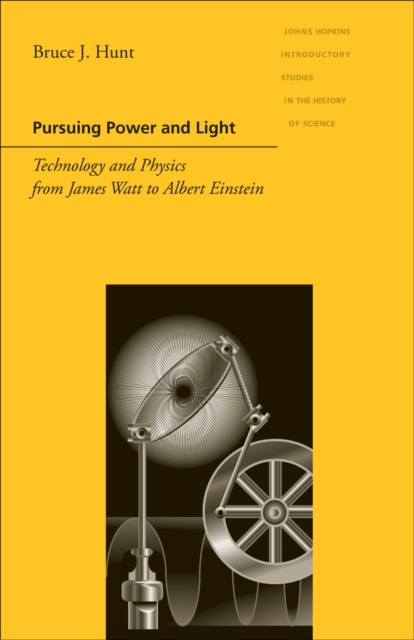
In the nineteenth century, science and technology developed a close and continuing relationship. The most important advancements in physics-the science of energy and the theory of the electromagnetic field-were deeply rooted in the new technologies of the steam engine, the telegraph, and electric power and light. Bruce J. Hunt here explores how the leading technologies of the industrial age helped reshape modern physics.This period marked a watershed in how human beings exerted power over the world around them. Sweeping changes in manufacturing, transportation, and communications transformed the economy, society, and daily life in ways never before imagined. At the same time, physical scientists made great strides in the study of energy, atoms, and electromagnetism. Hunt shows how technology informed science and vice versa, examining the interaction between steam technology and the formulation of the laws of thermodynamics, for example, and that between telegraphy and the rise of electrical science.Hunt's groundbreaking introduction to the history of physics points to the shift to atomic and quantum physics. It closes with a brief look at Albert Einstein's work at the Swiss patent office and the part it played in his formulation of relativity theory. Hunt translates his often-demanding material into engaging and accessible language suitable for undergraduate students of the history of science and technology.
eBook


James Watt and the Lunaticks of Birmingham
The most famous member of the Lunar Society of Birmingham, James Watt, is frequently but wrongly credited with the invention of the steam engine. Watt came up with the idea of a separate condenser for the steam machine.
Journal Article