
Catalogue Search | MBRL


Are you sure you want to remove the book from the shelf?

{{itemTitle}}
13
result(s) for
"Webcomics."
Sort by:

Eliza and her monsters
Eighteen-year-old Eliza Mirk is the anonymous creator of Monstrous Sea, a wildly popular webcomic, but when a new boy at school tempts her to live a life offline, everything she's worked for begins to crumble.
Book
Digital Graphic Communities
With the onset of the millennial lifestyle and the technological revolution gaining pace-feeling of inadequacy, a constant need to be seen, poor body image, nuclear family structure, social anxiety, and, as Gen Z labels it, FOMO (Fear of Missing Out) has added significantly to the upsurge in mental illness. Contemporarily, with the lived experience of ‘quarantine’ gaining momentum during the pandemic and post-pandemic era, isolation has almost become life’s Suo moto mantra. Pandemic-necessitated isolation has greatly affected human interaction by limiting it mostly to a virtual interface. This turn of events has further complicated an already complex scenario of mental disorders – like depression, addiction, bipolar disorder, OCD, etc., stemming from an extreme sense of loneliness, insecurity and apocalyptic anxiety. This article enquiries into the ways in which Webcomics or Digital Graphic medicine narratives can help create a virtual literary community where the phenomenology of mental illness finds an empathic representation and serves as a platform for self and collective healing. Artists and illustrators like Debbie Tung, Christopher Grady, Allie Brosh, and Clay Jonathan have now taken to social media handles like Facebook, Instagram, Tumblr, or other Webcomics platforms like Go Comics, StudyGroup Comics and Claycomix, etc., to share their stigmatised personal journey of mental illness with their readers and followers. Unlike the print media, digital readers get to respond to these comic strips and interact with the artist as well as one another by sharing their experience of viewing an artist’s rendition of their mental health trajectories. Amy Mazowita, while discussing the concept of a graphic care network, states that it is essential to offer a unique communicative opportunity for people and masses across various socioeconomic, political, and hegemonic entities: these networks offer users the comfort of anonymity besides offering a digital platform for legitimising their shared experiences of both collective and individual mental health realities (Mazowita).
Journal Article


Understanding the reader demographics of an emerging online reading platform, Webtoon
PurposeThe current study investigates the reader demographics, appeals and reading motivations of Webtoon, a born-digital emerging multimedia reading platform that is widely available via mobile applications. This study aims to contribute to existing reader studies by exploring a novel reading platform in order to create future recommendation services.Design/methodology/approachAn online survey was distributed, targeting Webtoon readers 18 years old or older. Descriptive and exploratory statistical analyses based on 1,117 valid survey responses were conducted to better understand the readers of Webtoon.FindingsSeventy-six percent of Webtoon readers fall into the 18–33 age range, indicating the medium’s popularity among young adult readers. Among 14 appeal elements identified, Webtoon-specific appeals include visual/artistic style, sound and interactivity, time commitment, user-friendliness, and cost and price. Frequently selected Webtoon reading motivations include relaxation, changing one’s emotional state, escapism and achieving new experiences. Lastly, a cluster analysis yielded six distinctive Webtoon reader profiles: Habitual readers, emotionally-responsive readers, occasional readers, convenience-seeking readers, socially aware readers and Webtoon expert readers.Originality/valueThe current study adopts a persona concept from user experience research to suggest a way to understand Webtoon readers and improve recommendation services, a unique approach in reader studies. It aims to understand Webtoon readers from readers’ advisory and media studies perspectives, bridging two areas.
Journal Article

Ozy and Millie
Follows the adventures of Ozy and Millie, two very different fox best friends from Seattle, as they navigate home and school life.
Book
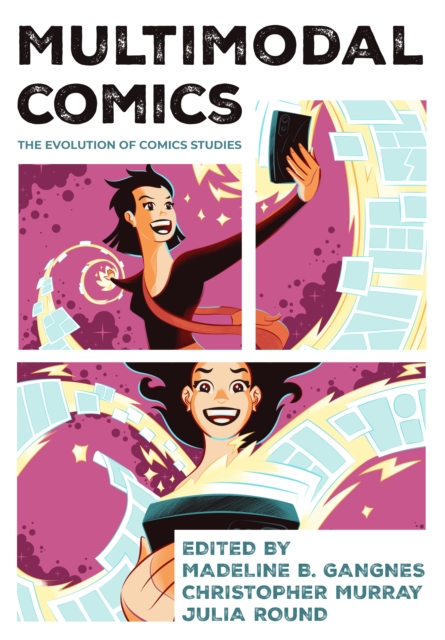
Multimodal Comics
Multimodality is of increasing relevance to daily life. Comics are a unique and informative site to study this concept, as they rely on complex interactions between word and image. This collection brings together leading international research, developing comics theory and speaking to additional media and disciplines. 53 b&w and 6 col. illus.
eBook

The Platformization of Culture: Webtoon Platforms and Media Ecology in Korea and Beyond
This article examines the webtoon (wept'un)—a term coined in Korea to refer to webcomics—which is arguably the most pervasive and powerful form of digital serial production in twenty-first-century Korea. Webtoons have developed by utilizing various potentials that the digital platform offers, such as open solicitation, (partial) free web/mobile distribution, profit from advertisement and page viewing, and transmedia production. As a new cultural medium, the webtoon is thus inseparable from its platform and organically tied to its distinctive platform ecology, which is different from the ecosystems that other (global) mega-platforms create. Engaging with the insights from recent studies of platforms and utilizing empirical media analysis, I argue that Korean webtoon platforms demonstrate the continuing and intensifying dependency of art on platforms—a process that I call “the platformization of culture”—and that this specific type of platformization is reinforced by what I call “the artist incubating system.” The case of webtoon platforms reveals a number of telling aspects of media ecosystems for art production in the digital age—aspects that are spreading and expanding to various fields of art.
Journal Article

Locating yourself in the historical record: challenges of provenance and metadata schemas in the library of congress’s digital materials
The Library of Congress (LOC) is an inherently political institution with immense reach. With 151.6 million visits and 520.3 million page views in 2022, its digital collections put the LOC’s repository of materials in the hands of users around the world, informing the kinds of narratives we tell about our past for purposes of the present. While more accessible, these collections are not always appropriately or transparently contextualized, creating significant barriers to access and often perpetuating biased or offensive language and attitudes. This matter stems from principles of provenance and metadata schemas, standards that govern how context is preserved and made available. As scholars working with digital information and literacy argue, the ubiquity of attributing authority to web-based information makes nuanced, accurate, and accessible context for digital collections increasingly necessary. Shortcomings in contemporary provenance and metadata practice are even sharper in the case of image and graphic narrative collections since prevailing descriptive standards were not designed with visual content in mind. These intersecting and at times contradictory concerns demonstrate both the complicated tension between provenance’s failures and its apparent necessity, and the ways it continues to affect applications of metadata. Exemplifying these complexities, we discuss two LOC case studies: the Webcomics Web Archive and Liljenquist Family Collection of Civil War Photographs. Illustrating the constraints of provenance and its circulation in metadata, these collections highlight the accessibility and equity issues that particularly impact visual materials.
Journal Article

The Renewal of the Webcomic in the Era of Platformization: The Case of 9Gag on Instagram
This article addresses the place that the webcomic occupies as valuable content within the repertoire of consumable options in digital social media platforms. For the new digital generations, these new media spaces of light entertainment are spaces of encounter and interaction. Taking as a case study the Instagram profile of 9Gag, this article analyzes the level of engagement of 9Gag audiences with the webcomics published in that profile during the year 2022. The hypothesis defended in this text is to consider that these new spaces of consumption and interaction between users and content are especially relevant when considering the reach that the webcomic has as a format or content of interest for younger audiences. The results obtained after the data analysis show, even considering its possible exploratory nature of the study, that the webcomic is an attractive content for centennial audiences, although its formal and discursive concreteness remains far from the linguistic innovations that the digital comic promoted in its first manifestations.
Journal Article

Il fumetto grassroots: gli antipodi convergenti di Dr. Pira e Sio
I processi di trasformazione che hanno interessato il campo fumettistico al crocevia del secolo si allacciano strettamente alla digitalizzazione e all’integrazione del sistema mediale. Accanto all’affermazione del graphic novel, che permette al fumetto di convergere verso archi narrativi organici di matrice romanzesca, si delineano tendenze al riscatto dei generi brevi del fumetto classico: la striscia umoristica, la vignetta fulminante, la tavola autoconclusiva. L’accrescimento vertiginoso dei flussi sviluppati dal web favorisce la trasposizione, il ricircolo, la stratificazione di simili schegge fumettistiche, tra comunicazione analogica e comunicazione digitale. Si tratta di proposte che insorgono dal basso, da protagonisti della compartecipazione creativa socialmediale o da rinnovatori della cultura underground. L’intreccio fra interazione estetica istituzionale e medialità autogestita, pur vincolato all’oligopolio delle piattaforme, dischiude originali opportunità di differenziazione e arricchimento dell’esperienza fumettistica.
Journal Article