
Catalogue Search | MBRL


Are you sure you want to remove the book from the shelf?

{{itemTitle}}
613
result(s) for
"Weizmann, Chaim, 1874-1952"
Sort by:

مذكرات \وإيزمان\ : \التجربة والخطأ\
تأتي ترجمة هذه المذكرات بهدف اطلاع الرأي العام العربي عليها، وليدرك الناس ما بذله الإنجليز والصهاينة وغيرهم من حلفائهم، وأعوانهم، ومأجوريهم، من جهد وسعي وإصرار وتصميم، لطرب عرب فلسطين من ديارهم وتسليمها للصهاينة (بدون سكان) كما جاء في الطبعة العبرية ! ويستعرض الكتاب في طياته المحتويات التالية : مقدمة المترجم، الفصل الأول : نشأة حايم وايزمان، الفصل الثاني : القصد من التصريح.
BOOK

Chaim Weizmann
The Arab-Israeli conflict has been one of the most defining features of recent world history, flaring up into open war fare yet again in Gaza at the end of 2008 and provoking large-scale demonstrations in the streets of cities across the world. The decision in 1919 by the Paris Peace Conference to award the Mandate for Palestine to Great Britain-which had announced its commitment to the creation of a national home for the Jewish people in the Balfour Declaration two years previously-sowed the seeds of this seemingly intractable problem, yet when the Zionist leader Chaim Weizmann (1874-1952) spoke before the Conference on 27 February 1919, he would have appeared as only one of the many representatives of minor nationalities putting their case to the peacemakers, and, what is more, one whose people had no territory of their own. How a Jewish chemistry professor from an obscure part of Eastern Europe could find himself at the heart of international diplomacy, and later become the first president of the State of Israel, is one of the most fascinating stories of the Paris Peace Conference and its aftermath. Ninety years after the Conference, what Weizmann said and did there is an essential part of our understanding of how this small, but critical, part of the world evolved out of the deliberations.
eBook
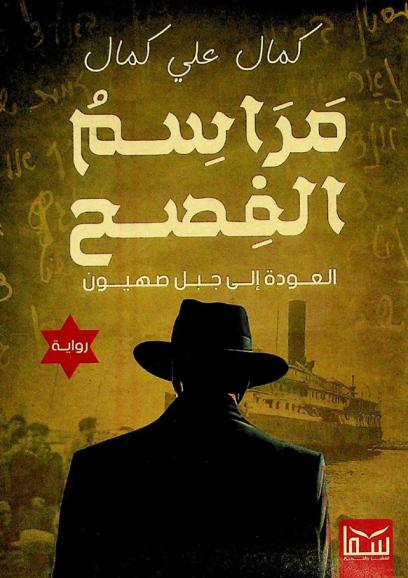
مراسم الفصح : حاييم وايزمان .. العودة إلى جبل صهيون : رواية تاريخية عن شخصية أثرت في الشرق الأوسط بل في العالم أجمع
رواية \"مراسم الفصح : العودة إلى جبل صهيون\" من تأليف كمال علي كمال، تتناول حياة حاييم وايزمان، أول رئيس لإسرائيل، وتفاصيل دوره البارز في تأسيس الدولة الإسرائيلية. الرواية تقدم سردا تاريخيا لأحداث مهمة، مثل الحصول على وعد بلفور، الذي كان نقطة تحول في تاريخ الصهيونية، تستعرض الرواية أيضا الجهود الدبلوماسية المكثفة التي بذلها وايزمان للحصول على دعم دولي لإقامة وطن قومي لليهود في فلسطين، وتأثير هذه الجهود على التوازن السياسي والديمغرافي في المنطقة.
Book

CHAIM WEIZMANN
Reinharz and Golani talk about Zionist leader Chaim Weizmann. Israel and Israelis owe him an immeasurable debt. Yet, he does not receive the recognition he deserves. His omission from Zionist and Israeli history has become so complete that, some years ago, when the Central Zionist Archives in Jerusalem organized a series of lectures on Zionist leaders, Weizmann was left out. The list of subjects for this important program included figures both well-known and less known, among them Theodor Herzl, Zeev Jabotinsky, and David Ben-Gurion, as well as Louis Brandeis, Haim Arlosoroff, Nahum Sokolow, Berl Katznelson, and Moshe Shertok.
Journal Article

Balfour and Weizmann : the Zionist, the zealot and the emergence of Israel
On November 2, 1917, Arthur Balfour, then Foreign Secretary, wrote to Lord Rothschild to say that the British Government viewed with favor the establishment in Palestine of a national home for the Jewish people.The consequences of this statement have reverberated throughout the world in a crescendo of bitterness and violence ever since.
eBook


Imagining a ‘Jewish atom bomb’, constructing a scientific diaspora
The nexus between transnational mobilization and Science and Technology Studies (STS) offers a productive platform for studying the formation of scientific activism, the influence of mobilization on scientific developments, and the ways science is used to achieve government goals. Integrating concepts from both sets of literature – particularly national sociotechnical imaginaries and sociospatial positionality – this article explores how Dr Chaim Weizmann, a prominent chemist and a Zionist leader, attempted to construct and mobilize a ‘scientific diaspora’. Empirically, the article draws on new archival evidence, revealing the hitherto unknown early efforts of the Zionist movement to acquire nuclear reactor and utilize the Jewish involvement in the American nuclear project for political leverage abroad. Theoretically, rather than beginning the analysis with a scientific-diasporic network that was ready to be mobilized, we trace the selective and tailored practices employed by Weizmann to animate the Jewish connection among nuclear scientists and professionals.
Journal Article

War-Time Contingency and the Balfour Declaration of 1917: An Improbable Regression
Rejecting deterministic views of the 1917 Balfour Declaration as an expression of the inevitable work of history returning Jews to their ancient homeland, this article argues that Britain's fateful endorsement of the idea of a national home for Jews in Palestine was, in fact, the result of a combination of fortuity and contingency related primarily to World War I and the concerns and personalities of the British politicians involved. The article highlights the historic improbability of the Declaration and its implementation in the League of Nations Mandate for Palestine, noting the regression it represented at a time when British imperial policy aspired to more flexible accommodations with colonial populations.
Journal Article
