
Catalogue Search | MBRL


Are you sure you want to remove the book from the shelf?

{{itemTitle}}
21
result(s) for
"Welfare Rights Advice"
Sort by:

The Do-Well study: protocol for a randomised controlled trial, economic and qualitative process evaluations of domiciliary welfare rights advice for socio-economically disadvantaged older people recruited via primary health care
Background
Older people in poor health are more likely to need extra money, aids and adaptations to allow them to remain independent and cope with ill health, yet in the UK many do not claim the welfare benefits to which they are entitled. Welfare rights advice interventions lead to greater welfare income, but have not been rigorously evaluated for health benefits. This study will evaluate the effects on health and well-being of a domiciliary welfare rights advice service provided by local government or voluntary organisations in North East England for independent living, socio-economically disadvantaged older people (aged ≥60 yrs), recruited from general (primary care) practices.
Methods/Design
The study is a pragmatic, individually randomised, single blinded, wait-list controlled trial of welfare rights advice versus usual care, with embedded economic and qualitative process evaluations. The qualitative study will examine whether the intervention is delivered as intended; explore responses to the intervention and examine reasons for the trial findings; and explore the potential for translation of the intervention into routine policy and practice. The primary outcome is the effect on health-related quality of life, measured using the CASP 19 questionnaire. Volunteer men and women aged ≥60 years (1/household) will be identified from general practice patient registers. Patients in nursing homes or hospitals at the time of recruitment will be excluded. General practice populations will be recruited from disadvantaged areas of North East England, including urban, rural and semi-rural areas, with no previous access to targeted welfare rights advice services delivered to primary care patients. A minimum of 750 participants will be randomised to intervention and control arms in a 1:1 ratio.
Discussion
Achieving a trial design that is both ethical and acceptable to potential participants, required methodological compromises. The choice of follow-up length required a trade-off between sufficient time to demonstrate health impact and the need to allow the control group access to the intervention as early as possible. The study will have implications for fundamental understanding of social inequalities and how to tackle them, and provides a model for similar evaluations of health-orientated social interventions. If the health benefits of this intervention are proven, targeted welfare rights advice services should be extended to ensure widespread provision for older people and other vulnerable groups.
Current Controlled Trials ISRCTN Number
ISRCTN37380518
Journal Article

Avoiding the brakes: Malign policy and legal advice in the Robodebt scandal
Abstract
Robodebt, a welfare compliance scheme that issued illegitimate debts to more than 500,000 welfare recipients, is among the most prominent examples of malign policymaking in recent Australian history. In this article, we seek to understand how the Australian Government came to implement a scheme that was in clear violation of social security law, focusing specifically on the role of legal advice. Legal advice can play an important role in policy design by foregrounding citizen rights and key democratic values like transparency and legislative scrutiny. However, in this case, public agencies ignored, avoided, and concealed internal and external legal advice, quashed internal dissent, pushed back against prominent legal experts, and sought to avoid the judgment of legal authorities for as long as possible. Robodebt therefore has troubling implications for our understanding of institutional protections against malign policy in liberal democratic policymaking. We argue that lawyers were often siloed from the policy process, with non-lawyers, particularly senior agency leadership, displaying a remarkable ability to evade grappling with basic legal questions. Even where internal legal advice was clear about the required standards of evidence needed to impose debts on welfare recipients, it held little force in the face of ministerial enthusiasm and the prospect of budget savings. The case suggests a need for policy scholars to pay closer attention to the organizational, institutional, and political factors that shape the production and use of legal knowledge in the policy process, and especially the ways in which non-lawyers strategically engage with legal knowledge.
Journal Article

Lawyers for the poor
Lawyers for the Poor explores the development of legal advice and aid provision in England between 1890 and 1990. It is the first book-length study to place legal advice provision in the wider context of English civil society and the welfare state, and it demonstrates how making it easier for people to get advice on their problems was shaped by changing ideas of what it meant to be a citizen. This book examines the origins in the after-hours ‘Poor Man’s Lawyer’ voluntary work of individual lawyers in late Victorian London through to the state-subsidised legal aid schemes of post-war Britain. It considers how affordable access to help with legal matters came to be seen as a right for all, and how charities, the main political parties, the trade unions and the media were involved in trying to achieve this by the 1940s. It also reveals the problems and advantages of offering legal advice services as part of the welfare state after 1949 and the ongoing concerns about using public money on private troubles – issues that remain unresolved in the twenty-first century. This book will be of interest to students and researchers of welfare, citizenship, politics, social policy and voluntary action in twentieth-century Britain, and to practitioners.
eBook
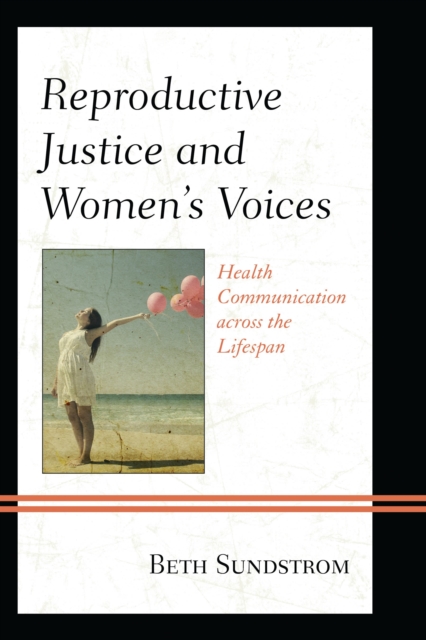
Reproductive justice and women's voices
Reproductive Justice and Women's Voices: Health Communication across the Lifespan contributes to patient-centered public health by analyzing women's reproductive health across the lifespan. Sundstrom explicates women's understandings of control and embodiment in the context of technology.
eBook

Acts of Assistance
This article explores everyday interactions with the British welfare state at a moment when it is attempting to shift and transform its funding regimes. Based on a study of two London legal services providers, it draws attention to a set of actors poised between local state officers and citizens: the advisers who carry out the work of translation, helping people to actualize their rights and, at the same time, forcing disparate state agencies to work together. Advice and government services providers are increasingly part of the same system, yet advisers' work runs counter to the state's aims when formal legal process is used to challenge unfair legislation. The article reveals that ever more complex, vague, and idiosyncratic interconnections between state, business, and the third sector are emerging in the field of public services.
Journal Article

The purchase of intimacy
In their personal lives, people consider it essential to separate economics and intimacy. We have, for example, a long-standing taboo against workplace romance, while we see marital love as different from prostitution because it is not a fundamentally financial exchange. In The Purchase of Intimacy, Viviana Zelizer mounts a provocative challenge to this view. Getting to the heart of one of life's greatest taboos, she shows how we all use economic activity to create, maintain, and renegotiate important ties—especially intimate ties—to other people. In everyday life, we invest intense effort and worry to strike the right balance. For example, when a wife's income equals or surpasses her husband's, how much more time should the man devote to household chores or child care? Sometimes legal disputes arise. Should the surviving partner in a same-sex relationship have received compensation for a partner's death as a result of 9/11? Through a host of compelling examples, Zelizer shows us why price is central to three key areas of intimacy: sexually tinged relations; health care by family members, friends, and professionals; and household economics. She draws both on research and materials ranging from reports on compensation to survivors of 9/11 victims to financial management Web sites and advice books for same-sex couples. From the bedroom to the courtroom, The Purchase of Intimacy opens a fascinating new window on the inner workings of the economic processes that pervade our private lives.
eBook

Routledge Handbook of Family Law and Policy
Changes in family structures, demographics, social attitudes and economic policies over the last sixty years have had a large impact on family lives and correspondingly on family law.
eBook

The Rights of Nature
A growing body of law around the world supports the idea that humans are not the only species with rights. More laws are being passed recognizing that ecosystems -- rivers, forests, mountains, and more -- have legally enforceable rights. And if nature has rights, then humans have responsibilities.
eBook

The Importance of Family and Friends in Advice-Seeking for Rights Problems
Rights problems such as debt, employment, welfare benefits and family problems are widespread. They are problems of everyday life, affecting many people and many aspects of people's lives and are now well documented. In contrast, there has been little research on the role of family and friends when experiencing a problem and seeking advice. Drawing on comprehensive qualitative research, this article explores how people seeking advice for their rights problems rely on family and friends for help in the advice-seeking process. The research shows that help lies on a continuum from encouraging people to seek advice to assistance with the tasks necessary for problem resolution. The implications of this for service design are considered.
Journal Article

What's new in law and case law around the world?: Protection of children in armed conflict: Thematic update on national implementation of international humanitarian law, 2014-2019
The update on national legislation and case law is an important tool for promoting the exchange of information on national measures for the implementation of international humanitarian law (IHL). This edition of the update will focus on concrete measures that States have taken in recent years on the thematic subject of this issue of the Review: strengthening the protection of children in armed conflict domestically and regionally. Children are especially vulnerable to armed conflicts and need special safeguards from the numerous dangers they face during armed hostilities and to help them rebuild their lives after the end of the conflict.
Journal Article