
Catalogue Search | MBRL


Are you sure you want to remove the book from the shelf?

{{itemTitle}}
176
result(s) for
"Wellington, Arthur Wellesley"
Sort by:

Spying for Wellington : British military intelligence in the Peninsular War
\"Describes the organization, development, and use of Arthur Wellesley's spy network during the Peninsular War and assesses the influence of intelligence-gathering on the Duke of Wellington's decision-making\"-- Provided by publisher.
Book

The Wake of Wellington
Soldier, hero, and politician, the Duke of Wellington is one of the best-known figures of nineteenth-century England. From his victory at Waterloo over Napoleon in 1815, he rose to become prime minister of his country. But Peter Sinnema finds equal fascination in Victorian England's response to the Duke's death.The Wake of Wellingtonconsiders Wellington's spectacular funeral pageant in the fall of 1852-an unprecedented event that attracted one and a half million spectators to London-as a threshold event against which the life of the soldier-hero and High-Tory statesman could be re-viewed and represented.Canvassing a profuse and dramatically proliferating Wellingtoniana, Sinnema examines the various assumptions behind, and implications of, theTimes's celebrated claim that the Irish-born Wellington \"was the very type and model of an Englishman.\" The dead duke, as Sinnema demonstrates, was repeatedly caught up in interpretive practices that stressed the quasi-symbolic relations between hero and nation.The Wake of Wellingtonprovides a unique view of how in death Wellington and his career were promoted as the consummation of a national destiny intimately bound up with Englishness itself, and with what it meant to be English at midcentury.
eBook
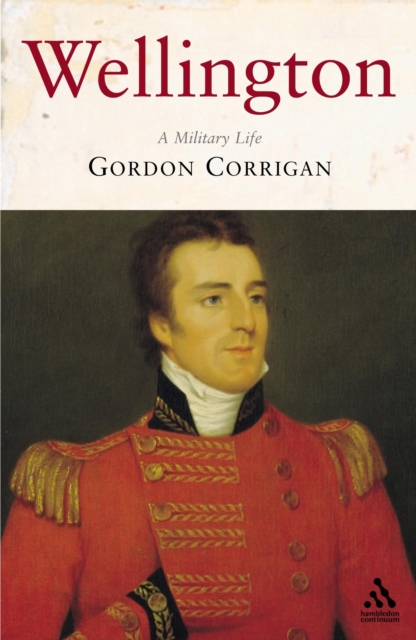
Wellington
The Duke of Wellington, the most successful of British commanders, set a standard by which all subsequent British generals have been measured.His defeat of Napoleon at Waterloo in 1815 crowned a reputation first won in India at Assaye and then confirmed during the Peninsular War, where he followed up his defence of Portugal by expelling.
eBook
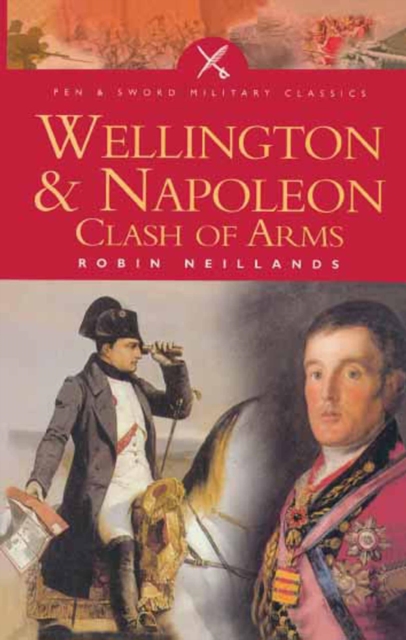
Wellington and Napoleon: clash of arms 1807-1815
Wellington and Napoleon tells the story of the convergence and final clash of two of the most brilliant commanders ever to meet on the field of battle. Wellington, his men said, did not know how to lose a battle. But Wellington himself admired his adversary
eBook

Wellington and Napoleon
Wellington and Napoleon tells the story of the convergence and final clash of two of the most brilliant commanders ever to meet on the field of battle. Wellington, his men said, did not know how to lose a battle. But Wellington himself admired his adversary.
eBook


A portrait at Eton by Sir Thomas Lawrence (1769–1830) of the Duke of Wellington
Sanchez-Cabello discusses a portrait at Eton by Sir Thomas Lawrence of the Duke of Wellington. In 2017 the National Portrait Gallery acquired Lawrence's last unfinished portrait of the Duke of Wellington. That it is incomplete, and therefore unembellished, means the viewer's glance is drawn to the face. The Duke's prediction that 'when my journal appears, many statues must come down', could conceivably have come from such a face. The journal appeared. The statues remained. As did the paintings. Indeed, the Duke's face remains fresher in the national mind than many others before the age of mass media, and fresher still in recent years, after the bicentenary of Waterloo and the publication of Charles Wellesley's Wellington Portrayed in 2014.
Journal Article