
Catalogue Search | MBRL


Are you sure you want to remove the book from the shelf?

{{itemTitle}}
6,914
result(s) for
"Wellingtons"
Sort by:

The Many Voyages of Arthur Wellington Clah
Drawing on a painstaking transcription of Clah's diaries, Peggy Brock offers a riveting portrait of a Tsimshian man and his encounters with colonialism.
eBook

The Wake of Wellington
Soldier, hero, and politician, the Duke of Wellington is one of the best-known figures of nineteenth-century England. From his victory at Waterloo over Napoleon in 1815, he rose to become prime minister of his country. But Peter Sinnema finds equal fascination in Victorian England's response to the Duke's death.The Wake of Wellingtonconsiders Wellington's spectacular funeral pageant in the fall of 1852-an unprecedented event that attracted one and a half million spectators to London-as a threshold event against which the life of the soldier-hero and High-Tory statesman could be re-viewed and represented.Canvassing a profuse and dramatically proliferating Wellingtoniana, Sinnema examines the various assumptions behind, and implications of, theTimes's celebrated claim that the Irish-born Wellington \"was the very type and model of an Englishman.\" The dead duke, as Sinnema demonstrates, was repeatedly caught up in interpretive practices that stressed the quasi-symbolic relations between hero and nation.The Wake of Wellingtonprovides a unique view of how in death Wellington and his career were promoted as the consummation of a national destiny intimately bound up with Englishness itself, and with what it meant to be English at midcentury.
eBook
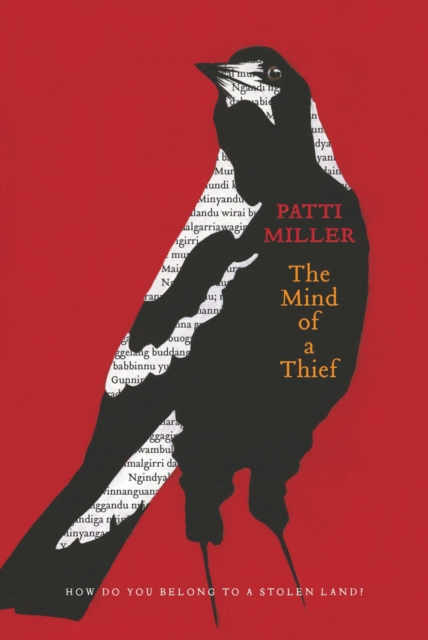
The Mind of a Thief
Exploring the history of the Wiradjuri people, the conflict of colonization, their mythologies, and their attachment to the land, author Patti Miller reveals both her own story and the position of Aboriginal people in today's society in this fascinating memoir. For 40,000 years, the Central New South Wales area of Wellington was Aboriginal Wiradjuri land. Following the arrival of white men, it became a penal settlement, a mission station, a gold-mining town, and a farming center with a history of white comfort and black marginalization. In the late 20th century, it was also the subject of the first post-Mabo native title claim, bringing new hope—and controversy—to the area and its people. Patti, a local of the area, explores Australian identity in relation to her beloved but stolen country. Black and white politics, the processes of colonization, family mythologies, generational conflict, and the power of place are evoked as she weaves a story that is very personal and, at the same time, a universal tale of belonging.
eBook

The evening post
Source: National Library of New Zealand Te Puna Matauranga o Aotearoa, licensed by the Department of Internal Affairs for re-use under the Creative Commons Attribution 3.0 New Zealand Licence.
Newspaper

'Nothing So Valuable as the Life and Health of the British Soldier'. The British Army's Medical Services in India 1797-1805: A Study of Wellington's Dispatches and Supplementary Despatches
Howard discusses his study on the British Army's medical services in India from 1797 to 1805, highlighting the Duke of Wellington's Dispatches and Supplementary Despatches. The primary objective of the study was to understand Arthur Wellesley's attitudes to and interventions in the Indian Army Medical Department between 1797 and 1805. A secondary objective was to further explore the nature of the Indian Army's medical provision during this period. Wellesley (the future Duke of Wellington) arrived in India in 1796 as a colonel in the 33rd Regiment. His rapid rise to commander in the Deccan campaigns of 1803 was in part due to his aristocratic lineage, his purchase of rank, and having an older brother, Richard, who was Governor-General of India. However, he was already demonstrating the talents that were to permeate his entire military career including common sense and a phenomenal attention to detail.
Journal Article


Imprints
The Pokagon Band of Potawatomi Indians has been a part of Chicago since its founding. In very public expressions of indigeneity, they have refused to hide in plain sight or assimilate. Instead, throughout the city's history, the Pokagon Potawatomi Indians have openly and aggressively expressed their refusal to be marginalized or forgotten-and in doing so, they have contributed to the fabric and history of the city.Imprints: The Pokagon Band of Potawatomi Indians and the City of Chicagoexamines the ways some Pokagon Potawatomi tribal members have maintained a distinct Native identity, their rejection of assimilation into the mainstream, and their desire for inclusion in the larger contemporary society without forfeiting their \"Indianness.\" Mindful that contact is never a one-way street, Low also examines the ways in which experiences in Chicago have influenced the Pokagon Potawatomi.Imprintscontinues the recent scholarship on the urban Indian experience before as well as after World War II.
eBook

Vertical Living
In 1946 a group of students and idealists got together to realize their visions for a modern city. Over the following half century, the Architectural Centre they founded helped shape the possibilities of modern life in urban New Zealand and profoundly influenced the remaking of the capital city of Wellington. More than just an association of architects, the Centre furthered education, published a magazine— Design Review—hosted modernist exhibitions in its gallery, staged an audacious campaign for political influence called \"the Project,\" and fought for better planning, better design, and better built environments in Wellington. Charting these activists and their projects over the years, Julia Gatley and Paul Walker also offer a history of urban Wellington from the 1940s to the 1990s and beyond. The book reminds us that, in modernist ideology, architecture and urban planning went hand-in-hand with visual and craft arts, graphic and industrial design. In recovering the multidisciplinary history, politics, and planning of the Architectural Centre, Gatley and Walker begin writing the city back into the history of architecture in New Zealand.
eBook
AS FAR AS THE ORDNANCE DEPARTMENT IS CONCERNED
Reiter focuses on the politics of military decision making from 1808-1809 under the leadership of Sir Arthur Wellesley and Lord Chatham. In the summer of 1808, Sir Arthur Wellesley was sent to the Iberian Peninsula at the head of a combined force of about 20,000 men. Prior to his departure, he made the usual arrangements with the various relevant government ministers for equipping his expedition, liaising particularly with Lord Castlereagh (the Secretary of State for War) and the 2nd Earl of Chatham (Master-General of the Ordnance). Despite these discussions, Wellesley remained dissatisfied with the fact that the Ordnance provided no artillery horses for his army. Responding to this deficiency, Wellesley acquired 300 horses from the Irish Commissariat through his own efforts, but these turned out to be old, ill, and generally unfit for purpose. Lord Chatham was well aware of Wellesley's anger against his department; in a striking parallel with his behaviour following his disastrous command of the Walcheren expedition the following year, he composed a private memorandum for the King setting out the reasons for the Ordnance's actions, or rather the lack of them.
Journal Article

New Insights into Earthquake Light: Rayleigh Scattering as the Source of Blue Hue and a Novel Co-Seismic Cloud Phenomenon
The New Zealand Kaikoura Earthquake (Mw 7.8, 14 November 2016) produced co-seismic flashes of earthquake light near the ground at midnight, 230 km north of the epicentre. Mostly, there was a white hemisphere in the atmosphere just above the ground, up to 250 m radius, the colour becoming radially increasingly dark blue. Fifteen videos were available for analysis which led to the following new or reaffirmed conclusions: (i) the blue colour is due to Rayleigh Scattering (new explanation); (ii) the light also sometimes occurs within low clouds but not as lightning—this is a new classification of earthquake light; (iii) the lithology may be greywacke, broadening previous literature emphasis on igneous sources; (iv) the light is most probably explained in our study area by seismically pressured microscopic quartz producing electric fields emerging into the atmosphere and reacting with it—mechanisms relying on particle-grinding or creation of cracks in rock are unlikely in the study area; (v) within the Wellington study area, the light is mostly independent of faults or their movement and is caused by seismic impulses which have travelled hundreds of kilometres from the epicentre—this possible independence from faults has not been clearly emphasised previously; and (vi) electrical grid problems are not the explanation.
Journal Article