
Catalogue Search | MBRL


Are you sure you want to remove the book from the shelf?

{{itemTitle}}
114
result(s) for
"Welsh language texts"
Sort by:

Modernist Arthur: The Welsh Revival
This chapter contains sections titled:
The Celtic Revival and the Rediscovery of Arthur
David Jones and Welsh writing in English
T. Gwynn Jones and Writing in Welsh
A Post‐Colonial Welsh Hero
Primary Texts
References and Further Reading
Book Chapter
Colloquial Welsh
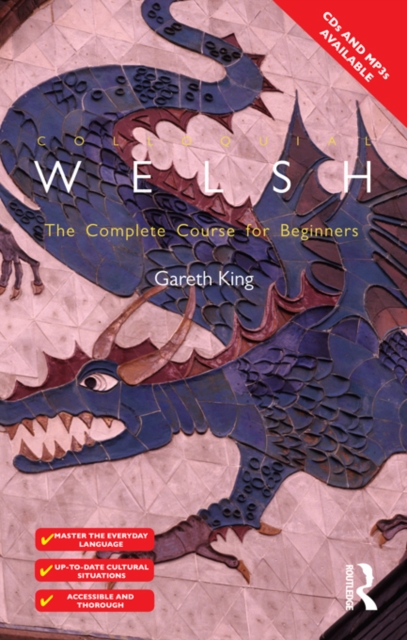
Colloquial Welsh provides a step-by-step course in Welsh as it is written and spoken today. Combining a user-friendly approach with a thorough treatment of the language, it equips learners with the essential skills needed to communicate confidently and effectively in Welsh in a broad range of situations. No prior knowledge of the language is required.
Key features include:
• progressive coverage of speaking, listening, reading and writing skills
• structured, jargon-free explanations of grammar
• an extensive range of focused and stimulating exercises
• realistic and entertaining dialogues covering a broad variety of scenarios
• useful vocabulary lists throughout the text
• additional resources available at the back of the book, including a full answer key, a grammar summary and bilingual glossaries
Balanced, comprehensive and rewarding, Colloquial Welsh will be an indispensable resource both for independent learners and students taking courses in Welsh.
Audio material to accompany the course is available to download free in MP3 format from www.routledge.com/cw/colloquials. Recorded by native speakers, the audio material features the dialogues and texts from the book and will help develop your listening and pronunciation skills.
‘If you want to get to grips further with any of the [European] languages, Routledge’s Colloquial series is the best place you could start.’ Rough Guide to Europe
Alphabet 1a. Cwrdd â phobol 1b. Enwi pobol a pethau 2a. Dod i nabod pobol 2b. Dw i ddim yn deall 3. Mynd allan 4. Ellwch chi ddangos i mi …? 5. Holi’r ffordd 6. Siopa 7. Y tywydd 8. Gwneud trefniadau 9. Be´ ddigwyddodd? 10. Awgrymu pethau 11. Beth wyt ti’n feddwl? 12. Clywed y newyddion 13. Dyma’r penawdau diweddara 14. Tasai’ch brawd fan’ma … 15. Cefn gwlad 16. Cymraeg ysgrifenedig a’r cyfryngau Key to exercises Ready-reference grammar Welsh-English glossary
Gary King has a first degree from Cambridge and a Master's from University of Wales. He taught Welsh as a second language from 1982 to 1998 and he is now UCAS co-ordinator, Oxbridge applications co-ordinator and Latin co-ordinator for a large sixth-form college.
eBook

Shakespeare's cinema of love
This engaging and stimulating book argues that Shakespeare's plays
significantly influenced movie genres in the twentieth century,
particularly in films concerning love in the classic Hollywood
period. Shakespeare's 'green world' has a close functional
equivalent in 'tinseltown' and on 'the silver screen', as well as
in hybrid genres in Bollywood cinema. Meanwhile, Romeo and
Juliet continues to be an enduring source for romantic tragedy
on screen. The nature of generic indebtedness has not gained
recognition because it is elusive and not always easy to recognise.
The book traces generic links between Shakespeare's comedies of
love and screen genres such as romantic comedy, 'screwball' comedy
and musicals, as well as clarifying the use of common conventions
defining the genres, such as mistaken identity, 'errors', disguise
and 'shrew-taming'. Speculative, challenging and entertaining, the
book will appeal to those interested in Shakespeare, movies and the
representation of love in narratives.
eBook

The Transmission of \Beowulf\
The Transmission of \"Beowulf\"
like
The Iliad
and
The Odyssey
, is a foundational work of Western literature that
originated in mysterious circumstances. In
The Transmission of Beowulf , Leonard Neidorf addresses
philological questions that are fundamental to the study of the
poem. Is
Beowulf the product of unitary or composite
authorship? How substantially did scribes alter the text during
its transmission, and how much time elapsed between composition
and preservation?
Neidorf answers these questions by distinguishing linguistic
and metrical regularities, which originate with the
Beowulf poet, from patterns of textual corruption,
which descend from copyists involved in the poem's
transmission. He argues, on the basis of archaic features that
pervade
Beowulf and set it apart from other Old English poems,
that the text preserved in the sole extant manuscript (ca.
1000) is essentially the work of one poet who composed it circa
700. Of course, during the poem's written transmission, several
hundred scribal errors crept into its text. These errors are
interpreted in the central chapters of the book as valuable
evidence for language history, cultural change, and scribal
practice. Neidorf's analysis reveals that the scribes earnestly
attempted to standardize and modernize the text's orthography,
but their unfamiliarity with obsolete words and ancient heroes
resulted in frequent errors. The
Beowulf manuscript thus emerges from his study as an
indispensible witness to processes of linguistic and cultural
change that took place in England between the eighth and
eleventh centuries. An appendix addresses
J. R. R. Tolkien's Beowulf: A Translation and
Commentary , which was published in 2014. Neidorf assesses
Tolkien's general views on the transmission of Beowulf and
evaluates his position on various textual issues.
eBook
John McGahern
This unique collection brings together essays by experts from a variety of disciplines, including history, sociology, education, journalism, creative writing and literary criticism, to offer new insights into the writer, his work and his legacy. Featuring a range of distinguished contributors, including Roy Foster, Paula Meehan, Frank McGuinness and Melvyn Bragg, along with a previously unpublished McGahern interview, the collection enhances the existing body of criticism, extending the McGahern conversation into new areas and deepening appreciation of the considerable achievements of this great writer. The volume, which also features an original poem by Paula Meehan written in honour of McGahern, will stimulate the interest of students, researchers and general readers of Irish literature and culture.
eBook

Orphan Texts
In one of the first studies of its kind, Orphan texts seeks to insert the orphan into the larger critical areas of the family and childhood in Victorian culture. Laura Peters considers canonical texts alongside lesser known works from popular culture in order to establish the context in which discourses of orphanhood operated.
eBook