
Catalogue Search | MBRL


Are you sure you want to remove the book from the shelf?

{{itemTitle}}
30
result(s) for
"Werewolves Folklore."
Sort by:

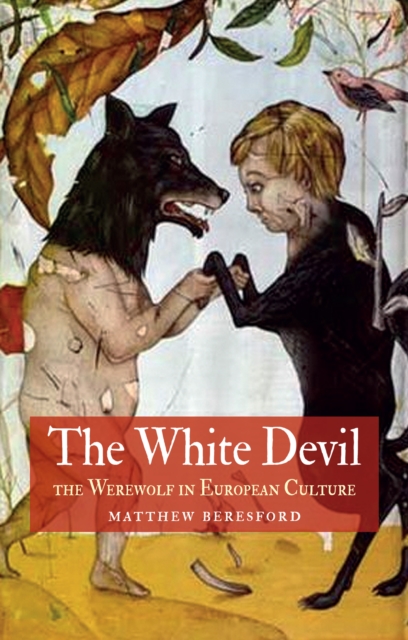
The White Devil
From Ovid's Lycaon to Professor Lupin, from Teen Wolf to An American Werewolf in Paris, the lycanthrope, or werewolf, comes to us frequently on the page and the silver screen. These interpretations often display lycanthropy as a curse, with the afflicted person becoming an uncontrollable, feral beast during every full moon. But this is just one version of the werewolf—its origins can be traced back thousands of years to early prehistory, and everything from Iron Age bog bodies and Roman gods to people such as Joan of Arc, Adolf Hitler, and Sigmund Freud feature in its story. Exploring the role of this odd assortment of ideas and people in the myth, The White Devil tracks the development of the werewolf from its birth to the present day, seeking to understand why the wolf curse continues to hold a firm grip on the modern imagination. Combining early death and burial rites, mythology, folklore, archaeological evidence, and local superstitions, Matthew Beresford explains that the werewolf has long been present in the beliefs and mythology of the many cultures of Europe. He examines prehistoric wolf cults, the use of the wolf as a symbol of ancient Rome, medieval werewolf executions, and the eradication of wolves by authorities in England during the Anglo-Saxon period. He also surveys werewolf trials, medical explanations, and alleged sightings, as well as the instances in which lycanthropes appear in literature and film. With sixty illustrations of these often terrifying—but sometimes noble—beasts, The White Devil offers a new understanding of the survival of the werewolf in European culture.
eBook

Bad medicine
\"After wandering out to the river near their homes, five teens decide to build a fire and exchange horror stories. Chad begins by telling the group about an unfortunate fisher who encountered a cluster of small, malevolent creatures while navigating the river in his canoe. Attempting to defend himself, Carl lashed out with an oar ... and his world changed forever. One by one, the teens try to outdo each other, and the evening evolves into an impromptu storytelling competition. On certain nights, if you walk along Loon River and peer under the bridge, you might spot a fire. You might hear a laugh. You might hear a scream. If you edge closer--and the conditions are just right--your view of the river will melt away, into the inky black beyond the firelight. Not to worry--the echoes of rushing water will help you find your way back. Or will they? Inspired by Cree folklore and modern Cree life, Bad Medicine will transport readers to terrifying new worlds that only exist at the edges of human imagination.\"--Amazon.
Book
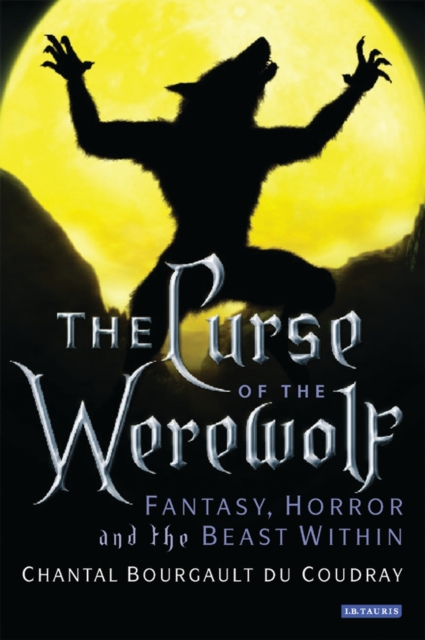
The Curse of the Werewolf
Half-man-half-myth, the werewolf has over the years infiltrated popular culture in many strange and varied shapes, from Gothic horror to the 'body horror' films of the 1980s and today's graphic novels. Yet despite enormous critical interest in myths and in monsters, from vampires to cyborgs, the figure of the werewolf has been strangely overlooked. Embodying our primal fears - of anguished masculinity, of 'the beast within' - the werewolf, argues Bourgault du Coudray, has revealed in its various lupine guises radically shifting attitudes to the human psyche. Tracing the werewolf's 'use' by anthropologists and criminologists and shifting interpretations of the figure - from the 'scientific' to the mythological and psychological - Bourgault du Coudray also sees the werewolf in Freud's 'wolf-man' case and the sinister use of wolf imagery in Nazism. \"The Curse of the Werewolf\" looks finally at the werewolf's revival in contemporary fantasy, finding in this supposedly conservative genre a fascinating new model of the human's relationship to nature. It is a required reading for students of fantasy, myth and monsters. No self-respecting werewolf should be without it.
eBook

The Fearless Vampire Killers: A Note about the Icelandic Draugr and Demonic Contamination in Grettis Saga
In 1897 Andrew Lang referred to Glámr, one of Iceland's most celebrated mediaeval ghosts, as a \"vampire\" in his The Book of Dreams and Ghosts. This article examines the arguments for such a categorisation, which are mainly the similar function of vampires and the Icelandic ghosts. It goes on to examine the case of Glámr; in particular, how his condition as a supernatural Other has been transmitted from a previous unspecified demon and the implications this has for the character of the well-known saga hero Grettir who eventually becomes Glámr's \"slayer.\" It argues that as Glámr had also been hired as a \"vampire slayer\" of sorts, Grettir and Glámr are in a sense doubles; and that the Glámr episode of Grettis saga highlights both his resilience in the face of evil but also the danger that goes with monster fighting and the lonely condition of the monster fighter.
Journal Article
\I Would Have Eaten You Too\: Werewolf Legends in the Flemish, Dutch and German Area
A geographical approach to werewolf legends results in the identification of a major werewolf area, stretching from mid-Germany into the Netherlands and Belgium-despite profound differences in the intensity of collecting the legends. Within this area there were people who were experiencing nightly encounters, especially with back-riding werewolves, and they advised each other about how best to overcome the beasts. Migratory legends, such as the Werewolf Lover/Husband and the Hungry Farmhand, show a different distribution: they exceed the boundaries of the core area but adhere to the national border between Germany and the Netherlands. As is the case with the nightmare, the meaning of the werewolf metaphor turns out to be sexual: \"werewolf\" denotes a sexually deviant man.
Journal Article

Monsters of the Gévaudan
In 1764 a peasant girl was killed and partially eaten while tending sheep. Eventually, over a hundred victims fell prey to a mysterious creature whose deadly efficiency mesmerized Europe. Monsters of the Gévaudan revisits this spellbinding tale and offers the definitive explanation for its mythic status in French folklore.
eBook

Fearless Children and Fabulous Monsters: Angela Carter, Lewis Carroll, and Beastly Girls
Angela Carter's various revisions of \"Little Red Riding Hood\" laid open the violent, alluring, and often distressing reality of adult sexuality. Although the relationship between Carter's stories and the earlier tale has been analyzed, relatively little attention has been paid to the figure of Lewis Carroll's Alice in her work on \"Little Red Riding Hood.\" Here it is argued that Alice is an important figure in and that Carroll's work is a vital intertext to Carter's short story \"Wolf-Alice\" and the film Company of Wolves.
Journal Article

The Werewolf in Medieval Icelandic Literature
People throughout the world have long been fascinated by the idea of shape-shifting. In all corners of the world there are stories about people who have the ability to transform themselves into animals. The ability is generally viewed negatively, and those with such powers are often sorcerers or witches. While the environment may determine the species into which human beings are transformed, the results are most often large predatory animals, for example, leopards, lions, hyenas, jaguars, tigers, and--not least--wolves and bears. Traditions about shape-shifting have been studied from various perspectives: literary, folkloric, historical, anthropological, and even etymological. The following article will focus on stories about werewolves in a wolf-free country, Iceland. [PUBLICATION ABSTRACT]
Journal Article

\The Hair that Wasn't There Before\: Demystifying Monstrosity and Menstruation in \Ginger Snaps\ and \Ginger Snaps Unleashed\
Werewolves have a long history in folklore and the Ginger Snaps films both substantiate and subvert many of the characteristics and conventions of this intricate past. The werewolf 's lineage is a complex one that transcends cultural and historical contexts. Miller comments on the Ginger Snaps trilogy and perceives werewolf folklore as tied to that of the menstruating adolescent woman.
Journal Article