
Catalogue Search | MBRL


Are you sure you want to remove the book from the shelf?

{{itemTitle}}
197
result(s) for
"Werewolves."
Sort by:

Werewolves
\"Some say the legend of the werewolf may have come from a rare condition of abundant hair growth called hypertrichosis. However the stories began, theyve persisted to present-day pop culture, continuously drawing in new audiences. Written in simple, clear language, all readers can explore the history of the werewolf myth.\"--Provided by publisher.
Book
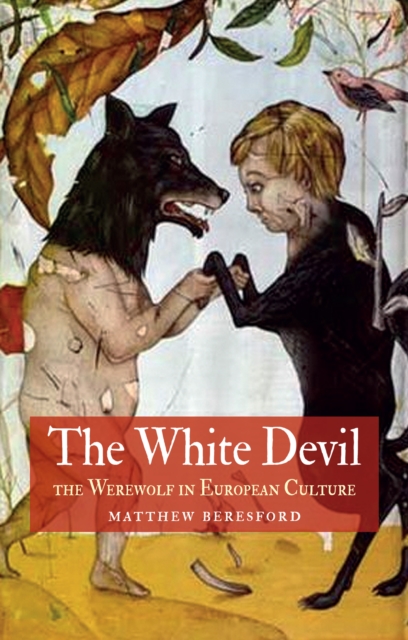
The White Devil
The werewolf a human with the ability to shapeshift into a wolf is a creature with a firm hold on the modern imagination. It prowls our countryside and cinema screens alike on the eve of a full moon. Yet the birth of the werewolf myth can be traced back thousands of years into prehistory. The White Devil tracks the development of the myth of the terrifying lycanthrope as it progresses through history to the present day. How do Iron Age bog bodies, Roman gods, Joan of Arc, Adolf Hitler, and Sigmund Freud all feature in the story of the werewolf myth? Matthew Beresford answers these questions and more in considering early death and burial rites, mythology, folklore, archaeological evidence and local superstitions through to medieval literary offerings, werewolf trials, medical explanations, alleged sightings and cinema. The White Devil draws on a wide variety of sources in order to understand why the werewolf has been part of cultural beliefs and mythology across Europe, tracing mankinds fascination with the beast over time. From the early wolf cults to the Anglo-Saxon criminal punishments, medieval werewolf executions and folkloric tales of noble werewolves, as well as psychological and medical explanations, it offers a new understanding of how the werewolf has survived within European culture for thousands of years.
eBook

Werewolves
In this book, readers discover legends of werewolves that have been told throughout the world from France to the United States.
Book
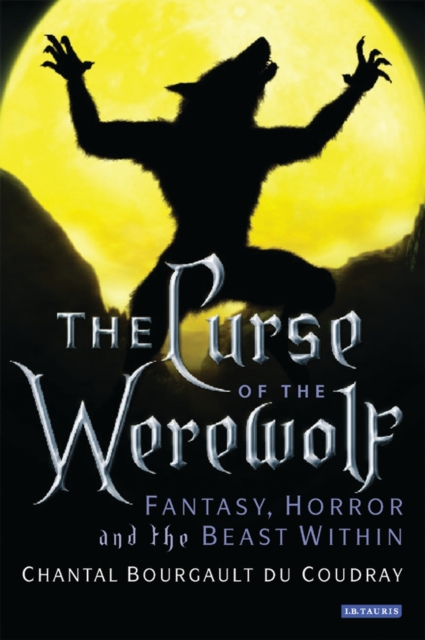
The Curse of the Werewolf
Half-man-half-myth, the werewolf has over the years infiltrated popular culture in many strange and varied shapes, from Gothic horror to the 'body horror' films of the 1980s and today's graphic novels. Yet despite enormous critical interest in myths and in monsters, from vampires to cyborgs, the figure of the werewolf has been strangely overlooked. Embodying our primal fears - of anguished masculinity, of 'the beast within' - the werewolf, argues Bourgault du Coudray, has revealed in its various lupine guises radically shifting attitudes to the human psyche. Tracing the werewolf's 'use' by anthropologists and criminologists and shifting interpretations of the figure - from the 'scientific' to the mythological and psychological - Bourgault du Coudray also sees the werewolf in Freud's 'wolf-man' case and the sinister use of wolf imagery in Nazism. \"The Curse of the Werewolf\" looks finally at the werewolf's revival in contemporary fantasy, finding in this supposedly conservative genre a fascinating new model of the human's relationship to nature. It is a required reading for students of fantasy, myth and monsters. No self-respecting werewolf should be without it.
eBook


Christians and Jews in the Twelfth-Century Werewolf Renaissance
In the late twelfth century, northern European Jewish mystics engaged in a sustained, unprecedented effort to explore the theological meaning of werewolves. This article seeks to anchor this surprising preoccupation in contemporary European religious culture, arguing that medieval Jews and Christians found werewolves “good to think with” in exploring the spiritual status of the (mutable, unstable) human body. Discourses of monstrosity were used as polemical ammunition in Jewish-Christian debates, but monstrous creatures were simultaneously held to be theologically resonant by both communities—a fact that sheds light upon the broader intellectual and cultural setting in which they were joint participants.
Journal Article

Werewolves
\"Books in the Magic, Myth, and Mystery series explore those spooky creatures that go bump in the night, fill our dreams (or nightmares!), and make us afraid of the dark. In Werewolves you'll learn more about these creepy creatures. Written with a high interest level to appeal to a more mature audience and a lower level of complexity with clear visuals to help struggling readers along. Considerate text includes tons of fascinating information and wild facts that will hold the readers' interest, allowing for successful mastery and comprehension. A table of contents, glossary with simplified pronunciations, and index all enhance comprehension.\"-- Provided by publisher.
Book


Werewolves and other shape-shifters
Learn about different types of legendary creatures that change shape.
Book
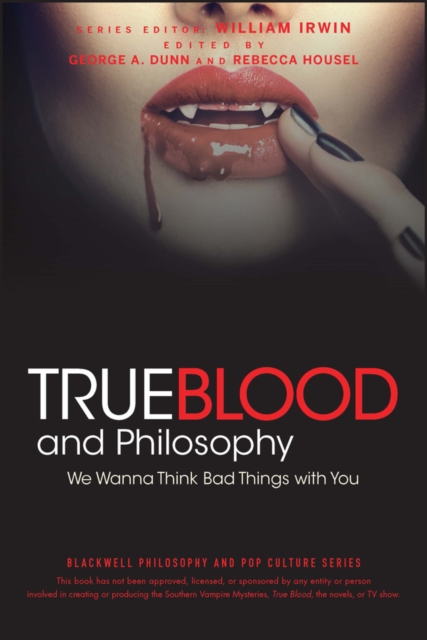
True blood and philosophy : we wanna think bad things with you
TRUEBLOOD and Philosophy Does God hate fangs?Is Sam still Sam when he turns into a collie?Is coming out of the coffin the same as coming out of the closet?Are all vampires created evil?Vampires, werewolves, shapeshifters, fairies, telepaths-- True Blood has it all.
eBook