
Catalogue Search | MBRL


Are you sure you want to remove the book from the shelf?

{{itemTitle}}
5,432
result(s) for
"West Bank"
Sort by:

Barriers to Democracy
Democracy-building efforts from the early 1990s on have funneled billions of dollars into nongovernmental organizations across the developing world, with the U.S. administration of George W. Bush leading the charge since 2001. But are many such \"civil society\" initiatives fatally flawed? Focusing on the Palestinian West Bank and the Arab world,Barriers to Democracymounts a powerful challenge to the core tenet of civil society initiatives: namely, that public participation in private associations necessarily yields the sort of civic engagement that, in turn, sustains effective democratic institutions. Such assertions tend to rely on evidence from states that are democratic to begin with. Here, Amaney Jamal investigates the role of civic associations in promoting democratic attitudes and behavioral patterns in contexts that are less than democratic.
Jamal argues that, in state-centralized environments, associations can just as easily promote civic qualities vital to authoritarian citizenship--such as support for the regime in power. Thus, any assessment of the influence of associational life on civic life must take into account political contexts, including the relationships among associations, their leaders, and political institutions.
Barriers to Democracyboth builds on and critiques the multifaceted literature that has emerged since the mid-1990s on associational life and civil society. By critically examining associational life in the West Bank during the height of the Oslo Peace Process (1993-99), and extending her findings to Morocco, Egypt, and Jordan, Jamal provides vital new insights into a timely issue.
eBook
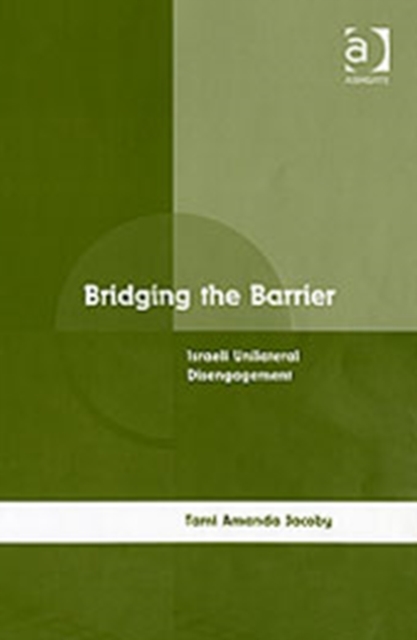
Bridging the Barrier
The construction of the barrier separating Israel from the West Bank has become the site of one of the most heated controversies the world over, the source of virulent propaganda, incitement and hatred. Tami A. Jacoby explores the incongruent narratives of Israelis and Palestinians with regards to Israel's security barrier and the policy of unilateral withdrawal. This insightful book offers a multidimensional approach that takes into consideration different sides of the barrier conflict as well as internal divisions. It also observes how the barrier affects the lives of individuals and communities through the rapid profusion of events in the legal, political, social and military sphere.
eBook

Keep your eye on the wall : Palestinian landscapes
This title brings together seven award-winning artist-photographers and four essayists, all responding to the Wall in images or words specially commissioned for this book.
Book
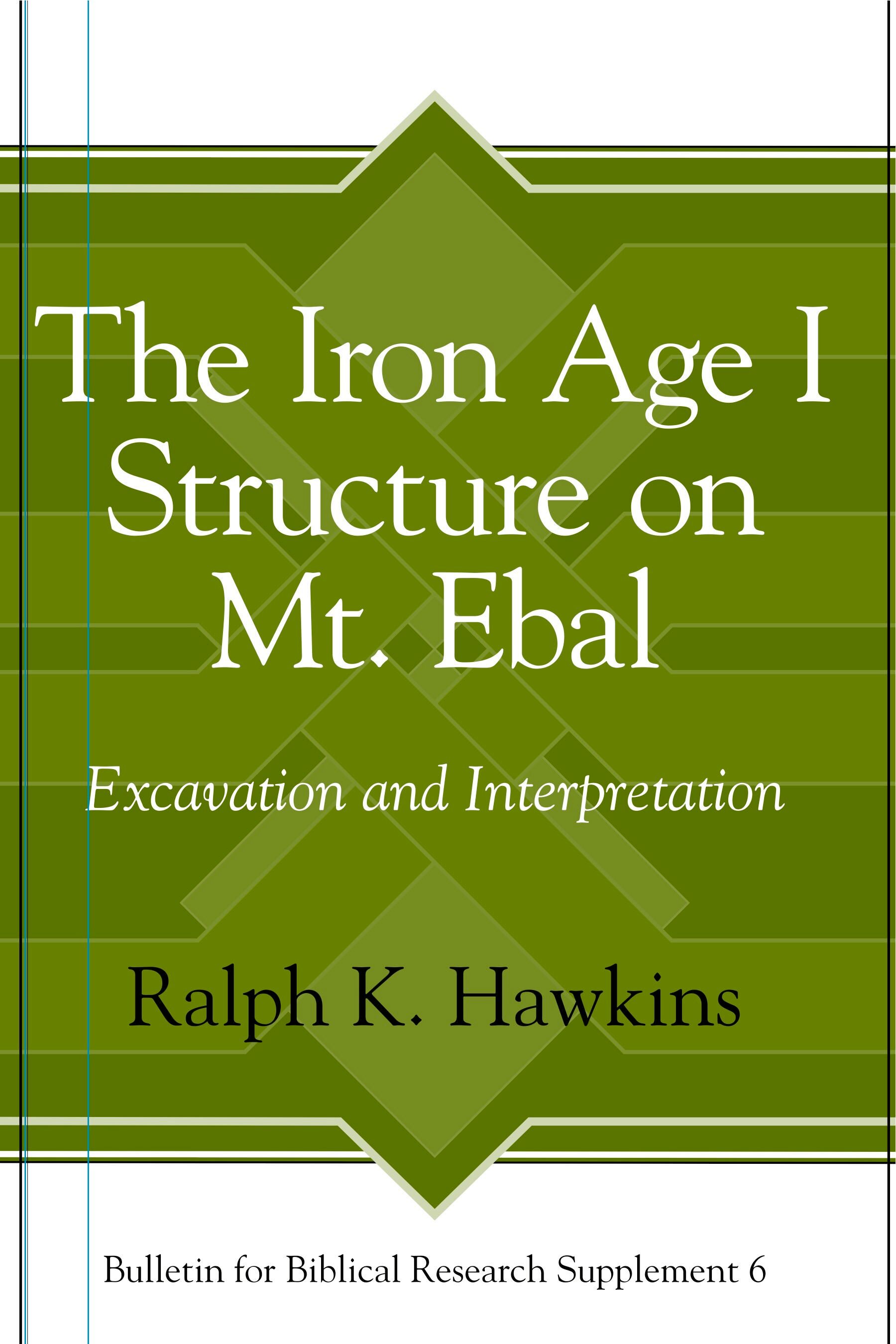
The Iron Age I Structure on Mt. Ebal
In Josh 8:30–35, Israel constructs an altar on Mt. Ebal in fulfillment of the command of Deut 27:1–8. This structure had very important social, political, and religious implications for Israel, for it was the first structure to be built after the people entered the land of Canaan. Once the altar was completed, sacrifices were to be offered on it, and a renewal of the covenant was to be carried out (patterned after the ritual of Deut 31:9–13). This covenant renewal was necessary to integrate the people into the covenant who had not been a part of the Sinai experience. The event was significant enough to establish nearby Shechem as the tribal league shrine, and it was the first political and religious ceremony that the Israelites undertook following their entry into the land. As a covenant ratification, it could be described as their ratification as a nation. The altar on Mt. Ebal and its concomitant ceremony were, therefore, according to the claims of the Hebrew Bible, of supreme importance in the life of ancient Israel.
In 1980, during the survey of the territory of Manasseh, Israeli archaeologist Adam Zertal discovered a site on Mt. Ebal dating to the period of Iron I, during which the Israelites began to sedentarize in the central hill country of Canaan. The site was excavated over eight seasons, from 1982 to 1989, under the auspices of the University of Haifa and the Israel Exploration Society. In 1985, Zertal published an article in which he suggested that the structure on Ebal may have been the altar of Josh 8:30–35.
In The Iron Age I Structure on Mt. Ebal, Ralph Hawkins reviews the excavation on Mt. Ebal and its results, including the scarabs, seals, and animal bones found there. He examines the architecture of the site in relation to Mesopotamian watchtowers, altars, and the descriptions of altars in mishnaic materials, Ezekiel, and Deuteronomic passages.
This fascinating book examines the Mt. Ebal site using a comparative method for both the physical data and the textual data. The site and its artifacts are analyzed and then compared with alternative proposals and literary traditions. The site is placed in its broader regional context in order to determine how it might relate to the larger settlement picture of Iron Age I. The primary purpose is to examine the data with a view to determining the nature and function of the site and its possible relation to Josh 8:30–35. A compelling read for biblical and archaeological students and scholars, who will better be able to envision sites of past events.
eBook


Occupied by Memory
Occupied by Memory explores the memories of the first Palestinian intifada. Based on extensive interviews with members of the \"intifada generation,\" those who were between 10 and 18 years old when the intifada began in 1987, the book provides a detailed look at the intifada memories of ordinary Palestinians. These personal stories are presented as part of a complex and politically charged discursive field through which young Palestinians are invested with meaning by scholars, politicians, journalists, and other observers. What emerges from their memories is a sense of a generation caught between a past that is simultaneously traumatic, empowering, and exciting - and a future that is perpetually uncertain. In this sense, Collins argues that understanding the stories and the struggles of the intifada generation is a key to understanding the ongoing state of emergency for the Palestinian people. The book will be of interest not only to scholars of the Middle East but also to those interested in nationalism, discourse analysis, social movements, and oral history.
eBook