
Catalogue Search | MBRL


Are you sure you want to remove the book from the shelf?

{{itemTitle}}
4
result(s) for
"Wetlands-Australia"
Sort by:

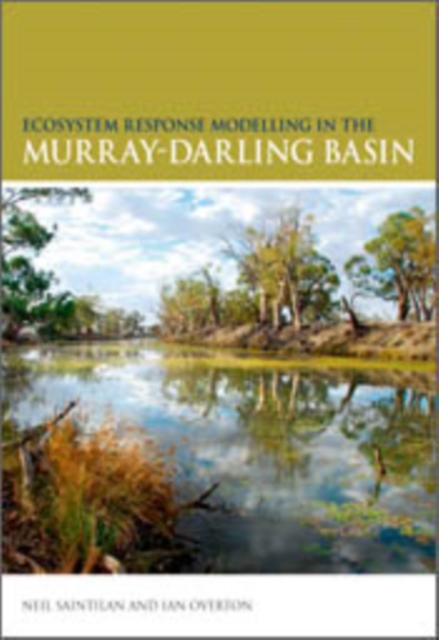
Ecosystem Response Modelling in the Murray-Darling Basin
Ecosystem Response Modelling in the Murray-Darling Basin provides an overview of the status of science in support of water management in Australia's largest and most economically important river catchment, and brings together the leading ecologists working in the rivers and wetlands of the Basin. It introduces the issues in ecosystem response modelling and how this area of science can support environmental watering decisions. The declining ecological condition of the internationally significant wetlands of the Murray-Darling Basin has been a prominent issue in Australia for many years. Several high profile government programs have sought to restore the flow conditions required to sustain healthy wetlands, and this book documents the scientific effort that is underpinning this task. In the Southern Murray-Darling Basin, the River Murray, the Murrumbidgee River and their associated wetlands and floodplains have been the focus of the Murray-Darling Basin Authority's 'The Living Murray' program, and the NSW Rivers Environmental Restoration Program. The book documents research aimed at informing environmental water use in a number of iconic wetlands including those along the Murray - the Barmah-Millewa Forest; the Chowilla Floodplain and Lindsay-Wallpolla Islands; the Coorong and Murray mouth; and the Murrumbidgee - the Lowbidgee Floodplain. Within the Northern Murray-Darling Basin, research conducted in support of the Wetland Recovery Plan and the NSW Rivers Environmental Restoration Program has improved our knowledge of the Gwydir Wetlands and the Macquarie Marshes, and the water regimes required to sustain their ecology.
eBook
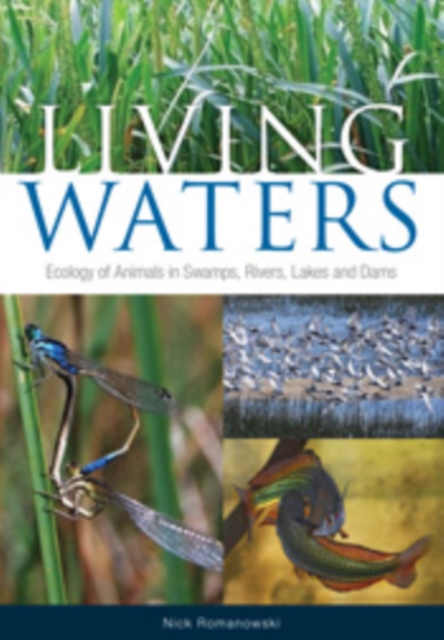
Living Waters
Wetlands are often seen as the ultimate symbol of beauty and tranquillity, their clear waters sheltering mysterious animals in a world where change is gentle and slow, from dragonflies skimming above their own reflections to the fishes glimpsed briefly below. Yet Australian wetlands are among the most varied and changeable habitats found anywhere, and the many creatures that live out their lives in and around water are superbly adapted to some of the most unpredictable ecosystems in the world. This book follows the diverse common themes and patterns that link inland waters from Tasmania to the tropics. It shows how cycles of change, the ways that different wetland animals travel through and between wetlands, and the interactions of the animals themselves create an ever-changing ecological kaleidoscope. Drawing on what is known of the biology, ecology and even the genetics of many of the most abundant, widespread and successful groups of animals, the author shows similarities to wetlands in other parts of the world, as well as some of the more extreme environments and specialised animals that are unique to this continent. Far more than a natural history, Living Waters explains the underlying forces that drive ecological change and movement in Australian wetlands, from the particular needs and habits of some specialised waterbirds to swarms of dragonflies and damselflies that may flourish for a few months before disappearing for years, and fishes found gasping in drying pools far from the nearest permanent water just hours after a desert deluge.
eBook
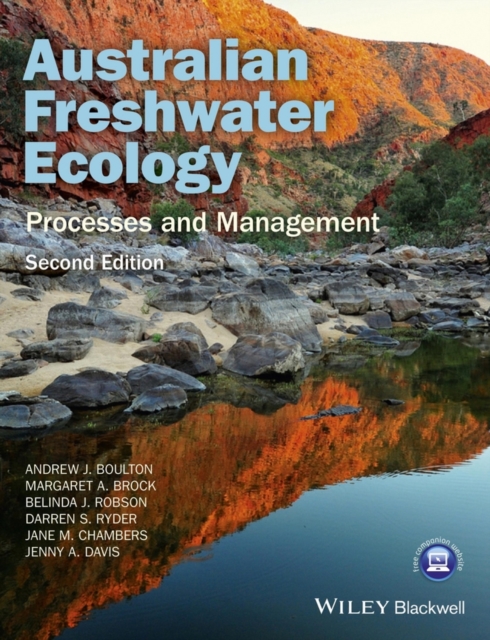
Australian freshwater ecology
As pressures on Australia's inland waters intensify from population growth, expanding resource development and climate change, there is an urgent need to manage and protect these special areas. Understanding their ecology underpins their wise management and conservation.
Australian Freshwater Ecology vividly describes the physical, chemical and biological features of wetlands, lakes, streams, rivers and groundwaters in Australia. It presents the principles of aquatic ecology linked to practical management and conservation, and explains the causes, mechanisms, effects and management of serious environmental problems such as altered water regimes, eutrophication, salinization, acidification and sedimentation of inland waters.
Key features:
* contributions from a diverse, highly qualified team of aquatic ecologists whose expertise spans the ecology and management of standing and running waters in Australia
* sections covering groundwaters, biodiversity, temporary and tropical waters, climate change, invasive species and freshwater conservation
* numerous Australian case-studies and guest 'text-boxes' showing management in practice
* concise descriptions of ecological processes and conceptual models illustrated with original, high- quality diagrams and photographs
Readable and logically structured, this text supports undergraduate and postgraduate courses in aquatic ecology and management. It is a valuable reference for consultants, restoration ecologists, water resource managers, science teachers, and other professionals with an interest in the ecology of surface and groundwaters.
eBook