
Catalogue Search | MBRL


Are you sure you want to remove the book from the shelf?

{{itemTitle}}
2,072
result(s) for
"Whaling ships"
Sort by:

The North water : a novel
The Volunteer, a nineteenth-century Yorkshire whaling ship, becomes the stage for a confrontation between brutal harpooner Henry Drax and ex-army surgeon Patrick Sumner, the ship's medic, during a violent, ill-fated voyage to the Arctic.
Book

Bluejackets in the Blubber Room
Explores key events in US maritime history from the 1820s
to the end of the Civil War through the biography of the sailing
ship William Badger Taking a biographical approach to
his subject, Peter Kurtz describes three phases of the life of
the William Badger, a sailing ship with a long and exemplary life
on the sea: first as a merchant ship carrying raw materials and
goods between New England, the US South, and Europe; second as a
whaling ship; and finally as a supply ship providing coal and
stores for the North Atlantic Blockading Squadron in Beaufort,
North Carolina, during the Civil War. Kurtz begins
Bluejackets in the Blubber Room by exploring early
American shipbuilding and shipbuilders in the Piscataqua region
of Maine and New Hampshire and the kinds of raw materials
harvested and used in making the wooden sailing ships of the
time. After its construction, the Badger became part of the key
economic trade between New England, the US South, and Europe. The
ship carried raw materials such as timber from New England to New
Orleans and subsequently cotton from New Orleans to Spain and
Liverpool, England. Using ship logs, sailors’ accounts, and
other primary sources, Kurtz delves into both the people and the
economics of this critical “cotton triangle” trade.
Following service as a merchant ship, the Badger became a whaling
ship, carrying its New England–based crew as far as the
South Pacific. Kurtz presents a colorful story of life aboard a
whaling ship and in the whaling towns ranging from Lynn,
Massachusetts, to Cape Leeuwin, Australia. Finally, Kurtz
describes the last phase of the Badger’s life as a key
player as a supply ship in the Union Navy’s blockade
effort. Although not the most dramatic duty a sailor could have,
blockade supply nevertheless was critical to the United
States’ prosecution of the Civil War and eventual victory.
Kurtz examines the decision-making involved in procuring such
ships and their crew, notably “refugees” and escaped
slaves known as “contrabands.”
eBook
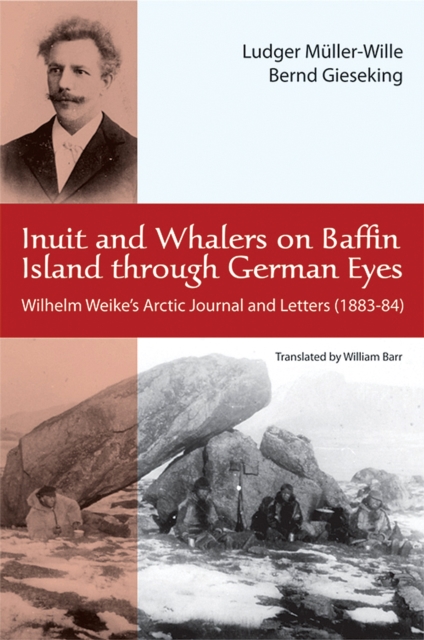
Inuit and Whalers on Baffin Island Through German Eyes
Told from an ordinary man's perspective, these are the journal and letters of Wilhelm Weike as he accompanied Franz Boas—the father of modern anthropology—on his journey to the arctic from 1883 to 1884. This extraordinary document of early arctic history provides a plain, direct view of the Inuit and the whalers in their arctic environment at the end of the 19th century. With invaluable contextual and complementary information, this book contributes key insights during the recent wave of scientific assessment of Franz Boas's legacy in all social sciences.
eBook

Moby Dick
Ishmael joined the crew of the whaling ship Pequod expecting a simple whaling voyage.Little did he know that the captain of the ship is thirsty for revenge against Moby Dick, the great white whale responsible for his missing leg.As the crew sails the ocean, Captain Ahab searches unceasingly for Moby Dick, ignoring warnings and prophecies of doom.
eBook

MANAGING LEVIATHAN
Perhaps no group of animals has come to better symbolize human misuse of the global environment than the great whales. Whaling killed almost three million whales in the twentieth century alone, with some populations estimated to have been reduced by 99% of their pristine abundance. Attempts to promote regulated, sustainable whaling by international agreement, notably through the International Convention for the Regulation of Whaling (1946), were almost immediately derailed by over-capitalization and profit-based self-interest. The major whaling nations used uncertainties in abundance estimates to ignore increasing evidence of population declines, and consistently exploited procedural flaws in the Convention to obstruct either the passage of rules designed to enact conservation measures or proposals for independent inspection of the industry. This major failure of regulatory efforts was exacerbated by secret, large-scale illegal whaling by the former Soviet Union and Japan that remained undisclosed for decades. Today, the status of the great whales varies widely: some species or populations are recovering strongly from exploitation, while a few others remain critically endangered. Although some whaling continues, the scale is greatly reduced from that of the twentieth century, and in this largely post-whaling world, other threats to whales are more significant. These include well-documented problems such as ship strikes and entanglement in fishing gear, as well as issues for which population-level impacts are unclear (ocean noise) or largely unknown. The removal of so many whales by whaling likely significantly impacted the ecosystems in which they played a major role as consumers and, through their transport and recycling of nutrients, enhanced primary productivity. As populations recover, the effect of their reintegration into the marine environment represents a fascinating issue in ecosystem dynamics. Overall (and with some notable exceptions), whale populations will likely continue to recover; however, this generally optimistic outlook is clouded by the potential for large-scale oceanic ecosystem changes precipitated by global warming.
Journal Article