
Catalogue Search | MBRL


Are you sure you want to remove the book from the shelf?

{{itemTitle}}
401
result(s) for
"Whistle blowing - United States"
Sort by:

Whistleblowers : Chelsea Manning, Edward Snowden and others
Whistleblowers are both celebrated and reviled. They expose illegal or unconscionable actions by a government official or organization, the dangerous practices or financial fraud of a corporation, or the perjury of a high-profile witness. The reasons that motivate whistleblowers are as diverse as the crimes and misdeeds they expose. Through articles written at the time of events, this book introduces readers to some of the most famous whistleblowers in recent history. These include Mark Felt, aka \"Deep Throat,\" whose information helped uncover the Watergate scandal; Chelsea Manning, who, as Bradley Manning, shared classified documents revealing unsavory, untruthful, and potentially illegal activity by the United States government in the Middle East; and Grigory Rodchenkov, the doctor who exposed Russia's state-sponsored doping program.
Book

The Snowden Reader
When Edward Snowden began leaking NSA documents in June 2013, his actions sparked impassioned debates about electronic surveillance, national security, and privacy in the digital age. The Snowden Reader looks at Snowden's disclosures and their aftermath. Critical analyses by experts discuss the historical, political, legal, and ethical issues raised by the disclosures. Over forty key documents related to the case are included, with introductory notes explaining their significance: documents leaked by Snowden; responses from the NSA, the Obama administration, and Congress; statements by foreign leaders, their governments, and international organizations; judicial rulings; findings of review committees; and Snowden's own statements. This book provides a valuable introduction and overview for anyone who wants to go beyond the headlines to understand this historic episode.
eBook

Ethical Climate Theory, Whistle-Blowing, and the Code of Silence in Police Agencies in the State of Georgia
This article reports the findings from a study that investigates the relationship between ethical climates and police whistle-blowing on five forms of misconduct in the State of Georgia. The results indicate that a friendship or team climate generally explains willingness to blow the whistle, but not the actual frequency of blowing the whistle. Instead, supervisory status, a control variable investigated in previous studies, is the most consistent predictor of both willingness to blow the whistle and frequency of blowing the whistle. Contrary to popular belief, the results also generally indicate that police are more inclined than civilian employees to blow the whistle in Georgia - in other words, they are less inclined to maintain a code of silence.
Journal Article

Whistleblowers : honesty in America from Washington to Trump
A magisterial exploration of whistleblowing in America, from the Revolutionary War to the Trump era. Misconduct by those in high places is always dangerous to reveal. Whistleblowers thus face conflicting impulses: by challenging and exposing transgressions by the powerful, they perform a vital public service-yet they always suffer for it. This episodic history brings to light how whistleblowing, an important but unrecognized cousin of civil disobedience, has held powerful elites accountable in America. Analyzing a range of whistleblowing episodes, from the corrupt Revolutionary War commodore Esek Hopkins (whose dismissal led in 1778 to the first whistleblower protection law) to Edward Snowden, to the dishonesty of Donald Trump, Allison Stanger reveals the centrality of whistleblowing to the health of American democracy. She also shows that with changing technology and increasing militarization, the exposure of misconduct has grown more difficult to do and more personally costly for those who do it-yet American freedom, especially today, depends on it.
Book

Edward Snowden
In June 2013, the news organization The Guardian first published articles revealing the shocking revelations that the National Security Agency (NSA) was conducting mass surveillance on all American citizens in secretive bulk-data collection programs. Hundreds of thousands of top-secret documents were leaked from the NSA by a computer programmer named Edward Snowden. This enlightening biography examines the life of Edward Snowden, his reasons for leaking classified documents, his ongoing controversy as a whistleblower, and the revelations and changes in data collection laws that resulted from the massive disclosure.
BOOK
The corporate whistleblower's survival guide
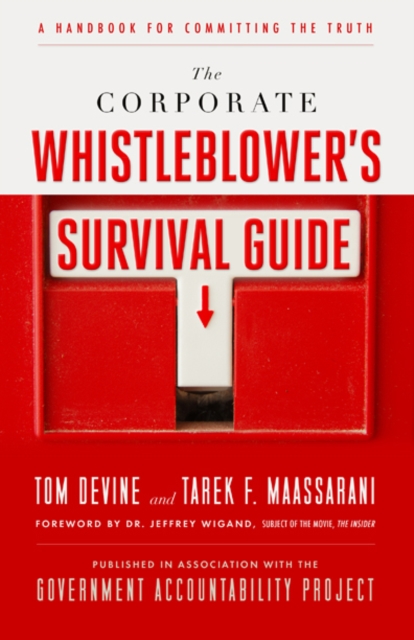
A Step-by-Step Guide to Blowing the Whistle-and Surviving the Storm That Follows Corporate whistleblowers save lives, prevent fraud, and preserve the environment. But these results come through a long, difficult, draining, and often frightening process that leads many unprepared would-be whistleblowers to give up. Fortunately, they now have the support they need. This unprecedented and authoritative guide covers every step of the process-finding information to support your claims, determining whom to blow the whistle to, dealing with attacks from opponents, enlisting allies, understanding the law, and more.
eBook

Crisis of conscience : whistleblowing in an age of fraud
The author forces readers to confront fundamental questions about the balance between free speech and state secrecy, and between individual rights and corporate power as he traces the rise of whistleblowing through a series of riveting cases.
BOOK
