
Catalogue Search | MBRL


Are you sure you want to remove the book from the shelf?

{{itemTitle}}
33
result(s) for
"Whites Race identity Southern States."
Sort by:

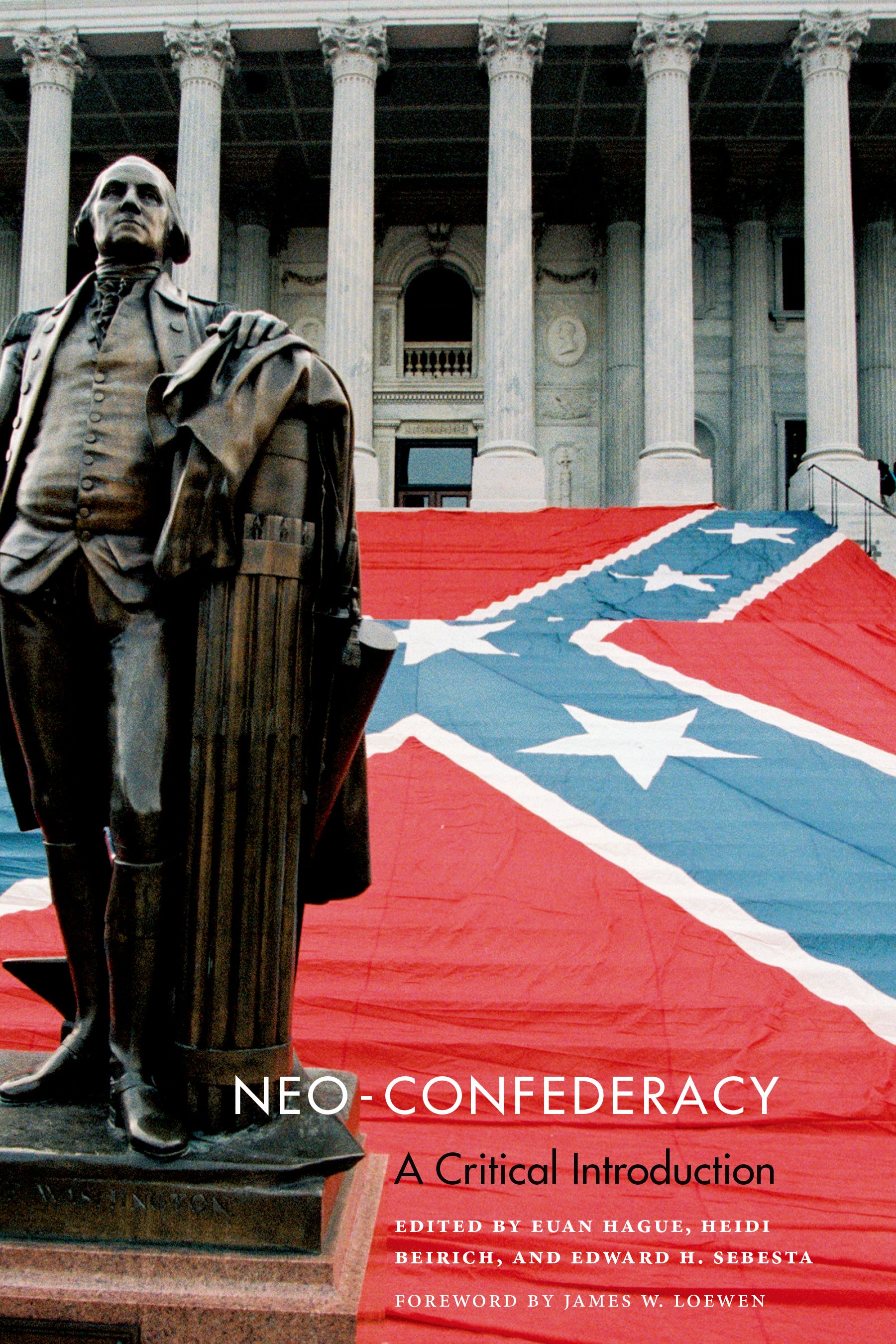
Neo-Confederacy
A century and a half after the conclusion of the Civil War, the legacy of the Confederate States of America continues to influence national politics in profound ways. Drawing on magazines such as Southern Partisan and publications from the secessionist organization League of the South, as well as DixieNet and additional newsletters and websites, Neo-Confederacy probes the veneer of this movement to reveal goals far more extensive than a mere celebration of ancestry. Incorporating groundbreaking essays on the Neo-Confederacy movement, this eye-opening work encompasses such topics as literature and music; the ethnic and cultural claims of white, Anglo-Celtic southerners; gender and sexuality; the origins and development of the movement and its tenets; and ultimately its nationalization into a far-reaching factor in reactionary conservative politics. The first book-length study of this powerful sociological phenomenon, Neo-Confederacy raises crucial questions about the mainstreaming of an ideology that, founded on notions of white supremacy, has made curiously strong inroads throughout the realms of sexist, homophobic, anti-immigrant, and often \"orthodox\" Christian populations that would otherwise have no affiliation with the regionality or heritage traditionally associated with Confederate history.
eBook

Growing up Jim Crow : how black and white southern children learned race
In the segregated South of the early twentieth century, unwritten rules guided every aspect of individual behavior, from how blacks and whites stood, sat, ate, drank, walked, and talked to whether they made eye contact with one another. Jennifer Ritterhouse asks how children learned this racial \"\"etiquette,\"\" which was sustained by coercion and the threat of violence. More broadly, she asks how individuals developed racial self-consciousness. Parental instruction was an important factor - both white parents' reinforcement of a white supremacist worldview and black parents' oppositional lessons in respectability and race pride. Children also learned much from their interactions across race lines. The fact that black youths were often eager to stand up for themselves, despite the risks, suggests that the emotional underpinnings of the civil rights movement were in place long before the historical moment when change became possible. Meanwhile, a younger generation of whites continued to enforce traditional patterns of domination and deference in private, while also creating an increasingly elaborate system of segregation in public settings. Exploring relationships between public and private and between segregation, racial etiquette, and racial violence, \"\"Growing Up Jim Crow\"\" sheds new light on tradition and change in the South and the meanings of segregation within southern culture.
eBook

Partly Colored
Arkansas, 1943. The Deep South during the heart of Jim Crow-era segregation. A Japanese-American person boards a bus, and immediately is faced with a dilemma. Not white. Not black. Where to sit?By elucidating the experience of interstitial ethnic groups such as Mexican, Asian, and Native Americans - groups that are held to be neither black nor white - Leslie Bow explores how the color line accommodated - or refused to accommodate - other ethnicities within a binary racial system. Analyzing pre- and post-1954 American literature, film, autobiography, government documents, ethnography, photographs, and popular culture, Bow investigates the ways in which racially in-between people and communities were brought to heel within the South's prevailing cultural logic, while locating the interstitial as a site of cultural anxiety and negotiation.Spanning the pre- to the post- segregation eras, Partly Colored traces the compelling history of third race individuals in the U.S. South, and in the process forces us to contend with the multiracial panorama that constitutes American culture and history.
eBook

No Common Ground
When it comes to Confederate monuments, there is no common ground.
Polarizing debates over their meaning have intensified into
legislative maneuvering to preserve the statues, legal battles to
remove them, and rowdy crowds taking matters into their own hands.
These conflicts have raged for well over a century--but they've
never been as intense as they are today. In this eye-opening
narrative of the efforts to raise, preserve, protest, and remove
Confederate monuments, Karen L. Cox depicts what these statues
meant to those who erected them and how a movement arose to force a
reckoning. She lucidly shows the forces that drove white
southerners to construct beacons of white supremacy, as well as the
ways that antimonument sentiment, largely stifled during the Jim
Crow era, returned with the civil rights movement and gathered
momentum in the decades after the Voting Rights Act of 1965.
Monument defenders responded with gerrymandering and \"heritage\"
laws intended to block efforts to remove these statues, but hard as
they worked to preserve the Lost Cause vision of southern history,
civil rights activists, Black elected officials, and movements of
ordinary people fought harder to take the story back. Timely,
accessible, and essential, No Common Ground is the story
of the seemingly invincible stone sentinels that are just beginning
to fall from their pedestals.
eBook

\Generations and Collective Memory\ Revisited: Race, Region, and Memory of Civil Rights
Using the spontaneous memories of a national sample of Americans in 1985, Schuman and Scott (1989) largely confirmed Mannheim's theory of generational identity by demonstrating that respondents' age structured their recall of important national and world events over the past 50 years. But they did not find the predicted age patterns for whites' recollections of civil rights. I argue that their failure was the consequence of ignoring regional differences in the impact of the Civil Rights movement on whites. Because the South was the target of and the battlefield for civil rights, \"civil rights memory\" should be greater for southern whites who experienced the movement as mature teenagers or young adults than for their equal-aged peers elsewhere or for southern whites in different age groups. I also hypothesize that this cohort of southern whites should attribute more historical importance to civil rights than do others. Both hypotheses are supported by analysis of the 1993 General Social Survey and Schuman's and Scott's original 1985 data. The theoretical import of the study is that where highly charged events happen shapes consciousness and memory, suggesting that Mannheim's idea of the \"social location\" of generational identity formation is place-specific, as well as age-dependent.
Journal Article

Neo-confederacy : a critical introduction
A century and a half after the conclusion of the Civil War, the legacy of the Confederate States of America continues to influence national politics in profound ways. Drawing on magazines such as Southern Partisan and publications from the secessionist organization League of the South, as well as DixieNet and additional newsletters and websites, Neo-Confederacy probes the veneer of this movement to reveal goals far more extensive than a mere celebration of ancestry. Incorporating groundbreaking essays on the Neo-Confederacy movement, this eye-opening work encompasses such topics as literature and music; the ethnic and cultural claims of white, Anglo-Celtic southerners; gender and sexuality; the origins and development of the movement and its tenets; and ultimately its nationalization into a far-reaching factor in reactionary conservative politics. The first book-length study of this powerful sociological phenomenon, Neo-Confederacy raises crucial questions about the mainstreaming of an ideology that, founded on notions of white supremacy, has made curiously strong inroads throughout the realms of sexist, homophobic, anti-immigrant, and often “orthodox” Christian populations that would otherwise have no affiliation with the regionality or heritage traditionally associated with Confederate history.
eBook

Becoming Zimbabwe or Becoming Zimbabwean: Identity, Nationalism and State-building
This lecture explores the processes of identity-making and state-building in a multi-ethnic and multiracial society recently emerging from a protracted armed struggle against racially ordered, settler-colonial domination. It explores the extent to which historical factors, such as the nature of the state, the prevailing national political economy, and regional and international forces and developments have shaped notions of belonging and citizenship over time and have affected state-building efforts. The role of the postcolonial state and economy, political developments and the land question in shaping the postcolonial dispensation is also examined. The lecture argues that, like most African states created by colonialism, Zimbabwe is not yet a nation and that it is only in the process of becoming. It also comments on the role of historians in shaping notions of nationhood and identity.
Journal Article

Race, Region, and Representative Bureaucracy
Scholars of representative bureaucracy have long been interested in the linkage between passive representation in public agencies and the pursuit of specific policies designed to benefit minority groups. Research in this area suggests that the structural characteristics of those organizations, the external political environment, and the perceptions of individual bureaucrats each help to facilitate that relationship. Work to date has not, however, sufficiently investigated the impact of region on representation behavior, which is surprising given the emphasis that it receives in the broader literature on race and politics. Drawing on that literature, this study argues that, for black bureaucrats, region of residence is an important moderator of active representation because it helps to determine the salience of race as an issue and the degree of identification with racial group interests. It tests hypotheses related to that general argument in a nationally representative sample of more than 3,000public schools. The results suggest that black teachers produce greater benefits for black students in the South, relative to other regions. A supplementary analysis also confirms the theoretical supposition that race is a more salient issue for Southern black bureaucrats, when compared with their non-Southern counterparts.
Journal Article
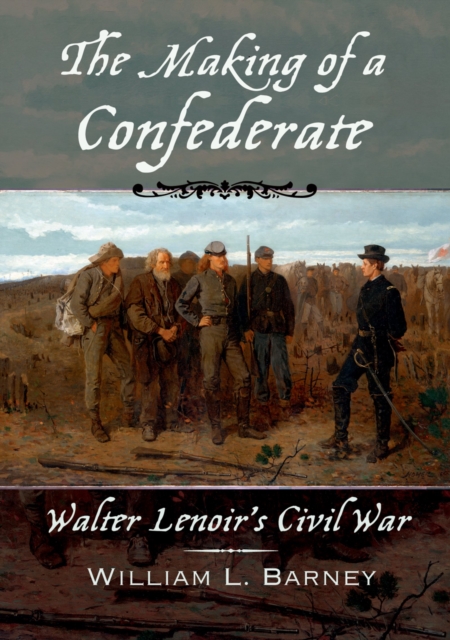
The Making of a Confederate
For all the advances of the civil rights movement, and for all the cultural diversity attending economic prosperity, many white southerners have been unable to relinquish the Confederate past and the idea of a heroic, liberty-loving South crushed by power-hungry Yankees. The Making of a Confederate uses the life of one man--Walter Lenoir of North Carolina--to explore the origins of southern white identity and the myriad ambiguities and complexities embedded in that history. Lenoir's case is particularly fascinating in the way it complicates notions about the sources of rabid devotion to the Confederate cause. Although born into a wealthy slaveholding family, Lenoir acknowledged the institution's evils and intended to divest himself of his inherited slaves. Opposed to secession, he planned in 1860 to move to Minnesota in the free North. With the war's outbreak, however, everything changed. Lenoir joined the Confederate army and fervidly supported its cause to the end. His postwar career reveals how one Confederate coped with bereavement and a crushing sense of loss, as he refashioned his memory of what had caused the war and embraced the cult of the Lost Cause. And while some southerners sank into depression, sought accommodation with the victors, or opposed the new order through various means, Lenoir found a fresh purpose by withdrawing to his acreage in the North Carolina mountains to pursue his own vision of the South's future, one that called for greater self-sufficiency and a more efficient use of the land. For Walter Lenoir and many other Confederates, the war never really ended. In tracing this compelling story, William Barney offers new insight into the uses of memory and how individual choices transform abstract historical processes into concrete actions.
eBook