
Catalogue Search | MBRL


Are you sure you want to remove the book from the shelf?

{{itemTitle}}
313
result(s) for
"Whittaker Chambers"
Sort by:

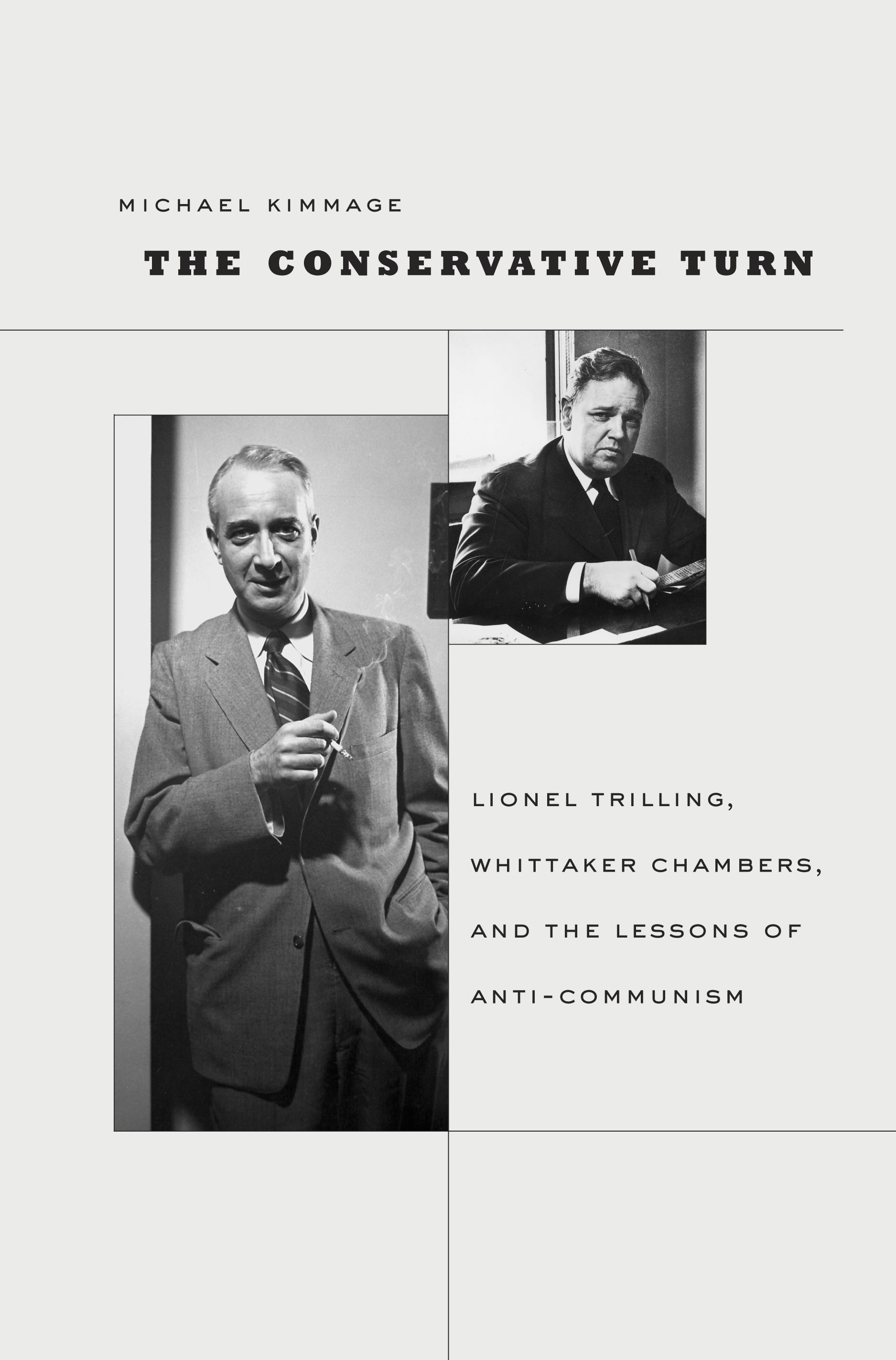
The conservative turn : Lionel Trilling, Whittaker Chambers, and the lessons of anti-communism
The Conservative Turn tells the story of postwar America's political evolution through two fascinating figures: Lionel Trilling and Whittaker Chambers. Born at the turn of the twentieth century, they were college classmates who went on to intellectual prominence, sharing the questions, crises, and challenges of their generation. A spy for the Soviet Union in the 1930s, Chambers became the main witness in the 1948 trial of Alger Hiss, which ended in Hiss's conviction for perjury. The trial advanced the careers of Richard Nixon and Joseph McCarthy and marked the beginning of the Cold War mood in America. Chambers was also a major conservative thinker, a theorist of the postwar conservative movement. Meanwhile, in the 1940s and 1950s, the literary critic Trilling wrote important essays that encouraged liberals to disown their radical past and to embrace a balanced maturity. Trilling's liberal anti-communism was highly influential, culminating politically in the presidency of John F. Kennedy. Kimmage argues that the divergent careers of these two men exemplify important developments in postwar American politics: the emergence of modern conservatism and the rise of moderate liberalism, crucially shaped by anti-communism. Taken together, these developments constitute a conservative turn in American political and intellectual life—a turn that continues to shape America's political landscape.
eBook


Perjury
When the Hiss-Chambers case first burst on the scene in 1948, its main characters and events seemed more appropriate to spy fiction than to American reality. The major historical authority on the case, Perjury was first published in 1978. Now, in its latest edition, Perjury links together the old and new evidence, much of it previously undiscovered or unavailable, bringing the Hiss-Chambers's amazing story up to the present.
eBook


The claims of experience : autobiography and American democracy
\"Why have so many figures throughout American history proclaimed their life stories when confronted by great political problems? The Claims of Experience provides a new theory for what makes autobiography political throughout the history of the United States and today. Across five chapters, Nolan Bennett examines the democratic crises that encouraged a diverse cast of figures to bear their stories: Benjamin Franklin amid the revolutionary era and its aftermath, Frederick Douglass in the antebellum and abolitionist movements, Henry Adams in the Gilded Age and its anxieties of industrial change, Emma Goldman among the first Red Scare and state opposition to radical speech, and Whittaker Chambers amid the second Red Scare that initiated the anticommunist turn of modern conservatism. These authors made what Bennett calls a \"claim of experience\": a life narrative that offers its audience new community by restoring to readers and author alike from prevailing political authorities the power to remake and make meaning of their lives. Whereas political theorists and activists have often seen autobiography to be too individualist or a mere documentary source of evidence, this theory reveals the democratic power that life narratives both written and spoken have offered those on the margins and in the mainstream. When successful, claims of experience redistribute popular authority from unsettled institutions and identities to new democratic visions. This book offers both a method for understanding the politics of life narrative and a call to anticipate claims of experience as they appear today. American politics, democracy, authority, life writing, autobiography, Benjamin Franklin, Frederick Douglass, Henry Adams, Emma Goldman, Whittaker Chambers\"-- Provided by publisher.
Book

The Battle of Bretton Woods
When turmoil strikes world monetary and financial markets, leaders invariably call for 'a new Bretton Woods' to prevent catastrophic economic disorder and defuse political conflict. The name of the remote New Hampshire town where representatives of forty-four nations gathered in July 1944, in the midst of the century's second great war, has become shorthand for enlightened globalization. The actual story surrounding the historic Bretton Woods accords, however, is full of startling drama, intrigue, and rivalry, which are vividly brought to life in Benn Steil's epic account.
Upending the conventional wisdom that Bretton Woods was the product of an amiable Anglo-American collaboration, Steil shows that it was in reality part of a much more ambitious geopolitical agenda hatched within President Franklin D. Roosevelt's Treasury and aimed at eliminating Britain as an economic and political rival. At the heart of the drama were the antipodal characters of John Maynard Keynes, the renowned and revolutionary British economist, and Harry Dexter White, the dogged, self-made American technocrat. Bringing to bear new and striking archival evidence, Steil offers the most compelling portrait yet of the complex and controversial figure of White--the architect of the dollar's privileged place in the Bretton Woods monetary system, who also, very privately, admired Soviet economic planning and engaged in clandestine communications with Soviet intelligence officials and agents over many years.
A remarkably deft work of storytelling that reveals how the blueprint for the postwar economic order was actually drawn,The Battle of Bretton Woodsis destined to become a classic of economic and political history.
eBook

