
Catalogue Search | MBRL


Are you sure you want to remove the book from the shelf?

{{itemTitle}}
2,427
result(s) for
"Wien"
Sort by:
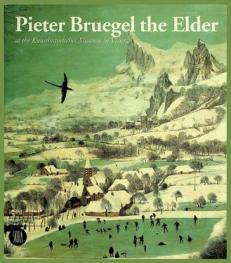
Pieter Bruegel the Elder at the Kunsthistorisches Museum in Vienna
Famous for having elevated the status of landscape painting, Pieter Bruegel the Elder is also considered to be the greatest 16th-century Flemish master of scenes from ordinary life. This volume presents a collection of his work, including 12 masterpieces.
Book

The Memory Factory
The Memory Factory introduces an eng-speaking public to the significant women artists of Vienna at the turn of the twentieth century, each chosen for her aesthetic innovations and participation in public exhibitions. These women played important public roles as exhibiting artists, both individually and in collectives, but this history has been silenced over time. Their stories show that the city of Vienna was contradictory and cosmopolitan: despite men-only policies in its main art institutions, it offered a myriad of unexpected ways for women artists to forge successful public careers. Women artists came from the provinces, Russia, and Germany to participate in its vibrant art scene. However, and especially because so many of the artists were Jewish, their contributions were actively obscured beginning in the late 1930s. Many had to flee Austria, losing their studios and lifework in the process. Some were killed in concentration camps. Along with the stories of individual women artists, the author reconstructs the history of separate women artists’ associations and their exhibitions. Chapters covering the careers of Tina Blau, Elena Luksch-Makowsky, Helene Funke, and Teresa Ries (among others) point to a more integrated and cosmopolitan art world than previously thought; one where women became part of the avant-garde, accepted and even highlighted in major exhibitions at the Secession and with the Klimt group. “This is an excellent addition to the literature on fin-de-siècle Vienna, well-researched and well-argued. It highlights little-known artists and situates them in a novel interpretation of women’s roles in the art world. The author challenges dominant tropes of feminist historiography and thus sheds new light on twentieth-century art history and historiography,” Michael Gubser, James Madison University.
eBook

Art in Vienna 1898-1918 : Klimt, Kokoschka, Schiele and their contemporaries
The artistic stagnation of Vienna at the end of the 19th century was rudely shaken by the artists of the Vienna Secession. Their work shocked a conservative public, but their successive exhibitions, their magazine Ver Sacrum, and their application to the applied arts and architecture soon brought them an enthusiastic following and wealthy patronage. Art in Vienna, 1898-1918: Klimt, Kokoschka, Schiele and their Contemporaries, now published in its 4th edition, brilliantly traces the course of this development. Klimt, Kokoschka and Schiele were the leading figures in the fine arts; Wagner, Olbrich, Loos and Hoffmann in architecture and the applied arts. In other fields, Mahler, Freud and Schnitzler were influencing the avant-garde. The book includes eye-witness accounts of exhibitions, the opening of the Secession building and other events, and the result is a fascinating documentary study of the members of an artistic movement which is much admired today. Some 150 colour images and 75 black-and-white archival illustrations make this a sumptuous and historically engrossing study of a period when Vienna was the centre of the European art world.-- Source other than Library of Congress.
Book

Coexisting Attractors and Multistability in a Simple Memristive Wien-Bridge Chaotic Circuit
In this paper, a new voltage-controlled memristor is presented. The mathematical expression of this memristor has an absolute value term, so it is called an absolute voltage-controlled memristor. The proposed memristor is locally active, which is proved by its DC V–I (Voltage–Current) plot. A simple three-order Wien-bridge chaotic circuit without inductor is constructed on the basis of the presented memristor. The dynamical behaviors of the simple chaotic system are analyzed in this paper. The main properties of this system are coexisting attractors and multistability. Furthermore, an analog circuit of this chaotic system is realized by the Multisim software. The multistability of the proposed system can enlarge the key space in encryption, which makes the encryption effect better. Therefore, the proposed chaotic system can be used as a pseudo-random sequence generator to provide key sequences for digital encryption systems. Thus, the chaotic system is discretized and implemented by Digital Signal Processing (DSP) technology. The National Institute of Standards and Technology (NIST) test and Approximate Entropy analysis of the proposed chaotic system are conducted in this paper.
Journal Article

Studio Prix : University of Applied Arts Vienna 1990-2011
Wolf D. Prix, the co-founder of Coop Himmelb(l)au was head of the Studio Prix at the University of Applied Arts in Vienna for more than twenty years. His architectural visions shaped the studio, which from the very beginning came to stand for radicalism, cutting edge strategies and utopias translated into reality (built into the real). Studio Prix was a creative lab that offered intense support. The publication features a selection of projects and diploma works of students as well as statements of international guests such as architects like Hitoshi Abe, Peter Cook, Mario Coyula-Cowley, Christine Hawley, Lars Lerup, Greg Lynn, Eric Owen Moss, Carl Pruscha, Michael Rotondi, Patrik Schumacher, Zaha Hadid and theoreticians like Sylvia Lavin, Sanford Kwinter, Jeffrey Kipnis, Christian Reder and Hans Ulrich Reck.
Book
Friderike Klauner (1916–1993). Director of the Picture Gallery and First Director of the Kunsthistorisches Museum Wien. A biographical sketch
50 years ago, a woman headed Austria’s largest art museum for the first time. For eight years, Friderike Klauner managed the affairs of the Kunsthistorisches Museum in Vienna with untiring commitment. She introduced some innovations, but also preserved traditions in order to make the valuable, formerly imperial art collection accessible to the interested public in various forms. This essay attempts a biographical approach to the successful art historian. It explores her career and her professional achievements. It wonders why so little has been published about her so far and finally asks what still remains of Friderike Klauner to this day.
Journal Article


Correction of traditional incorrect oscillation formula for the Wien‐Bridge Oscillator
An incorrect mistake that the DC bias resistance cannot change the oscillation frequency exists for the traditional formula of the Wien‐Bridge oscillator. From the rigorous hardware experiments and theoretical proofs in this study, the proposed new formula exploits the fact that the oscillation frequency of the Wien‐Bridge oscillator is indeed determined by the DC bias resistance. The feedback theory and Barkhausen criterion are often utilised to address the oscillating formula of the Wien‐Bridge oscillator for traditional approaches. However, the steps of the feedback theory are complicated, and its severe shortcoming is the utilisation of Kirchhoff's law. The traditional Barkhausen formula is only necessary but not sufficient for the Wien‐Bridge oscillator. Hence, the oscillator with a feedback device, which fulfils the Barkhausen criterion does not necessarily oscillate at a frequency and then this fact will make the Barkhausen criterion impractical. This study applies our series research Chen's Electric Unifying Approach to overcome the serious shortcomings of the traditional Barkhausen method and yields a necessary and sufficient oscillation formula for the Wien‐Bridge oscillator. Another important feature of our proposed method is that the oscillation condition is effective for a range value, and it can solve the impact caused by the change in environmental factors.
Journal Article

The new space : movement and experience in Viennese modern architecture
Scholars have long explored the problem of ornament and expression when considering Viennese modernism. By the first decade of the 20th century, however, the avant-garde had shifted its focus from the surface to the interior. Adolf Loos (1870-1933), together with Josef Frank (1885-1967) and Oskar Strnad (1879-1935), led this generation of architects to interpret modernism through culture and lifestyle. They were interested in the experience of architectural space: how it could be navigated, inhabited, and designed to reflect the modern way of life while also offering respite from it. The New Space traces the theoretical conversation about space carried out in the writings and built works of Loos, Frank, and Strnad over four decades. The three ultimately foregrounded what Le Corbusier would later-independently-term the architectural promenade. Lavishly illustrated with new photography and architectural plans, this important book enhances our understanding of the development of modernism and of architectural theory and practice.
Book

Chaotic and periodic bursting phenomena in a memristive Wien-bridge oscillator
Bursting, an important communication activity in biological neurons and endocrine cells, has been widely found in fast-slow dynamical systems. In this paper, a modified second-order generalized memristor, memristive diode bridge cascaded with LC network, is presented and its fingerprints of the pinched hysteresis loops are analyzed. By replacing the parallel resistor with the modified generalized memristor, a novel memristive Wien-bridge oscillator is constructed and its mathematical model is established, from which the dynamical behaviors of symmetric chaotic and periodic bursting oscillations are observed and the corresponding bifurcation mechanisms are explained. Based on a hardware realization circuit, experimental observations are performed, which verify the numerical simulations.
Journal Article