
Catalogue Search | MBRL


Are you sure you want to remove the book from the shelf?

{{itemTitle}}
90
result(s) for
"Wildlife attracting"
Sort by:

Where once there was a wood
Examines the many forms of wildlife that can be displaced if their environment is destroyed by development and discusses how communities and schools can provide spaces for them to live.
Book

Animal Architecture
A provocative call for architects to remember and embrace the nonhuman lives that share our spaces. A spider spinning its web in a dark corner. Wasps building a nest under a roof. There's hardly any part of the built environment that can't be inhabited by nonhumans, and yet we are extremely selective about which animals we keep in or out. This book imagines new ways of thinking about architecture and the more-than-human and asks how we might design with animals and the other lives that share our spaces in mind. Animal Architecture is a provocative exploration of how to think about building in a world where humans and other animals are already entangled, whether we acknowledge it or not.
eBook


Anthelmintic Baiting of Foxes against Echinococcus multilocularis in Small Public Area, Japan
We distributed anthelmintic baits on a university campus in Japan inhabited by foxes infected with Echinococcus multilocularis to design an effective baiting protocol for small public areas. High-density baiting can reduce the risk for human exposure to the parasite to near zero. However, monthly baiting is recommended to maintain this effect.
Journal Article

Community acceptance of a novel malaria intervention, Attractive Targeted Sugar Baits, in the Zambia phase III trial
Background
Community acceptance is an important criterion to assess in community trials, particularly for new tools that require high coverage and use by a target population. Installed on exterior walls of household structures, the attractive targeted sugar bait (ATSB) is a new vector control tool designed to attract and kill mosquitoes. ATSBs were evaluated in Western Zambia during a two-year cluster randomized controlled trial to assess the efficacy of ATSBs in reducing malaria transmission. Community acceptance of ATSBs was critical for successful trial implementation.
Methods
A community engagement strategy outlined activities and key messages to promote acceptance. Annual cross-sectional surveys, conducted during the peak transmission period, assessed households for presence of ATSBs as well as perceived benefits, concerns, and willingness to use ATSBs. Sixteen focus group discussions and 16 in-depth interviews, conducted at the end of each ATSB station deployment period, obtained a range of perceptions and household experiences with ATSB stations, as well as ITN use in the context of ATSB deployment.
Results
Methods used during the study to promote acceptance and continued use of ATSBs were effective in achieving greater than 90% coverage, a high (greater than 70%) level of perceived benefits, and fewer than 10% of households reporting safety concerns. Common facilitators of acceptance included the desire for protection against malaria and reduction of mosquitoes, trust in health initiatives, and understanding of the product. Common barriers to acceptance included misconceptions of product impact on mosquitoes, continued cases of malaria, association with satanism, and damage to household structures.
Discussion
Future use of the ATSB intervention will likely require activities that foster community acceptance before, during, and after the intervention is introduced. Additional research may be needed to understand the impact of different levels of community engagement on ATSB station coverage, ATSB station perception, and ITN use.
Conclusion
There was high acceptance of ATSB stations during the trial in Western Zambia. Continuous and intense community engagement efforts contributed to sustained ATSB coverage and trust in the product. Acceptance of ATSBs during programmatic delivery requires further research.
Journal Article

PRELIMINARY ANALYSIS OF SUPPLEMENTAL FEEDING ON CAMERA TRAP CAPTURES OF SMALL MAMMALS IN CENTRAL GEORGIA
Although it brings joy to many people, bird feeding has been shown to have potentially negative effects on local bird populations and small mammalian species. To study the differences in local occurrence of native small mammalian species around bird feeders and in more distant settings, six camera traps were placed in a rural residential area in Putnam County, Georgia. Species presence was recorded three days a week from 12:00 am Monday to 12:00 am Thursday between 11 November 2019 and 29 January 2020. We recorded 5,073 images of mammals during the 36 days: gray squirrels (4,264), eastern chipmunks (458), raccoons (113), Virginia opossums (65), domestic cats (54), white-tailed deer (36), gray foxes (35), field mice (22), armadillos (11), eastern cottontail rabbits (11), and domestic dogs (4). Pair-wise t-tests indicate a greater frequency of image-captures of gray squirrels, chipmunks, raccoons, opossums and cats near the feeders compared to the area away from the feeders. Foxes and deer were imaged more frequently in the area away from the feeders. Not only do bird feeders contribute to a higher visitation frequency in certain species such as gray squirrels and raccoons, species known to depredate bird nests, the elevated densities of birds and mammals in the area also attract more predators such as domestic/feral cats.
Journal Article
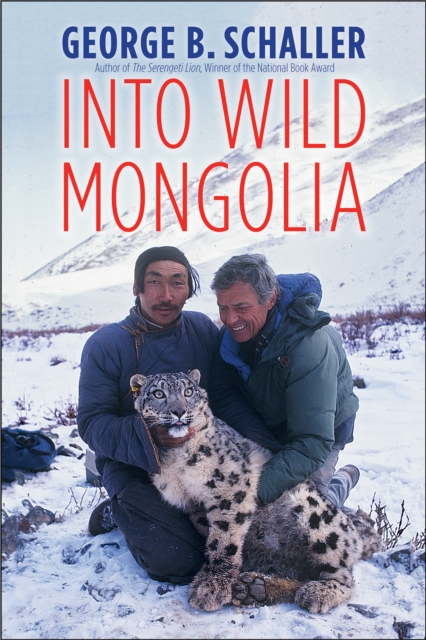
Into Wild Mongolia
Explore the wonders of wild Mongolia through the eyes of a distinguished field biologist Mongolia became a satellite of the Soviet Union in the mid-1920s, and for nearly seven decades effectively closed its doors to the outside world. Biologist George Schaller initially visited the country in 1989, and was one of the first Western scientists allowed to study and assess the conservation status of Mongolia's many unique, native wildlife species. Schaller made a number of trips from 1989 to 2018 in collaboration with Mongolian and American scientists, witnessing Mongolia's recovery and transition to a market economy after the collapse of the Soviet Union. This informative and fascinating new book provides a firsthand account of Schaller's time in this little-known and remote country, where he studied and helped develop conservation initiatives for the snow leopard, Gobi bear, wild camel, and Mongolian gazelle, among other species. Featuring magnificent photographs from his travels, the book offers a critical, at times inspiring contribution for those who treasure wildlife, as well as a fresh perspective on the natural beauty of the region, which encompasses steppes, mountains, and the Gobi Desert.
eBook


Changes in the Vegetation, Soil Seed Bank and Soil Properties at Bait Sites in a Protected Area of the Central European Lower Montane Zone
Feeding places for shooting wild boar (so-called bait sites) are spreading in some regions and they have a growing impact on natural ecosystems. Bait sites were investigated to detect the changes in vegetation, the soil seed bank and soil nutrients. The study area is situated in the Mátra Landscape Protection Area, representing a typical oak forest in the Central European lower montane zone (in Hungary). Two types of bait sites were selected: forests and clearings. A vegetation survey, a soil seed bank experiment and a soil analysis were conducted. The degree of degradation of vegetation was similar at the various bait sites, but only the abundance of weeds was higher in the clearings. The density of weed seeds in the soil varied regardless of type, clearly showing the effects of artificial seed sources. The number of weed species was, however, significantly higher in the clearings. The degree of Jaccard-similarity between the vegetation and the seed bank was the highest in the clearings. The dominance of long-term persistent seeds did not differ among bait sites, indicating frequent disturbances at these sites. The amount of soil nutrients was significantly (more than 10 times) higher in the clearings and this, along with their greater openness, may be responsible for the higher number of weed species in their seed banks. The vegetation and the soil of the clearings proved to be more degraded, mainly due to their habitat characteristics, but the seed bank was similarly infected in the less weedy forests; thus, all bait sites may equally be the focal points of a possible invasion. It means new challenges for the management, considering that climate change and the intensive logging and hunting activities can strengthen the effects of bait sites.
Journal Article