
Catalogue Search | MBRL


Are you sure you want to remove the book from the shelf?

{{itemTitle}}
12,904
result(s) for
"Williams, Tennessee"
Sort by:


Law and sexuality in Tennessee Williams's America
Gender and cultural studies readings of Tennessee Williams's work have provided diverse perspectives on his complex representations of sexuality, whether of himself as an openly gay man, or of his characters, many of whom narrate or dramatize sexual attitudes or behavior that cross heteronormative boundaries of the mid-century period. Several of these studies have positioned Williams and his work amid the public tensions in American life over roughly four decades, from 1940–1980, as notions of equality and freedom of choice challenged prejudice and repression in law and in society. To date, however, neither Williams's homosexuality nor his persistent representations of sexual transgressions have been examined as legal matters that challenged the rule of law.
Directed by legal history and informed by multiple strands of Williams's studies criticism, textual, and cultural, this book explores the interplay of select topics defined and debated in law's texts with those same topics in Williams's personal and imaginative texts. By tracing the obscure and the transparent representations of homosexuality, specifically, and diverse sexualities more generally, through selected stories and plays, the book charts the intersections between Williams's literature and the laws that governed the period. His imaginative works, backlit by his personal documents and historical and legal records from the period, underscore his preoccupation with depictions of diverse sexualities throughout his career. His use of legal language and its varied effects on his texts demonstrate his work's multiple and complex intersection with major twentieth-century concerns, including significant legal and cultural dialogues about identity formation, intimacy, privacy, and difference.
eBook


Tennessee Williams and Europe
Tennessee Williams and Europe: Intercultural Encounters, Transatlantic Exchanges documents the bi-directional exchange of ideas and images between Williams and post-war Europe that have altered the artistic landscapes of both continents.
eBook


The Cambridge Companion to Tennessee Williams
This is a collection of thirteen original essays from a team of leading scholars in the field. In this wide-ranging volume, the contributors cover a healthy sampling of Williams's works, from the early apprenticeship years in the 1930s through to his last play before his death in 1983, Something Cloudy, Something Clear. In addition to essays on such major plays as The Glass Menagerie, A Streetcar Named Desire, and Cat on a Hot Tin Roof, among others, the contributors also consider selected minor plays, short stories, poems, and biographical concerns. The Companion also features a chapter on selected key productions as well as a bibliographic essay surveying the major critical statements on Williams.
eBook


Exploring The Glass Menagerie by Tennessee Williams Through the Lens of Feminism
The characters, scenes, and events in Tennessee William’s The Glass Menagerie are used to expand on the idea of women's liberation. Utilizing a feminist lens, the article aims to reread The Glass Menagerie from a feminist approach. It also highlights the distinctions between the characters in the play and the reasons behind them. The degree of liberalness in each of the drama's scenes helps to clarify them. Additionally, one of the ideas that will be covered in the study is the patriarchal influence of male characters over female characters. However, The Glass Menagerie's portrayal of a mother figure's challenging relationship with her rebellious son and helpless daughter takes the idea of liberal women in a different direction. Importantly, now that literary study often overlooks the significance of female characters’ development and change, this article contributes to discussing these elements within the research.
Journal Article
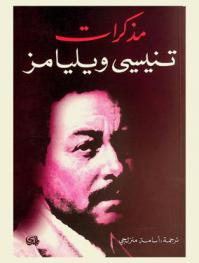
مذكرات تنيسي ويليامز
يبدو كتاب (مذكرات تنيسي ويليامز) في جانب منه، كما لو أنه محاولة لتصفية حساب مؤلمة مع الذات، مع التاريخ الشخصي، مع ماض لا يمكن تغييره بأية حال إنها تصفية حساب نهائية، طالما حصلت في الشفق الصارخ والمؤسسي للحياة، احتجاجا، ليس على الموت المقبل وحسب، بل على الحياة نفسها، لأنها على هذا القدر الكبير من الهشاشة، وماضية حتما نحو التبدد. فهو احتجاج على بذرة الفناء الثاوية في قلب الأشياء. وعلي الأشياء التي تتنكر بحكم الضرورة لنفسها ولحيويتها، وللجمال الجمال الذي هو قيمة عليا لشخص مثل ويليامز وقد استقطر رحيقه، أو سعى جاهدا، لذلك، حد الإشباع. وربما، حد الاستهتار بالقيم السائدة. إنه كتاب غاضب، كتب من قبل رجل لا يهادن وهو يعرض الحقيقة مثلما حصلت ؛ عارية وقاسية ومثيرة للحيرة والحنق. كتاب، كان يدرك أنه سيشعل غيظ التقليديين والمحافظين والمنافقين.
BOOK

Gender and Disability in Bahram Tavakoli’s Here Without Me and Tennessee Williams’s The Glass Menagerie
This article examines the intersection of gender and disability in The Glass Menagerie, a 1944 play by the acclaimed American dramatist Tennessee Williams, and the 2010 Iranian film adaptation Here Without Me, scripted and directed by Bahram Tavakoli. Disability studies is a relatively new discipline which seeks to investigate the variegated continuum of embodiment through cultural discourses that challenge the medical and scientific perceptions of disability. In the adapted film, compulsory able-bodiedness, the belief that perfect healthy bodies are the norm, while freakish, different, and disabled ones are deviations from the said norm, is seen on the screen countless times, a view established by the dominant culture of normalcy. As a site of intercultural transposition, the film re-contextualizes the intersection of gender and disability in contemporary Iran and hence throws into relief some of the tacit assumptions regarding embodied experience. Both the play and the film implicate fantasy as an implicit critique of normalcy.
Journal Article