
Catalogue Search | MBRL


Are you sure you want to remove the book from the shelf?

{{itemTitle}}
83
result(s) for
"Williams, William Carlos, 1883-1963 Criticism and interpretation."
Sort by:

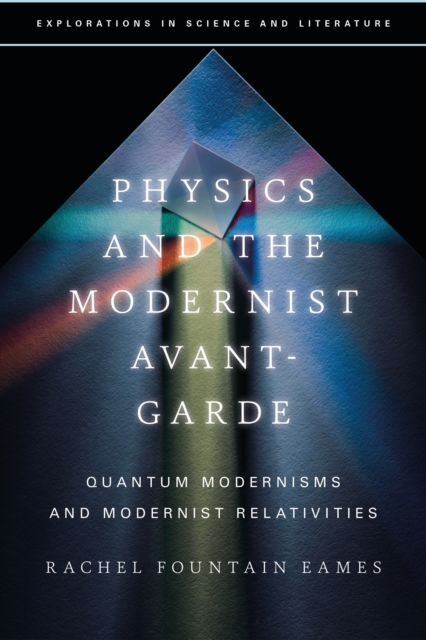
Physics and the modernist avant-garde : quantum modernisms and modernist relativities
Developing a reading of modernist poetics centred on the three-way relationship between literature, modern physics and avant-garde art movements, this book focuses on four key poets - William Carlos Williams, Mina Loy, the Baroness Elsa von Freytag-Loringhoven and Wallace Stevens - whose lives crossed paths in 20th-century New York.
eBook

The Cambridge companion to William Carlos Williams
\"This Companion contains thirteen new essays from leading international experts on William Carlos Williams, covering his major poetry and prose works - including Paterson, In the American Grain, and the Stecher trilogy. It addresses central issues of recent Williams scholarship and discusses a wide variety of topics: Williams and the visual arts, Williams and medicine, Williams's version of local modernism, Williams and gender, Williams and multiculturalism, and more. Authors examine Williams's relationships with figures such as Ezra Pound, Wallace Stevens, and H. D. and Marianne Moore, and illustrate the importance of his legacy for Allen Ginsberg, Amiri Baraka, Robert Creeley, Robert Lowell, and numerous contemporary poets. Featuring a chronology and an up-to-date bibliography of the writer, The Cambridge Companion to William Carlos Williams is an invaluable guide for students of this influential literary figure\"-- Provided by publisher.
BOOK

William Carlos Williams
This set comprises of 40 volumes covering nineteenth and twentieth century European and American authors. These volumes will be available as a complete set, mini boxed sets (by theme) or as individual volumes. This second set compliments the first 68 volume set of Critical Heritage published by Routledge in October 1995.
eBook


The Fall of Icarus : Intersemiotic Translation from Painting to Poetry
The paper will discuss Pieter Bruegel's painting Landscape with the Fall of Icarus and William Carlos Williams' poem 'Landscape with the Fall of Icarus' through the conceptual lens of intersemiotic translation to explore how the poem's rendition of the painting departs from the more traditional concerns of interlinguistic translation, i.e., the focus on optimum fidelity between the source and the translated text. With a focus on the visual-verbal (a)symmetries, the paper will try to look into how intersemiotic translation between pictorial and linguistic texts throws into quandary the hierarchical relationship between source text and translated text by culling out different but complementary meanings by means of their respective significatory codes to engineer an augmentation of meaning, rather than a faithful preservation of the same.
Journal Article
Modernist Verbal and Visual Portraiture: The Artistic Construction of the Portrait's Subject
In the twentieth century the appearance of a great number of innovative verbal and visual portraits, created by modernist writers and painters, haunted by questions of identity and human representability, was determined by the tangible shift in sociocultural ideas about selfhood and the manners of its construction. Analyzing the poetics of literary and pictorial portraits created by Gertrude Stein, Virginia Woolf, William Carlos Williams, Ezra Pound, Henri Matisse, Pablo Picasso, Vincent van Gogh, and Paul Cezanne, this paper focuses on the intermedial flexibility of this genre and investigates the strategies of destruction and deformation of traditional referential portrait conventions through the juxtaposition of mimetic and non-mimetic elements, the \"still life\" approach to portraiture, intertextual scaffolding, activation of genre memory, and the parodization of the concept of resemblance. It demonstrates that the indexical tracing of the individual's particular identity as a traditional function of portraiture is replaced in modernist portraiture by the fluid process of identity construction and erosion. Keywords: modernist portraiture, literary portrait, non-mimetic representation, Gertrude Stein, Virginia Woolf, William Carlos Williams, Ezra Pound
Journal Article

Sandbox Modernism
Morrissey talks about the child's play. Child's play is fundamentally transformative. A stone becomes bread, sand becomes grain, a stick becomes a knife. A stone becomes a school bus, sand becomes paper, a stick becomes a companionable snake. Scraps of the given world are arranged and made provisionally otherwise. While grown-ups might supply them with specialized toys to encourage their development in suitable ways, children are irresistibly drawn by the detritus generated by building, gardening, housework, tailoring, or carpentry. In waste products they recognize the face that the world of things turns directly and solely to them. To recognize a face in wasted things is to encounter the world as something animate, to sense a hidden animal kinship, a closeness known only to children. They see what the grown-ups see, but they see it aslant.
Journal Article

Listening to Allen Ginsberg
The four-letter word, much abused, assumes here a delicious and simple and homosexual irony as the reader and listener imagine the rocket-shaped phallus and a howling explosion as the poet exercises his right to deny sex to Moloch, because \"I won't write my poem till I'm in my right mind.\" Perhaps at thirty, finishing \"Howl\" in San Francisco, having \"wandered around and around at midnight in the / railroad yard wondering where to go, and went, / leaving no broken hearts,\" Ginsberg managed to distill all the years of his experience into one tremendous first thought-\"I saw the best minds of my generation\"-and kept the thought alive through \"incomparable blind sheets of shuddering cloud . . . listening to the crack of doom on the hydrogen jukebox / . . . yacketayakking screaming vomiting whispering facts / and memories and anecdotes and eyeball kicks / and shocks of hospitals and jails and wars . . . .\" What a sweeping entrance to this American line and poem, a mind breath stirring the young, shell-shocked, comatose, \"destroyed by madness, starving hysterical naked, / dragging themselves through the negro streets at dawn / looking for an angry fix.\" Despite Howl's reputation as the mantra of the counterculture, essential reading of adolescents turning against their parents, a quintessential Holden Caulfield for the gay, hip set, I find the poem speaks to me now in my fifties as powerful, heart-rending elegy: a love song for what has passed and is passing, affirming the value of hurtling through the charnel house, of witnessing the horror and beauty and distilling what senses and spirit have learned in verses that gallop through the heart and mind of the house, stirring the dust, taking the jambs
Journal Article