
Catalogue Search | MBRL


Are you sure you want to remove the book from the shelf?

{{itemTitle}}
550,512
result(s) for
"Wine"
Sort by:


Soft Soil, Black Grapes
Winner of the 2013 New York Book Show Award in
Scholarly/Professional Book Design From Ernest and Julio
Gallo to Francis Ford Coppola, Italians have shaped the history of
California wine. More than any other group, Italian immigrants and
their families have made California viticulture one of America's
most distinctive and vibrant achievements, from boutique vineyards
in the Sonoma hills to the massive industrial wineries of the
Central Valley. But how did a small group of nineteenth-century
immigrants plant the roots that flourished into a world-class
industry? Was there something particularly \"Italian\" in their
success? In this fresh, fascinating account of the ethnic origins
of California wine, Simone Cinotto rewrites a century-old
triumphalist story. He demonstrates that these Italian visionaries
were not skilled winemakers transplanting an immemorial
agricultural tradition, even if California did resemble the rolling
Italian countryside of their native Piedmont. Instead, Cinotto
argues that it was the wine-makers' access to \"social capital,\" or
the ethnic and familial ties that bound them to their rich
wine-growing heritage, and not financial leverage or direct
enological experience, that enabled them to develop such a
successful and influential wine business. Focusing on some of the
most important names in wine history-particularly Pietro Carlo
Rossi, Secondo Guasti, and the Gallos-he chronicles a story driven
by ambition and creativity but realized in a complicated tangle of
immigrant entrepreneurship, class struggle, racial inequality, and
a new world of consumer culture. Skillfully blending regional,
social, and immigration history, Soft Soil, Black Grapes takes us
on an original journey into the cultural construction of ethnic
economies and markets, the social dynamics of American race, and
the fully transnational history of American wine.
eBook


The formation of volatiles in fruit wine process and its impact on wine quality
Fruit wine is one of the oldest fermented beverages made from non-grape fruits. Owing to the differences in fruit varieties, growing regions, climates, and harvesting seasons, the nutritional compositions of fruits (sugars, organic acids, etc.) are different. Therefore, the fermentation process and microorganisms involved are varied for a particular fruit selected for wine production, resulting in differences in volatile compound formation, which ultimately determine the quality of fruit wine. This article reviews the effects of various factors involved in fruit wine making, especially the particular modifications differing from the grape winemaking process and the selected strains suitable for the specific fruit wine fermentation, on the formation of volatile compounds, flavor and aroma profiles, and quality characteristics of the wine thus produced.
Key points
•
The volatile profile and fruit wine quality are affected by enological parameters
.
•
The composition and content of nutrients in fruit must impact volatile profiles
.
•
Yeast and LAB are the key determining factors of the volatile profiles of fruit wines
.
Journal Article

Management and marketing of wine tourism business : theory, practice, and cases
Linking research in wine marketing/management and wine tourism, this book offers international and multidisciplinary perspectives. Addressing the evolving nature of the wine tourism industry and market, the book brings in new research streams and technology advances such as social media, customer empowerment and engagement, co-creation, social/responsible marketing and wine consumption. Each section includes an introductory chapter written by the editors discussing the aims and the chapters of the section.
Book
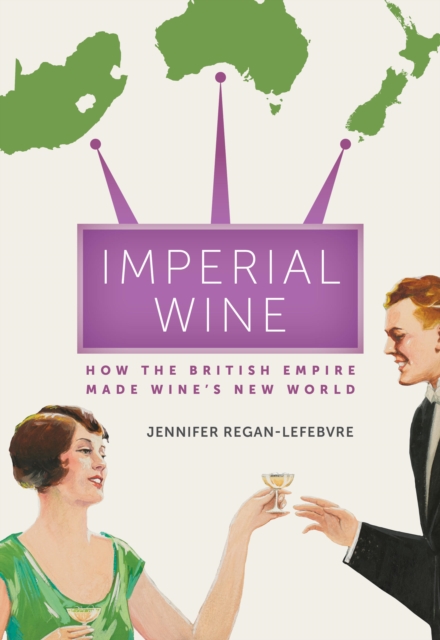
Imperial Wine
A fascinating deep dive into the colonial roots of the
global wine industry. Imperial Wine is a bold,
rigorous history of Britain's surprising role in creating the wine
industries of Australia, South Africa, and New Zealand. Here,
historian Jennifer Regan-Lefebvre bridges the genres of global
commodity history and imperial history, presenting provocative new
research in an accessible narrative. This is the first book to
argue that today's global wine industry exists as a result of
settler colonialism and that imperialism was central, not
incidental, to viticulture in the British colonies. Wineries were
established almost immediately after the colonization of South
Africa, Australia, and New Zealand as part of a civilizing mission:
tidy vines, heavy with fruit, were symbolic of Britain's
subordination of foreign lands. Economically and culturally,
nineteenth-century settler winemakers saw the British market as
paramount. However, British drinkers were apathetic towards what
they pejoratively called \"colonial wine.\" The tables only began to
turn after the First World War, when colonial wines were marketed
as cheap and patriotic and started to find their niche among
middle- and working-class British drinkers. This trend, combined
with social and cultural shifts after the Second World War, laid
the foundation for the New World revolution in the 1980s, making
Britain into a confirmed country of wine-drinkers and a massive
market for New World wines. These New World producers may have only
received critical acclaim in the late twentieth century, but
Imperial Wine shows that they had spent centuries wooing,
and indeed manufacturing, a British market for inexpensive colonial
wines. This book is sure to satisfy any curious reader who savors
the complex stories behind this commodity chain.
eBook

Wine and culture : vineyard to glass
This collection of essays by leading scholars explores the cultural, social and historical issues which inform the production and consumption of wine. It covers the latest ethnography, theoretical and ethnohistorical research on wine throughout the globe.
Book


Wine Politics
After reading this intriguing book, a glass of wine will be more than hints of blackberries or truffles on the palate. Written by the author of the popular, award-winning website DrVino.com, Wine Politics exposes a little-known but extremely influential aspect of the wine business—the politics behind it. Tyler Colman systematically explains how politics affects what we can buy, how much it costs, how it tastes, what appears on labels, and more. He offers an insightful comparative view of wine-making in Napa and Bordeaux, tracing the different paths American and French wines take as they travel from vineyard to dining room table. Colman also explores globalization in the wine business and illuminates the role of behind-the-scenes players such as governments, distributors, and prominent critics who wield enormous clout. Throughout, Wine Politics reveals just how deeply politics matters— right down to the taste of the wine in your glass tonight.
eBook