
Catalogue Search | MBRL


Are you sure you want to remove the book from the shelf?

{{itemTitle}}
10
result(s) for
"Winthrop, John, 1588-1649 Influence."
Sort by:

City on a hill : a History of American exceptionalism
In this illuminating book, Abram Van Engen shows how the phrase \"City on a Hill,\" from a 1630 sermon by Massachusetts Bay governor John Winthrop, shaped the story of American exceptionalism in the twentieth century. By tracing the history of Winthrop's speech, its changing status throughout time, and its use in modern politics, Van Engen asks us to reevaluate our national narratives. He tells the story of curators, librarians, collectors, archivists, antiquarians, and often anonymous figures who emphasized the role of the Pilgrims and Puritans in American history, paving the way for the saving and sanctifying of a single sermon. This sermon's rags-to-riches rise reveals the way national stories take shape and shows us how those tales continue to influence competing visions of the country - the many different meanings of America that emerge from its literary past--Book jacket.
Book
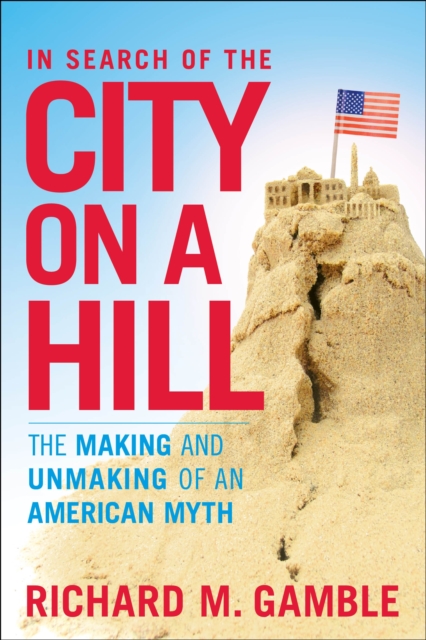
In Search of the City on a Hill
In Search of the City on a Hill challenges the widespread assumption that Americans have always used this potent metaphor to define their national identity.It demonstrates that America's 'redeemer myth' owes more to nineteenth- and twentieth-century reinventions of the Puritans than to the colonists' own conceptions of divine election.
eBook

As a city on a hill : the story of America's most famous lay sermon
\"'For we must consider that we shall be as a city upon a hill,' John Winthrop warned his fellow Puritans at New England's founding in 1630. More than three centuries later, Ronald Reagan remade that passage into a ... celebration of American promise. How were Winthrop's long-forgotten words reinvented as a central statement of American identity and exceptionalism? In [this book], ... Daniel Rodgers tells the surprising story of one of the most celebrated documents in the canon of the American idea\"--Dust jacket flap.
Book
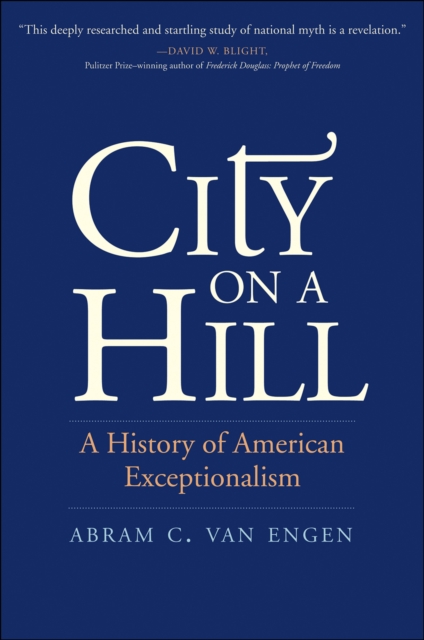
City on a Hill
A fresh, original history of America's national narratives, told through the loss, recovery, and rise of one influential Puritan sermon from 1630 to the present day In this illuminating book, Abram Van Engen shows how the phrase \"City on a Hill,\" from a 1630 sermon by Massachusetts Bay governor John Winthrop, shaped the story of American exceptionalism in the twentieth century. By tracing the history of Winthrop's speech, its changing status throughout time, and its use in modern politics, Van Engen asks us to reevaluate our national narratives. He tells the story of curators, librarians, collectors, archivists, antiquarians, and often anonymous figures who emphasized the role of the Pilgrims and Puritans in American history, paving the way for the saving and sanctifying of a single sermon. This sermon's rags-to-riches rise reveals the way national stories take shape and shows us how those tales continue to influence competing visions of the country-the many different meanings of America that emerge from its literary past.
eBook

Light Apparitions and the Shaping of Community in Winthrop's \History of New England\
The godly community Winthrop envisioned was a participatory one formed by the fluid interplay of religious and civic consciousness, one that was necessarily subject to change as the practical needs of the colonial project changed and that was given strength and legitimacy through consent but also through the reconciliation of dissent.2 The use of the light apparitions exercises this participatory act of interpretation through which religious and civic convictions were mutually shaped in response to the colony's uncertain, controversial, and mutable relation to the material world.
Journal Article
Puritanism and the Power of Sympathy
[...] the philosophy of sensibility held an optimistic belief that all people were innately good; individuals had a \"natural tendency to respond to the feelings of others\" (Dwyer 1032). [...] exploring the Puritan doctrine of fellow feeling could lead to a broader grasp of how sympathy functions in later literature- how the remnants of sign, doctrine, and duty, tied initially to a theology of election, might still influence narratives where the \"Author of Nature\" enables sympathetic responses only in those who possess \"a heart of sensibility,\" while simultaneously requiring readers \"to extend the hand of relief to all the necessitous\" (W. Brown 62, 68, 81).
Journal Article

Fallout From the Ice Age
The Global Crisis of the 17th Century Reconsidered by Geoffrey Parker, and Crisis, Chronology, and the Shape of European Social History by Jonathan Dewald, in American Historical Review, Oct 2008. For most of the 20th century, these upheavals were explained in the English-speaking world as fallout from the shift from feudalism to capitalism, writes Jonathan Dewald, a historian at the State University of New York at Buffalo.
Journal Article