
Catalogue Search | MBRL


Are you sure you want to remove the book from the shelf?

{{itemTitle}}
1,574
result(s) for
"Wireless communication systems -- Mathematics"
Sort by:

Stochastic Geometry for Wireless Networks
Covering point process theory, random geometric graphs and coverage processes, this rigorous introduction to stochastic geometry will enable you to obtain powerful, general estimates and bounds of wireless network performance and make good design choices for future wireless architectures and protocols that efficiently manage interference effects. Practical engineering applications are integrated with mathematical theory, with an understanding of probability the only prerequisite. At the same time, stochastic geometry is connected to percolation theory and the theory of random geometric graphs and accompanied by a brief introduction to the R statistical computing language. Combining theory and hands-on analytical techniques with practical examples and exercises, this is a comprehensive guide to the spatial stochastic models essential for modelling and analysis of wireless network performance.
eBook
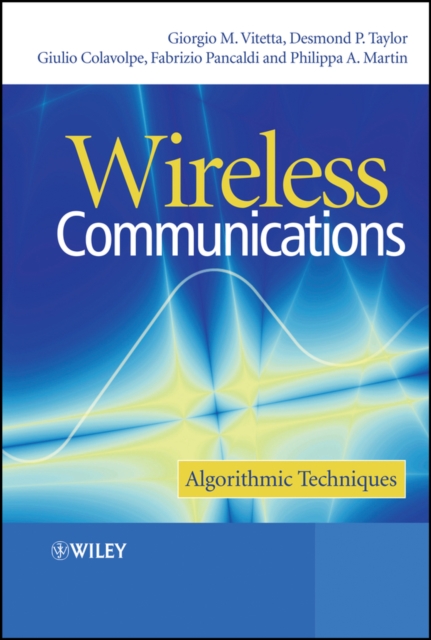
Wireless communications
\"This book introduces the theoretical elements at the basis of various classes of algorithms commonly employed in the physical layer (and, in part, in MAC layer) of wireless communications systems. It focuses on single user systems, so ignoring multiple access techniques. Moreover, emphasis is put on single-input single-output (SISO) systems, although some relevant topics about multiple-input multiple-output (MIMO) systems are also illustrated. Comprehensive wireless specific guide to algorithmic techniques Provides a detailed analysis of channel equalization and channel coding for wireless applications Unique conceptual approach focusing in single user systems Covers algebraic decoding, modulation techniques, channel coding and channel equalisation\"--
eBook

Behavioral Modeling and Predistortion of Wideband Wireless Transmitters
Covers theoretical and practical aspects related to the behavioral modelling and predistortion of wireless transmitters and power amplifiers. It includes simulation software that enables the users to apply the theory presented in the book. In the first section, the reader is given the general background of nonlinear dynamic systems along with their behavioral modelling from all its aspects. In the second part, a comprehensive compilation of behavioral models formulations and structures is provided including memory polynomial based models, box oriented models such as Hammerstein-based and Wiener-based models, and neural networks-based models. The book will be a valuable resource for design engineers, industrial engineers, applications engineers, postgraduate students, and researchers working on power amplifiers modelling, linearization, and design.
eBook

WAP Systems and Labeled Subshifts
The main object of this work is to present a powerful method of construction of subshifts which we use chiefly to construct WAP
systems with various properties. Among many other applications of this so called labeled subshifts, we obtain examples of null as well
as non-null WAP subshifts, WAP subshifts of arbitrary countable (Birkhoff) height, and completely scrambled WAP systems of arbitrary
countable height. We also construct LE but not HAE subshifts, and recurrent non-tame subshifts
eBook
Signal Processing for 5G: Algorithms and Implementations
Fa-Long Luo, Ph.D., IEEE Fellow Charlie Zhang, Ph.D., IEEE Fellow
A comprehensive and invaluable guide to 5G technology, implementation and practice in one single volume. For all things 5G, this book is a must-read. Signal processing techniques have played the most important role in wireless communications since the second generation of cellular systems. It is anticipated that new techniques employed in 5G wireless networks will not only improve peak service rates significantly, but also enhance capacity, coverage, reliability , low-latency, efficiency, flexibility, compatibility and convergence to meet the increasing demands imposed by applications such as big data, cloud service, machine-to-machine (M2M) and mission-critical communications. This book is a comprehensive and detailed guide to all signal processing techniques employed in 5G wireless networks. Uniquely organized into four categories, New Modulation and Coding, New Spatial Processing, New Spectrum Opportunities and New System-level Enabling Technologies, it covers everything from network architecture, physical-layer (down-link and up-link), protocols and air interface, to cell acquisition, scheduling and rate adaption, access procedures and relaying to spectrum allocations. All technology aspects and major roadmaps of global 5G standard development and deployments are included in the book.
Key Features: Offers step-by-step guidance on bringing 5G technology into practice, by applying algorithms and design methodology to real-time circuit implementation, taking into account rapidly growing applications that have multi-standards and multi-systems. Addresses spatial signal processing for 5G, in particular massive multiple-input multiple-output (massive-MIMO), FD-MIMO and 3D-MIMO along with orbital angular momentum multiplexing, 3D beamforming and diversity. Provides detailed algorithms and implementations, and compares all multicarrier modulation and multiple access schemes that offer superior data transmission performance including FBMC, GFDM, F-OFDM, UFMC, SEFDM, FTN, MUSA, SCMA and NOMA. Demonstrates the translation of signal processing theories into practical solutions for new spectrum opportunities in terms of millimeter wave, full-duplex transmission and license assisted access. Presents well-designed implementation examples, from individual function block to system level for effective and accurate learning. Covers signal processing aspects of emerging system and network architectures, including ultra-dense networks (UDN), software-defined networks (SDN), device-to-device (D2D) communications and cloud radio access network (C-RAN).
eBook

Rate-splitting multiple access for downlink communication systems: bridging, generalizing, and outperforming SDMA and NOMA
Space-division multiple access (SDMA) utilizes linear precoding to separate users in the spatial domain and relies on fully treating any residual multi-user interference as noise. Non-orthogonal multiple access (NOMA) uses linearly precoded superposition coding with successive interference cancellation (SIC) to superpose users in the power domain and relies on user grouping and ordering to enforce some users to fully decode and cancel interference created by other users.In this paper, we argue that to efficiently cope with the high throughput, heterogeneity of quality of service (QoS), and massive connectivity requirements of future multi-antenna wireless networks, multiple access design needs to depart from those two extreme interference management strategies, namely fully treat interference as noise (as in SDMA) and fully decode interference (as in NOMA).Considering a multiple-input single-output broadcast channel, we develop a novel multiple access framework, called rate-splitting multiple access (RSMA). RSMA is a more general and more powerful multiple access for downlink multi-antenna systems that contains SDMA and NOMA as special cases. RSMA relies on linearly precoded rate-splitting with SIC to decode part of the interference and treat the remaining part of the interference as noise. This capability of RSMA to partially decode interference and partially treat interference as noise enables to softly bridge the two extremes of fully decoding interference and treating interference as noise and provides room for rate and QoS enhancements and complexity reduction.The three multiple access schemes are compared, and extensive numerical results show that RSMA provides a smooth transition between SDMA and NOMA and outperforms them both in a wide range of network loads (underloaded and overloaded regimes) and user deployments (with a diversity of channel directions, channel strengths, and qualities of channel state information at the transmitter). Moreover, RSMA provides rate and QoS enhancements over NOMA at a lower computational complexity for the transmit scheduler and the receivers (number of SIC layers).
Journal Article

Energy-Efficient Routing in Wireless Sensor Networks: A Meta-heuristic and Artificial Intelligence-based Approach: A Comprehensive Review
Artificial Intelligence (AI) realizes Wireless Sensor Networks (WSNs) as a dynamic environment of battery-powered sensor nodes. These nodes are carefully built to monitor and record several environmental factors over a large area. The above nodes, which perform many activities in our everyday lives, may be considered the digital equivalents of our sensory faculties. Recent advances in network connection and computing capability have expanded WSN applications. Data capture and transmission to a distant server, frequently in an isolated place, are WSNs’ main purpose. These networks might be subterranean, underwater, terrestrial, or multimodal. They are utilized in industrial automation, traffic management, medical device monitoring, and other fields. Despite market growth, WSNs have several hurdles. Energy efficiency, storage and processing resource restrictions, bandwidth, error rates, scalability, and survival in hostile climates must be considered. This circumstance has made extending the longevity of these networks a major issue. Energy saving is a major difficulty in many vocations. Several bio-inspired algorithms have been developed to find the best route from member nodes to the sink node. These methods aim to reduce energy use and extend network life. This article investigates WSN routing and clustering, concentrating on optimization methods. We aim to give a comprehensive and insightful evaluation of WSN research, with an emphasis on AI integration. This study honors the development of clever methods to overcome WSNs’ various obstacles. The above issues will affect sensor-based connection in our increasing global environment, and our research shows our commitment to understanding and resolving them.
Journal Article

Revisiting QRS Detection Methodologies for Portable, Wearable, Battery-Operated, and Wireless ECG Systems
Cardiovascular diseases are the number one cause of death worldwide. Currently, portable battery-operated systems such as mobile phones with wireless ECG sensors have the potential to be used in continuous cardiac function assessment that can be easily integrated into daily life. These portable point-of-care diagnostic systems can therefore help unveil and treat cardiovascular diseases. The basis for ECG analysis is a robust detection of the prominent QRS complex, as well as other ECG signal characteristics. However, it is not clear from the literature which ECG analysis algorithms are suited for an implementation on a mobile device. We investigate current QRS detection algorithms based on three assessment criteria: 1) robustness to noise, 2) parameter choice, and 3) numerical efficiency, in order to target a universal fast-robust detector. Furthermore, existing QRS detection algorithms may provide an acceptable solution only on small segments of ECG signals, within a certain amplitude range, or amid particular types of arrhythmia and/or noise. These issues are discussed in the context of a comparison with the most conventional algorithms, followed by future recommendations for developing reliable QRS detection schemes suitable for implementation on battery-operated mobile devices.
Journal Article
Singularity: Scientific containers for mobility of compute
Here we present Singularity, software developed to bring containers and reproducibility to scientific computing. Using Singularity containers, developers can work in reproducible environments of their choosing and design, and these complete environments can easily be copied and executed on other platforms. Singularity is an open source initiative that harnesses the expertise of system and software engineers and researchers alike, and integrates seamlessly into common workflows for both of these groups. As its primary use case, Singularity brings mobility of computing to both users and HPC centers, providing a secure means to capture and distribute software and compute environments. This ability to create and deploy reproducible environments across these centers, a previously unmet need, makes Singularity a game changing development for computational science.
Journal Article

5G for the Connected World
<p><b>COMPREHENSIVE HANDBOOK DEMYSTIFIES 5G FOR TECHNICAL AND BUSINESS PROFESSIONALS IN MOBILE TELECOMMUNICATION FIELDS</b> <p>Much is being said regarding the possibilities and capabilities of the emerging 5G technology, as the evolution towards 5G promises to transform entire industries and many aspects of our society. <i>5G for the Connected World</i> offers a comprehensive technical overview that telecommunication professionals need to understand and take advantage of these developments. <p>The book offers a wide-ranging coverage of the technical aspects of 5G (with special consideration of the 3GPP Release 15 content), how it enables new services and how it differs from LTE. This includes information on potential use cases, aspects of radio and core networks, spectrum considerations and the services primarily driving 5G development and deployment. <p>The text also looks at 5G in relation to the Internet of Things, machine to machine communication and technical enablers such as LTE-M, NB-IoT and EC-GSM. Additional chapters discuss new business models for telecommunication service providers and vertical industries as a result of introducing 5G, and strategies for staying ahead of the curve. Other topics include: <ul> <li>Key features of the new 5G radio such as descriptions of new waveforms, massive MIMO and beamforming technologies, as well as spectrum considerations for 5G radio regarding all possible bands</li> <li>Drivers, motivations and an overview of the new 5G system – especially RAN architecture and technology enablers (e.g. service-based architecture, compute-storage split and network exposure) for native cloud deployments</li> <li>Mobile edge computing, Non-3GPP access, Fixed-Mobile Convergence</li> <li>Detailed overview of mobility management, session management and Quality of Service frameworks</li> <li>5G security vision and architecture</li> <li>Ultra-low latency and high reliability use cases and enablers, challenges and requirements (e.g. remote control, industrial automation, public safety and V2X communication)</li> <li>An outline of the requirements and challenges imposed by a massive number of devices connected to cellular networks</li> </ul> <p>While some familiarity with the basics of 3GPP networks is helpful, <i>5G for the Connected World</i> is intended for a variety of readers. It will prove a useful guide for telecommunication professionals, standardization experts, network operators, application developers and business analysts (or students working in these fields) as well as infrastructure and device vendors looking to develop and integrate 5G into their products, and deploy 5G radio and core networks.
eBook