
Catalogue Search | MBRL


Are you sure you want to remove the book from the shelf?

{{itemTitle}}
3,511
result(s) for
"Wisdom History."
Sort by:


Secrets of the Oracle
What is wisdom? Where does it come from? Where can we find it? And what does it mean in our lives?Shaw explores these questions by turning to the works of wisdom writers, whose words retain their meaning and transformative power even centuries after they were written.
eBook

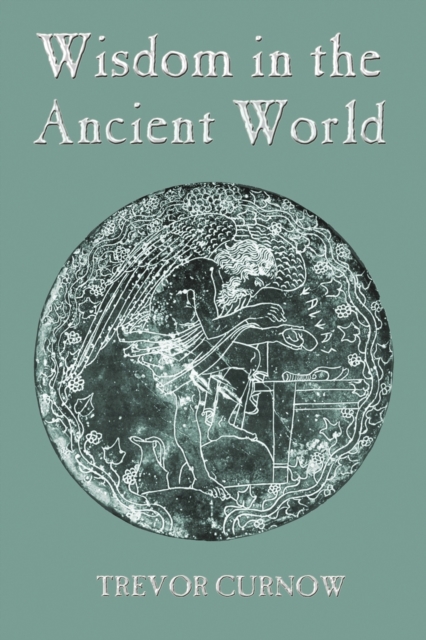
Wisdom in the Ancient World
This book brings the different aspects of the study of ancient wisdom together and presents it as a subject in its own right, looking at wise deities, wise figures from myth and legend, wise characters from ancient history, practices associated with wisdom (including divination and healing), and wisdom as it appears in ancient literature.
eBook

Wisdom and folly in Euripides
\"The volume throws fresh light on a major polarity in Euripidean drama, including its roots in the tradition and its reception in vase-painting and literature. Virtually all Euripidean characters are subject to folly and claim some measure of wisdom. Leading international scholars discuss the polarity and the plays' ambiguities from various angles and theoretical perspectives, offering trenchant insights into moral, social and historical issues.\"-- Provided by publisher
BOOK

The Rise of the Sage in Greek and Jewish Antiquity
Abstract
This article explores the emergence of the sage as an exemplar in Greek and Jewish antiquity. Greek philosophical writings and Jewish literary accounts are analysed, the latter including texts written in both Hebrew and Greek. The Greek and Jewish sources are compared in order to highlight (dis)similarities between them. It will be argued that the conception of the sage as an idealized figure and object of emulation originates from the classical Greek world, but it becomes integrated into the Jewish discourse on wisdom and good life in the later Hellenistic period. In spite of this shared element, the portrayals of the sage vary regarding the amount of concreteness and the discursive strategies in which his exemplarity is constructed.
Journal Article

Speaker and authority in old Norse wisdom poetry
\"While there is a long tradition of research into eddic poetry, including the poems classed as wisdom literature, much of this has approached the subject either as a primarily philological commentary or has addressed literary and thematic topics of individual or small groups of poems. This book offers a wide-ranging enquiry into the defining features of Old Norse wisdom, including the representation of wisdom in texts which cross traditional generic boundaries. It builds on recent advances in understanding of pre-Christian religion in Scandinavia, and calls on comparative and supporting work from several different disciplinary backgrounds (including literary theory, other medieval literatures and anthropology). Speaker and Authority interrogates important questions about the concept of knowledge, as well as its role in medieval Scandinavian society and its broader European cultural context\"-- Provided by publisher.
Book

Wisdom on the Move
Wisdom on the Move explores religious wisdom traditions in Late Antiquity and beyond. It traces the movement of such texts across linguistic, religious and cultural borders. Particular attention is paid to the monastic Apophthegmata patrum.
eBook

More than true : the wisdom of fairy tales
\"Few forms of storytelling have greater power to captivate the human mind than fairy tales, but where do these tales originate from, and what do they mean? ... Poet and bestselling author Robert Bly has been asking these questions throughout his career. Here Bly looks at six tales that have stood the test of time\"-- Provided by publisher.
Book
Proverbs 8, Christological Controversies, and the Pre-existence of the Son and Torah in the Third and Fourth Centuries
Abstract
This article argues that the opening of Genesis Rabbah 1 can be read productively in conversation with Christian controversies which raged from the middle of the third century to the fourth century. In rabbinic literature, it is not until the Amoraic period, in Palestine, that Proverbs 8 began to be employed as a proof of Torah's pre-existence. This is precisely the same time that Christians engaged in heated debate as to the pre-existence of the Son, also based on Proverbs 8, not least in Palestine. By way of a broad reading of the christological controversies of this era, and a close reading of the exegesis of Proverbs 8 in Genesis Rabbah 1, the obscure debate partners of Genesis Rabbah 1 come to light: Christians who were debating the pre-existence of Wisdom.
Journal Article