
Catalogue Search | MBRL


Are you sure you want to remove the book from the shelf?

{{itemTitle}}
26,031
result(s) for
"Witches"
Sort by:

Witches
\"Some of the most iconic pop-culture figures ever have been witches: the Wicked Witch of the West, the White Witch in The Chronicles of Narnia, Hermione in the Harry Potter books. But there's a long history of witch legends from around the world, including historical events condemning them, such as the Salem witch trials\"--Amazon.com.
Book

Witchcraft, Witches, and Violence in Ghana
Witchcraft violence is a feature of many contemporary African societies. In Ghana, belief in witchcraft and the malignant activities of putative witches is prevalent. Purported witches are blamed for all manner of adversities including inexplicable illnesses and untimely deaths. As in other historical periods and other societies, in contemporary Ghana, alleged witches are typically female, elderly, poor, and marginalized. Childhood socialization in homes and schools, exposure to mass media, and other institutional mechanisms ensure that witchcraft beliefs are transmitted across generations and entrenched over time. This book provides a detailed account of Ghanaian witchcraft beliefs and practices and their role in fueling violent attacks on alleged witches by aggrieved individuals and vigilante groups.
eBook


Johann Wier
This book deals with a fascinating and original claim in 16th-century Europe. Witches should be cured, not executed. It was the physician and scholar Johann Wier (1515-1588) who challenged the dominant idea. For his defense of witches, more than three centuries later, Sigmund Freud chose to put Wier's work among the ten books to be read. According to Wier, Satan seduced witches, thus they did not deserve to be executed, but they must be cured for their melancholy. When the witch hunt was rising, Wier was the first to use some of the arguments adopted in the emerging debate on religious tolerance in defence of witches. This is the first overall study of Wier which offers an innovative view of his thought, by highlighting Wier's sources and his attempts to involve theologians, physicians, and philosophers in his fight against cruel witch hunts. Johann Wier: Debating the Devil and Witches situates and explains his claim as a result of a moral and religious path as well as the outcome of his medical experience. The book aims to provide an insightful examination of Wier's works to read his pleas emphasizing the duty of every good Christian to not abandon anyone who strays from the flock of Christ. For these reasons, Wier was overwhelmed by bitter confutations, such as those of Jean Bodin, but he was also celebrated for his outstanding and prolific heritage for debating religious tolerance.
eBook

Hansel and Gretel
TRADITIONAL STORIES (CHILDREN'S / TEENAGE). 'Hansel and Gretel', one of the most notorious Brothers Grimm tales, is told in this book in a modern, original and engaging way thanks to the drawing by Agnese Baruzzi, a versatile and creative artist who developed the laser cut pages in the story, obtained by carving the paper. By turning them on the drawings below, the characters in the tale will move as if they were on stage, making the story even more engaging for young readers. Ages 5+
Book
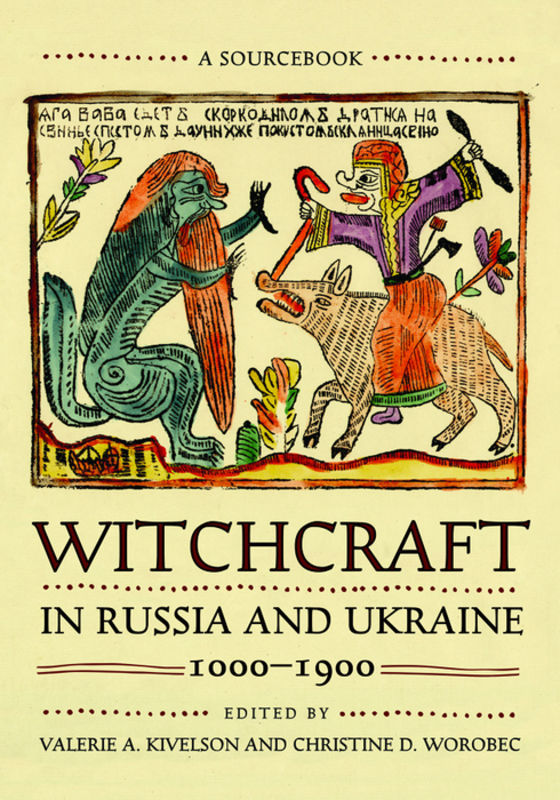
Witchcraft in Russia and Ukraine, 1000–1900
This sourcebook provides the first systematic overview of
witchcraft laws and trials in Russia and Ukraine from medieval
times to the late nineteenth century. Witchcraft in Russia and
Ukraine weaves scholarly commentary with
never-before-published primary source materials translated from
Polish, Russian, and Ukrainian. These sources include the earliest
references to witchcraft and sorcery, secular and religious laws
regarding witchcraft and possession, full trial transcripts, and a
wealth of magical spells. The documents present a rich panorama of
daily life and reveal the extraordinary power of magical words.
Editors Valerie A. Kivelson and Christine D. Worobec present new
analyses of the workings and evolution of legal systems, the
interplay and tensions between church and state, and the prosaic
concerns of the women and men involved in witchcraft proceedings.
The extended documentary commentaries also explore the shifting
boundaries and fraught political relations between Russia and
Ukraine.
eBook

Tiffky Doofky
Madame Tarsal's prediction that garbage collector Tiffky Doofky will meet his true love before sunset is upset by a bad-tempered witch, whose spell takes Tiffky far from Popville and very close to sundown.
Book

Marks of an Absolute Witch
This work explores the social foundation of evidence law in a specific historical social and cultural context - the debate concerning the proof of the crime of witchcraft in early modern England. In this period the question of how to prove the crime of witchcraft was the centre of a public debate and even those who strongly believed in the reality of witchcraft had considerable concerns regarding its proof. In a typical witchcraft crime there were no eyewitnesses, and since torture was not a standard measure in English criminal trials, confessions could not be easily obtained. The scarcity of evidence left the fact-finders with a pressing dilemma. On the one hand, using the standard evidentiary methods might have jeopardized any chance of prosecuting and convicting extremely dangerous criminals. On the other hand, lowering the evidentiary standards might have led to the conviction of innocent people. Based on the analysis of 157 primary sources, the book presents a picture of a diverse society whose members tried to influence evidentiary techniques to achieve their distinct goals and to bolster their social standing. In so doing this book further uncovers the interplay between the struggle with the evidentiary dilemma and social characteristics (such as class, position along the centre/periphery axis and the professional affiliation) of the participants in the debate. In particular, attention is focused on the professions of law, clergy and medicine. This book finds clear affinity between the professional affiliation and the evidentiary positions of the participants in the debate, demonstrating how the diverse social players and groups employed evidentiary strategies as a resource, to mobilize their interests. The witchcraft debate took place within the formative era of modern evidence law, and the book highlights the mutual influences between the witch trials and major legal developments.
eBook