
Catalogue Search | MBRL


Are you sure you want to remove the book from the shelf?

{{itemTitle}}
10
result(s) for
"Women Africa, North Social conditions 21st century."
Sort by:

Gender in the Middle East and North Africa : contemporary issues and challenges
\"The role of gender in the Middle East and North Africa is widely discussed-but often little understood. Seeking to close that gap, the authors of this comprehensive study explore a wide range of issues related to gender in the region as they have been unfolding since the Arab Spring\"-- Provided by publisher.
Book
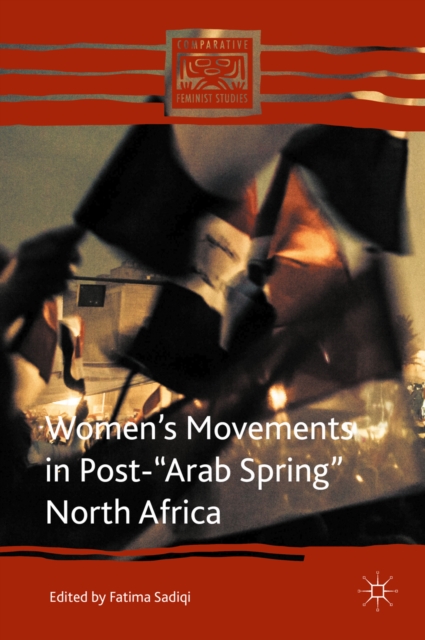
Women's movements in post-\Arab Spring\ North Africa
Centering on women's movements before, during, and after the revolutions, Women's Movements in Post-\"Arab Spring\" North Africa highlights the broader sources of authority that affected the emergence of new feminist actors and agents and their impact on the sociopolitical landscapes of the region.
eBook
Jobs for shared prosperity
Jobs are crucial for individual well-being. They provide a livelihood and, equally important, a sense of dignity. They are also crucial for collective well-being and economic growth. However, the rules and incentives that govern labor markets in Middle East and North Africa (MENA) countries have led to in efficient and inequitable outcomes, both individually and collectively. Several underlying distortions prevent a more productive use of human capital and have led to a widespread sense of unfairness and exclusion, of which the Arab Spring was a powerful expression. The Middle East and North Africa has a large reservoir of untapped human resources, with the world's highest unemployment rate among youth and the lowest participation of females in the labor force. Desirable jobs, defined as high paying or formal jobs, are few, and private employment is overwhelmingly of low added value. Overall, the region's labor markets can be characterized as being in efficient, inequitable, and locked in low productivity equilibrium.
eBook

A Quiet Revolution
In Cairo in the 1940s, Leila Ahmed was raised by a generation of women who never dressed in the veils and headscarves their mothers and grandmothers had worn. To them, these coverings seemed irrelevant to both modern life and Islamic piety. Today, however, the majority of Muslim women throughout the Islamic world again wear the veil. Why, Ahmed asks, did this change take root so swiftly, and what does this shift mean for women, Islam, and the West?
When she began her study, Ahmed assumed that the veil's return indicated a backward step for Muslim women worldwide. What she discovered, however, in the stories of British colonial officials, young Muslim feminists, Arab nationalists, pious Islamic daughters, American Muslim immigrants, violent jihadists, and peaceful Islamic activists, confounded her expectations. Ahmed observed that Islamism, with its commitments to activism in the service of the poor and in pursuit of social justice, is the strain of Islam most easily and naturally merging with western democracies' own tradition of activism in the cause of justice and social change. It is often Islamists, even more than secular Muslims, who are at the forefront of such contemporary activist struggles as civil rights and women's rights. Ahmed's surprising conclusions represent a near reversal of her thinking on this topic.
Richly insightful, intricately drawn, and passionately argued, this absorbing story of the veil's resurgence, from Egypt through Saudi Arabia and into the West, suggests a dramatically new portrait of contemporary Islam.
eBook

Engaging Modernity
Engaging Modernity is Ousseina Alidou’s rich and compelling portrait of Muslim women in Niger as they confront the challenges and opportunities of the twentieth century. Contrary to Western stereotypes of passive subordination, these women are taking control of their own lives and resisting domination from indigenous traditions, westernization, and Islam alike. Based on thorough scholarly research and extensive fieldwork—including a wealth of interviews—Alidou’s work offers insights into the meaning of modernity for Muslim women in Niger. Mixing biography with sociological data, social theory and linguistic analysis, this is a multilayered vision of political Islam, education, popular culture, and war and its aftermath. A gripping look at one of the Muslim world’s most powerful untold stories. Runner-up for the Aidoo-Snyder Book Prize, Women’s Caucus of the African Studies Association
eBook

Encountering the Transnational
When Muslim women from diverse national and cultural contexts meet one another through transnational dialogue and networking, what happens to their sense of identity and social agency? Addressing this question, Meena Sharify-Funk encountered women activists and intellectuals in North America, the Middle East, South Asia and Southeast Asia - women whose lives and visions have become linked by 'the transnational' despite their differing circumstances and intellectual backgrounds. The resultant work provides a rich and cliché-bursting account of women's reflections on a wide range of topics including: the status of women in Islam, the role of women as interpreters of religious norms, the relationship between secular and religious forms of self-identification, perceptions of Islamic-Western relations, experiences of marginalization, and opportunities for empowerment. Giving careful attention both to common threads in Muslim women's experiences and to the unique voices of remarkable women, this is a compelling account of conversations that are bringing new energy and dynamism into women's activism in a world of collapsing distances.
eBook

Financial sector development in africa
This edited volume contains eight studies of financial sector challenges in Africa that served as background studies for Financing Africa: Through the Crisis and Beyond. One of the major challenges for African financial systems is to expand financial services to a larger share of the population. The chapters in this area cover microfinance in Africa, the role of technology, reforms of payment infrastructure, and financing agriculture. Two chapters cover challenges in increasing long-term finance; one covers housing finance and the other the role of sovereign wealth fund. The book also contains a detailed discussion of bank regulation and supervision, especially in light of the current regulatory reforms in Europe and North America. The final chapter provides a political economy perspective, discussing the conditions for activist government policies in the financial sector.
eBook

Women's Economic Empowerment in Selected MENA Countries
This report examines how current legal provisions in Algeria, Egypt, Jordan, Libya, Morocco and Tunisia are impacting women’s ability to fully participate in economic life, both as employees and entrepreneurs. It is based on a comparative analysis of the various rights set out in constitutions, personal status laws, labour laws, in addition to tax and business laws. The report recognises the considerable progress made – in particular in the aftermath of the 2011 uprisings – following the adoption of constitutional and institutional reforms to strengthen women’s status.Yet ensuring sufficient opportunities for women remains a challenge in the six countries. The report suggests that this may be due to different factors such as: the existence of certain laws that are gender discriminatory, contradictions between various legal frameworks, lack of enforcement mechanisms, and barriers for women in accessing justice. Through targeted policies, countries can tackle these challenges, and help unleash women’s potential to boost growth, competitiveness and inclusive social development.
eBook