
Catalogue Search | MBRL


Are you sure you want to remove the book from the shelf?

{{itemTitle}}
37
result(s) for
"Women Europe History Middle Ages, 500-1500."
Sort by:


Women and Aristocratic Culture in the Carolingian World
Despite the wealth of scholarship in recent decades on medieval women, we still know much less about the experiences of women in the early Middle Ages than we do about those in later centuries. InWomen and Aristocratic Culture in the Carolingian World, Valerie L. Garver offers a fresh appraisal of the cultural and social history of eighth- and ninth-century women. Examining changes in women's lives and in the ways others perceived women during the early Middle Ages, she shows that lay and religious women, despite their legal and social constrictions, played integral roles in Carolingian society.
Garver's innovative book employs an especially wide range of sources, both textual and material, which she uses to construct a more complex and nuanced impression of aristocratic women than we've seen before. She looks at the importance of female beauty and adornment; the family and the construction of identities and collective memory; education and moral exemplarity; wealth, hospitality and domestic management; textile work, and the lifecycle of elite Carolingian women.
Her interdisciplinary approach makes deft use of canons of church councils, chronicles, charters, polyptychs, capitularies, letters, poetry, exegesis, liturgy, inventories, hagiography, memorial books, artworks, archaeological remains, and textiles. Ultimately,Women and Aristocratic Culture in the Carolingian Worldunderlines the centrality of the Carolingian era to the reshaping of antique ideas and the development of lasting social norms.
eBook


Heterosyncrasies
Heterosyncrasies looks to the foundation of modern society in the Middle Ages to question the heterosexuality of that history. From the letters of Heloise to Lollard heretical attacks on the Church, to Chaucer's Canterbury Tales, and the Amazons of medieval myth, Karma Lochrie focuses on female sexuality in the Middle Ages in an effort to discern a diversified understanding of it.
eBook

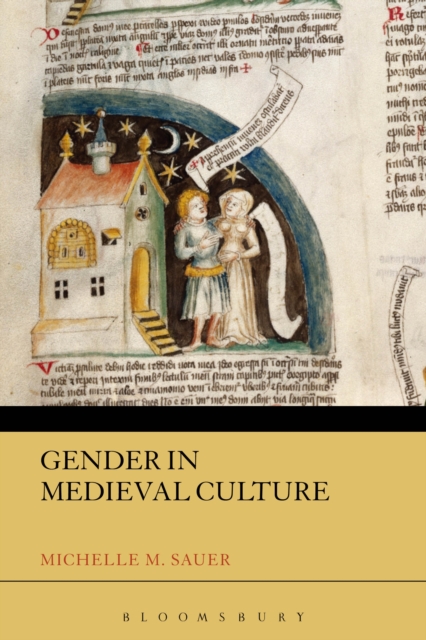
Gender in Medieval Culture
Using the idea of “performative essentialism,” meaning that gender in the Middle Ages was both a product of and a reaction to biology, social roles, and personal actions, Gender in Medieval Culture explores the roles men and women fulfilled in medieval Europe, while also suggesting that these functions were often surprisingly flexible. Although most facets of medieval life, including the law, literature, science, and religion, worked together to ensure that the natural state of woman was a fundamentally lesser being than man, there were exceptional situations where gender became fluid or malleable. For instance, when a woman chose a life of vowed virginity, rejecting the traditional female role of motherhood, she transcended the confines of her flesh, and performed in a rational masculine manner instead. Similarly, Christ was equally constructed as the ideal man and spouse, yet was also the ultimate model of perpetual virginity and was deemed maternal for his suffering for and nurturing of humanity. Ultimately, this volume examines the medieval world through the lens of gender and sexuality in order to create a fuller understanding of the gendered expectations we still live with today.
eBook


A Medieval Woman's Companion
What have a deaf nun, the mother of the first baby born to Europeans in North America, and a condemned heretic to do with one another? They are among the virtuous virgins, marvelous maidens, and fierce feminists of the Middle Ages who trail-blazed paths for women today. Without those first courageous souls who worked in fields dominated by men, women might not have the presence they currently do in professions such as education, the law, and literature. Focusing on women from Western Europe between c. 300 and 1500 CE in the medieval period and richly carpeted with detail, A Medieval Woman’s Companion offers a wealth of information about real medieval women who are now considered vital for understanding the Middle Ages in a full and nuanced way. Short biographies of 20 medieval women illustrate how they have anticipated and shaped current concerns, including access to education; creative emotional outlets such as art, theater, romantic fiction, and music; marriage and marital rights; fertility, pregnancy, childbirth, contraception and gynecology; sex trafficking and sexual violence; the balance of work and family; faith; and disability. Their legacy abides until today in attitudes to contemporary women that have their roots in the medieval period. The final chapter suggests how 20th and 21st century feminist and gender theories can be applied to and complicated by medieval women's lives and writings. Doubly marginalized due to gender and the remoteness of the time period, medieval women’s accomplishments are acknowledged and presented in a way that readers can appreciate and find inspiring. Ideal for high school and college classroom use in courses ranging from history and literature to women's and gender studies, an accompanying website with educational links, images, downloadable curriculum guide, and interactive blog will be made available at the time of publication.
eBook

