
Catalogue Search | MBRL


Are you sure you want to remove the book from the shelf?

{{itemTitle}}
1,793
result(s) for
"Women Evolution."
Sort by:

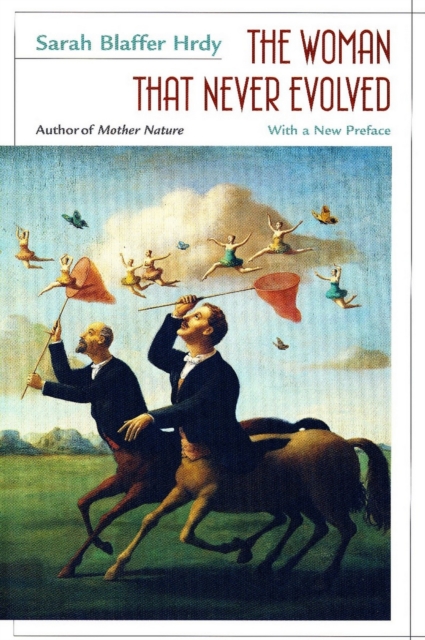
The woman that never evolved: with a new preface and bibliographical updates
Hailed as a ground-breaking synthesis of feminism and evolutionary theory when first published, The Woman That Never Evolved is a bold and refreshing answer to contemporary versions of social Darwinism that shoehorn female nature into narrow stereotypes. Sarah Blaffer Hrdy, a leader in modern primatology, argues that evolutionary theorists' emphasis on sexual competition among males for access to females overlooks selection pressures on females themselves. In a vivid account of what female primates themselves actually do to secure their own reproductive advantage, she demolishes myths about sexually passive, \"coy,\" compliant, exclusively nurturing females. Her lucid and compelling account of the great range of behaviors in many species of primates expands the concept of female nature to include the full range of selection pressures on females, and reminds us of the true complexity and dynamism of the evolutionary story.
eBook

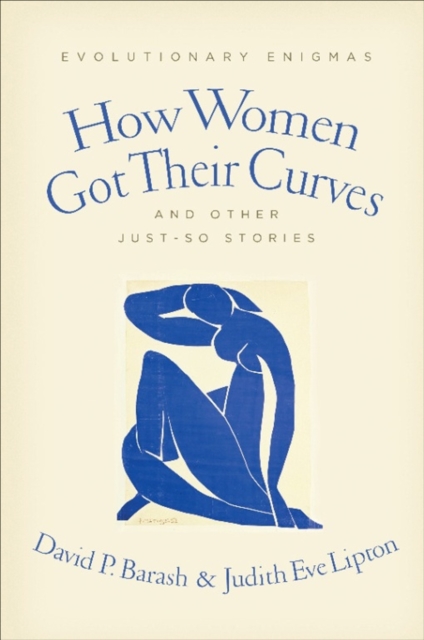
How Women Got Their Curves and Other Just-So Stories
So how did women get their curves? Why do they have breasts, while other mammals only develop breast tissue while lactating, and why do women menstruate, when virtually no other beings do so? What are the reasons for female orgasm? Why are human females kept in the dark about their own time of ovulation and maximum fertility, and why are they the only animals to experience menopause?David P. Barash and Judith Eve Lipton, coauthors of acclaimed books on human sexuality and gender, discuss the theories scientists have advanced to explain these evolutionary enigmas (sometimes called \"Just-So stories\" by their detractors) and present hypotheses of their own. Some scientific theories are based on legitimate empirical data, while others are pure speculation. Barash and Lipton distinguish between what is solid and what remains uncertain, skillfully incorporating their expert knowledge of biology, psychology, animal behavior, anthropology, and human sexuality into their entertaining critiques. Inviting readers to examine the evidence and draw their own conclusions, Barash and Lipton tell an evolutionary suspense story that captures the excitement and thrill of true scientific detection.
eBook


The evolving female
A human female is born, lives her life, and dies within the space of a few decades, but the shape of her life has been strongly influenced by 50 million years of primate evolution and more than 100 million years of mammalian evolution. How the individual female plays out the stages of her life--from infancy, through the reproductive period, to old age--and how these stages have been formed by a long evolutionary process, is the theme of this collection. Written by leading scholars in fields ranging from evolutionary biology to cultural anthropology, these essays together examine what it means to be female, integrating the life histories of marine mammals, monkeys, apes, and humans. The result is a fascinating inquiry into the similarities among the ways females of different species balance the need for survival with their role in reproduction and mothering.
The Evolving Femaleoffers an outlook integrating life history with an intimate examination of female life paths. Behavior, anatomy and physiology, growth and development, cultural identity of women, the individual, and the society are among the topics investigated. In addition to the editors, the contributors are Linda Fedigan, Kathryn Ono, Joanne Reiter, Barbara Smuts, Mariko Hiraiwa-Hasegawa, Mary McDonald Pavelka, Caroline Pond, Robin McFarland, Silvana Borgognini Tarli and Elena Repetto, Gilda Morelli, Patricia Draper, Catherine Panter-Brick, Virginia J. Vitzthum, Alison Jolly, and Beverly McLeod.
eBook

One step sideways, three steps forward : one woman's path to becoming a biologist
Scientist Rosemary Grant's journey in life has involved detours and sidesteps - not the shortest or the straightest of paths, but one that has led her to the top of evolutionary biology. In this engaging and moving book, Grant tells the story of her life and career - from her childhood love of nature in England's Lake District to an undergraduate education at the University of Edinburgh through a swerve to Canada and teaching, followed by marriage, children, a PhD at age forty-nine, and her life's work with Darwin's finches in the Galápagos Islands. Grant's unorthodox career is one woman's solution to the problem of combining professional life as a field biologist with raising a family.
BOOK
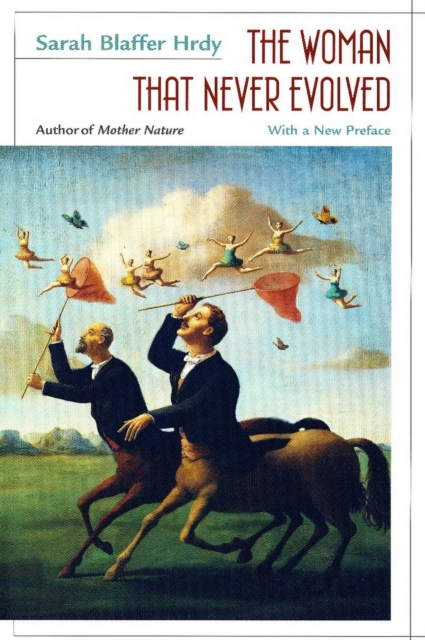
The Woman That Never Evolved
Hrdy argues that evolutionary theorists' emphasis on sexual competition among males for access to females overlooks selection pressures on females themselves. In this account of what female primates themselves do to secure their own reproductive advantage, she demolishes myths about sexually passive, \"coy,\" compliant, exclusively nurturing females.
eBook

In ascension
Leigh grew up in Rotterdam, drawn to the waterfront as a refuge from her unhappy home life and volatile father. Enchanted by the marine world of her childhood, she excels in postgraduate research on ancient algae. When an unfathomable vent appears in the mid-Atlantic floor, Leigh joins the investigating team; what she finds there will change her life forever. Around the same time, a trio of engineers, unknown to each other, make a seismic breakthrough in rocket propulsion, announcing an almost limitless era of space exploration. Billions of dollars is poured into projects, and Leigh's classified research on the ocean vent sees her recruited to develop an experimental food source for off-world travel. From her base in the Mojave desert, she's drawn further into the space agency's work, where she learns of a series of anomalies suggesting a beacon sent from the far side of the solar system.
Book
