
Catalogue Search | MBRL


Are you sure you want to remove the book from the shelf?

{{itemTitle}}
1,167
result(s) for
"Women Government policy Great Britain."
Sort by:

Regulating women
A number of women’s issues serve to create novel policy problems that require creative, and sometimes unique, regulatory and legal responses. This book embarks upon a comparative case study approach to explore UK policymaking in the areas of abortion, rape, prostitution and pornography in turn. Each chapter engages a different institutional perspective to explore the influence of a range of bodies such as the legal system, medical profession, civil society, police force and mass media. The analysis reveals a common thread that runs throughout decision-making in these areas; a constant balancing act between regulation that purports to protect women, and regulation that supposedly reflects female liberation, with a continual dance between the labels of ‘criminal’ and ‘victim’ being performed by policy actors. Largely reflective of a dogmatic approach to the status of women, it is argued that different institutions retain strongholds over policymaking in these domains, prohibiting a joined-up approach. This has served to perpetuate harmful and negative stereotyping of women’s issues and create countless conundrums when the activities of women fall into more than one policy category.
eBook

Race, gender and the body in British immigration control : subject to examination
\"Race, Gender and the Body in British Immigration Control provides the most detailed account of the virginity testing controversy in the late 1970s, and demonstrates that this abusive practice, which was endured by South Asian women for more than a decade, was part of a wider culture of mistreatment and discrimination that occurred within the immigration system authorized by the state. Using recently opened government documents, Smith and Marmo offer a unique insight into this matter and uncover the extent to which these women were scrutinized, interrogated and subject to physical examination at the border. Combining cutting edge criminological theory and historical research, this book proposes that the contemporary British immigration control system should be viewed as an attempt to replicate colonial hierarchies upon migrants in the post-imperial era. For this reason, the abuses of human rights at the border became a secondary issue to the need of the post-imperial British nation-state to enforce strict immigration controls\"-- Provided by publisher.
Book

Race, gender and the body in British immigration control : subject to examination
01
02
Race, Gender and the Body in British Immigration Cont ro l provides the most detailed account of the virginity testing controversy in the late 1970s, and demonstrates that this abusive practice, which was endured by South Asian women for more than a decade, was part of a wider culture of mistreatment and discrimination that occurred within the immigration system authorized by the state. Using recently opened government documents, Smith and Marmo offer a unique insight into this matter and uncover the extent to which these women were scrutinized, interrogated and subject to physical examination at the border. Combining cutting-edge criminological theory and historical research, this book proposes that the contemporary British immigration control system should be viewed as an attempt to replicate colonial hierarchies upon migrants in the post-imperial era. For this reason, the abuses of human rights at the border became a secondary issue to the need of the post-imperial British nation-state to enforce strict immigration controls.
04
02
Introduction
1. Decolonisation and the Creation of the British Immigration Control System
2. The Border as a Filter: Maintaining the Divide in the Post-Imperial Era
3. Reorienting the South Asian Female Body: the Practice of 'Virginity Testing' and the Treatment of Migrant Women
4. Deny, Normalise and Obfuscate: the Government Response to the Virginity Testing Practice and Other Physical Abuses
5. The Postcolonial World Stage: Immigration and Britain's International Reputation
6. Discrimination by other Means: Further Restrictions on Migrant Women and Children under the Conservatives
Conclusion
02
02
This book analyses the practice of virginity testing endured by South Asian women who wished to enter Britain between the late 1960s and the early 1980s, and places this practice into a wider historical context. Using recently opened government documents the extent to which these women were interrogated and scrutinized at the border is uncovered.
08
02
\"An important and revelatory study of a shameful episode in 20th century British immigration history that was shaped by Imperial racism.\" - Alan Travis, Home Affairs Editor, The Guardian \"It is impossible to over-estimate the importance of Smith and Marmo's study. Their chilling documentation of abuses permitted – and vigorously denied – by the Home Office represents feminist scholarship at its best.\" - Philippa Levine, Mary Helen Thompson Centennial Professor in the Humanities, University of Texas at Austin, US \"This historical study examines the intertwining of 'race', gender and the body in the application of immigration controls in Britain since the 1970s. Drawing on research in British Government archives, 'Race, Gender and the Body in British Immigration Control' begins with the shocking case of virginity testing of a 35 year old woman, who arrived at Heathrow Airport, London in 1979 to marry her fiancé. Smith and Marmo unpick these obscene practices as symptomatic of the de-humanising treatment of migrants from the former colonies and the dense racialized, sexual politics of British border controls. Crucially, Smith and Marmo also explore the incredible resistance of South Asian women and anti-deportation activists against the discriminatory practices of the British state. This important new history of immigration control speaks directly to the contemporary situation of border securitisation in Britain and beyond. It will be of interest to, and will be widely read by all interested in migration, citizenship, human rights, post-colonial migration, and histories of resistance to unjust border controls.\" - Dr Imogen Tyler, Senior Lecturer in Sociology, Lancaster University, UK
13
02
Evan Smith is Vice-Chancellor's Postdoctoral Research Fellow in the School of International Studies at Flinders University, Australia. He has written widely on the British immigration control system, the politics of race in Britain and the British far left.
Marinella Marmo is Associate Professor in Criminology at Flinders University Law School, Australia. Her research interests include international criminal justice, transnational crime and comparative criminology.
eBook
Women Workers in the Second World War
The Second World War is often seen as a period of emancipation, because of the influx of women into paid work, and because the state took steps to relieve women of domestic work.
This study challenges such a picture. The state approached the removal of women from the domestic sphere with extreme caution, in spite of the desperate need for women's labour in war work. Women's own preferences were frequently neglected or distorted in the search for a compromise between production and patriarchy. However, the enduring practices of paying women less and treating them as an inferior category of workers led to growth in the numbers and proportions of women employed after the war in many areas of work.
Penny Summerfield concludes that the war accelerated the segregation of women in 'inferior' sectors of work, and inflated the expectation that working women would bear the double burden without a redistribution of responsibility for the domestic sphere between men, women and the state.
First published in 1984, this is an important book for students of history, sociology and women's studies at all levels.
eBook

Women and Politics in Early Modern England, 1450–1700
This collection of essays examines women's involvement in politics in early modern England, as writers, as members of kinship and patronage networks, and as petitioners, intermediaries and patrons. It challenges conventional conceptualizations of female power and influence, defining 'politics' broadly in order to incorporate women excluded from formal, male-dominated state institutions. The chapters embrace a range of interdisciplinary approaches: historical, literary, palaeographic, linguistic and gender based. They deal with a variety of issues related to female intervention within political spheres, including women's rhetorical, persuasive and communicative skills; the production by women of a range of texts that can be termed 'political'; the politicization of marital, family and kinship networks; and female involvement in patronage and court politics. Women and Politics in Early Modern England, 1450-700 also looks at ways in which images of female power and authority were represented within canonical texts, such as Shakespeare's plays and Milton's epic poetry. The volume extends the range of areas and texts for the study of women, gender and politics, and locates women's political, social and cultural activities within the contexts of the family, locality and wider national stage. It argues for a blurring of the boundaries between the traditional categories of the 'public' and the 'private,' the 'domestic' and the 'political'; and enhances our understanding of the ways in which women exerted political force through informal, intimate and personal, as well as more official, and formal channels of power. As a whole the book makes an important contribution to the reassessment of early modern politics from the perspective of women.
Contents: Introduction: Rethinking women and politics in early modern England, James Daybell; Sisterhood, friendship and the power of English aristocratic women, 1450-1550, Barbara J. Harris; A rhetoric of requests: genre and linguistic scripts in Elizabethan women's suitors' letters, Lynne Magnusson; Politics in the Elizabethan Privy Chamber: Lady Mary Sidney and Kat Ashley, Natalie Mears; Portingale women and politics in late Elizabethan London, Alan Stewart; Negotiating favour: the letters of Lady Ralegh, Karen Robertson; 'Suche newes as on the Quenes hye wayes we have mett': the news and intelligence networks of Elizabeth Talbot, countess of Shrewsbury (c.1527-1608), James Daybell; Esther Inglis and the English succession crisis of 1599, Tricia Bracher; The Cavendish-Talbot women: playing a high-stakes game, Sara Jayne Steen; Aristocratic women, power, patronage and family networks at the Jacobean Court, 1603-25, Helen Payne; Anne of Denmark and the historical contextualisation of Shakespeare and Fletcher's Henry VIII, Susan Frye; Mothers, lovers and others: royalist women, Jerome de Groot; Beyond microhistory: the use of women's manuscripts in a widening political arena, Elizabeth Clarke; Loyal and dutiful subjects: English nuns and Stuart politics, Claire Walker; Assuming gentility: Thomas Middleton, Mary Carleton, Aphra Behn, Valerie Wayne; Index.
eBook

Gender and political recruitment : theorizing institutional change
This book explores the gendered dynamics of institutional innovation, continuity and change in candidate selection and recruitment. Drawing on the insights of feminist institutionalism, it extends the 'supply and demand model' of political recruitment via a micro-level case study of the candidate selection process in post-devolution Scotland.
eBook
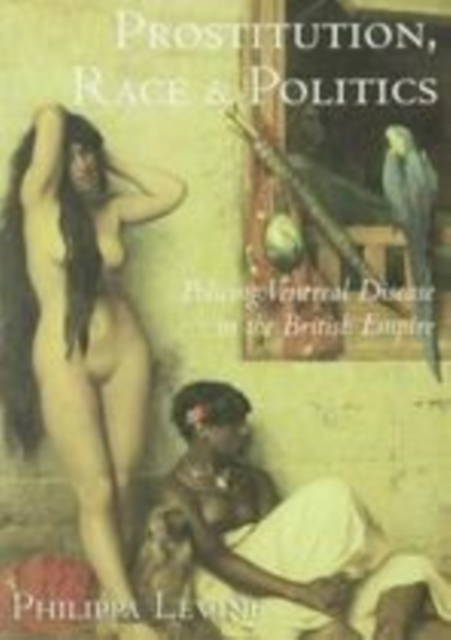
Prostitution, Race, and Politics
In addition to shouldering the blame for the increasing incidence of venereal disease among sailors and soldiers, prostitutes throughout the British Empire also bore the burden of the contagious diseases ordinances that the British government passed. By studying how British authorities enforced these laws in four colonial sites between the 1860s and the end of the First World War, Philippa Levine reveals how myths and prejudices about the sexual practices of colonized peoples not only had a direct and often punishing effect on how the laws operated, but how they also further justified the distinction between the colonizer and the colonized.
eBook
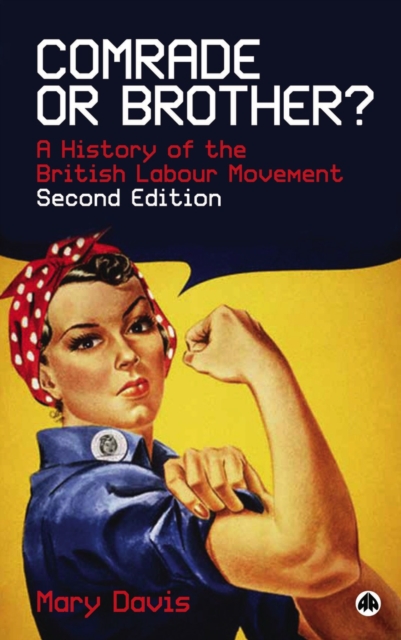
Comrade or Brother?
'The book stands comparison with A.L.Morton's 'People's History' and G.D.H. Cole's 'Common People'. But it is more than just this. It is in a real sense a history for our own times.' John Foster, Emeritus Professor, University of the West of Scotland 'This book is ideal for its purpose. I only wish it had been available in the decades when I was teaching trade union courses.' Jim Fryth, Labour History Review 'At last a readable and accessible general history of the labour movement ... Highly recommended.' Manchester TUC Newsletter --A revised, updated and expanded edition of this classic feminist account of British labour history-- Critical and iconoclastic, Comrade or Brother? traces the history of the British Labour Movement from its beginnings at the onset of industrialisation through its development within a capitalist society, up to the end of the twentieth-century. Written by a leading activist in the labour movement, the book redresses the balance in much labour history writing. It examines the place of women and the influence of racism and sexism as well as providing a critical analysis of the rival ideologies which played a role in the uneven development of the labour movement.
eBook

Welfare Hot Buttons
Sylvia Bashevkin probes the fate of single mothers on social assistance during the period when three \"third way\" political executives were in office ? Bill Clinton (US), Jean Chrétien (Canada), and Tony Blair (Great Britain).
eBook