
Catalogue Search | MBRL


Are you sure you want to remove the book from the shelf?

{{itemTitle}}
107
result(s) for
"Women Political activity India."
Sort by:


Everyday Nationalism
Hindu nationalism has been responsible for acts of extreme violence against religious minorities and is a dominant force on the sociopolitical landscape of contemporary India. How does such a violent and exclusionary movement recruit supporters? How do members navigate the tensions between the normative prescriptions of such movements and competing ideologies? To understand the expansionary power of Hindu nationalism, Kalyani Menon argues, it is critical to examine the everyday constructions of politics and ideology through which activists garner support at the grassroots level. Based on fieldwork with women in several Hindu nationalist organizations, Menon explores how these activists use gendered constructions of religion, history, national insecurity, and social responsibility to recruit individuals from a variety of backgrounds. As Hindu nationalism extends its reach to appeal to increasingly diverse groups, she explains, it is forced to acknowledge a multiplicity of positions within the movement. She argues that Hindu nationalism's willingness to accommodate dissonance is central to understanding the popularity of the movement.Everyday Nationalismcontends that the Hindu nationalist movement's power to attract and maintain constituencies with incongruous beliefs and practices is key to its growth. The book reveals that the movement's success is facilitated by its ability to become meaningful in people's daily lives, resonating with their constructions of the past, appealing to their fears in the present, presenting itself as the protector of the country's citizens, and inventing traditions through the use of Hindu texts, symbols, and rituals to unite people in a sense of belonging to a nation.
eBook

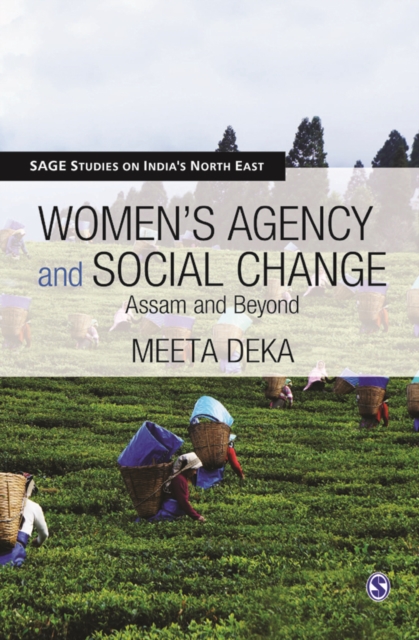
Women's agency and social change : Assam and beyond
Women's Agency and Social Change: Assam and Beyond focuses on varied oppression, power relations and ideologies embedded in the complex yet interdependent social, political, economic and legal structures, and women's subordination therein.British intervention, 1826–1947, by itself did not impact the agency aspect on women directly, but the emergence of new forces and factors sowed the seeds of women's agency to impact social change, even if minimal. In the post-Independence period, British colonial legacy perpetuated the subordination of women through caste and class hierarchy at several levels, but an undercurrent of a feminist struggle persisted, not merely as a movement but also at individual levels.The book is written with the hope of encouraging future research on women's experiences in the Northeastern region of India, and elsewhere; hence, a discussion on sources, methods and methodology is included in the conclusion. This book is based on the belief that knowledge production is, in itself, the praxis against oppressive structures and the need to understand the historical processes that slowly transformed women to become catalysts of social transformation.
eBook

Gender and Radical Politics in India
The Naxalbari movement marks a significant moment in the postcolonial history of India. Beginning as an armed peasant uprising in 1967 under the leadership of radical communists, the movement was inspired by the Marxist-Leninist theory of revolution and involved a significant section of the contemporary youth from diverse social strata with a vision of people’s revolution. It inspired similar radical movements in other South Asian countries such as Nepal.
Arguing that the history and memory of the Naxalbari movement is fraught with varied gendered experiences of political motivation, revolutionary activism, and violence, this book analyses the participation of women in the movement and their experiences. Based on extensive ethnographic and archival research, the author argues that women’s emancipation was an integral part of their vision of revolution, and many of them identified the days of their activism as magic moments, as a period of enchanted sense of emancipation. The book places the movement into the postcolonial history of South Asia. It makes a significant contribution to the understanding of radical communist politics in South Asia, particularly in relation to issues concerning the role of women in radical politics.
1. Introduction: In Search of the Definition of Naxalbari 2. Through the Looking Glass of Gender 3. Multiple Patriarchies: Politics, Power, and Masculinity 4. Speaking Silence: Continuous Politics and Discrete Memory 5. Acts of Agency: Political Activism and Identity in Women’s Words 6. Weapons and Wounds: The Discourse of Violence 7. Conclusion: Third World, Second Sex: Sisterhood of Resistance
Mallarika Sinha Roy is Assistant Professor in the Department of Regional and Cross-Cultural Studies at Copenhagen University, Denmark. Her research interests include gender studies, social movements, postcolonial studies and South Asian History and Politics.
eBook

Fields of Protest
The women’s movement in India has a long and rich history in which millions of women live, work, and struggle to survive in order to remake their family, home, and social lives. Using an innovative and comparative perspective, Ray offers a unique look at Indian activist women and adds a new dimension to the study of women’s movements on a global level.
eBook

Life Histories of Women Panchayat Sarpanches from Haryana, India
This volume represents a collection of life histories of women who live in rural Haryana. It looks at the impact of the 73rd Amendment to India's constitution, which introduced reservations in the political arena for women. The Panchayati Raj Act of 1992 reserved one third of all Sarpanch positions for women, and granted constitutional status to the Panchayat system, outlining its specific functions and jurisdiction. This book enhances existing scholarship on the impact of these changes in that it provides the opportunity for women Sarpanches from Haryana to speak for themselves and reflect upon their journey. Ten elected women Sarpanches share their stories about their lives, from childhood to adolescence to adulthood. Their life histories address the following questions: Who are these women who agreed to run for a reserved seat in the elections? What motivated them? Why were they asked to run? What barriers do they face? Do they feel they are making a difference? Indeed, these stories reflect the lived realities of the women impacted by the changes in legislation.
eBook


Quotas for women in politics : gender and candidate selection reform worldwide
In recent years, parties and legislatures in more than 100 countries have adopted quotas for the selection of female candidates to political office. This book addresses quotas as a global phenomenon and develops a framework for explaining their adoption and mixed effects on the numbers of women elected.
eBook