
Catalogue Search | MBRL


Are you sure you want to remove the book from the shelf?

{{itemTitle}}
4,383
result(s) for
"Women Suffrage."
Sort by:


To Be Equals in Our Own Country
To Be Equals in Our Own Country chronicles the bitter struggle for women's suffrage in Quebec, the last province to grant Canadian women this fundamental human right.
eBook
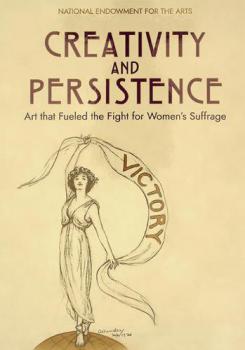
Creativity and persistence : art that fueled the fight for women's suffrage
\"The National Endowment for the Arts commemorates how the arts were critical to the ultimate success of the women's suffrage movement--just as they have been critical to countless social and political movements before and since. The arts--from poetry to visual arts to fashion--have a unique ability to serve as a rallying cry, disseminating messages across large audiences, and inspiring us in a way that few other things can\"-- Provided by publisher.
Book

The Politics of Women's Rights
Here Christina Wolbrecht boldly demonstrates how the Republican and Democratic parties have helped transform, and have been transformed by, American public debate and policy on women's rights. She begins by showing the evolution of the positions of both parties on women's rights over the past five decades. In the 1950s and early 1960s, Republicans were slightly more favorable than Democrats, but by the early 1980s, the parties had polarized sharply, with Democrats supporting, and Republicans opposing, such policies as the Equal Rights Amendment and abortion rights. Wolbrecht not only traces the development of this shift in the parties' relative positions--focusing on party platforms, the words and actions of presidents and presidential candidates, and the behavior of the parties' delegations in Congress--but also seeks to explain the realignment.
The author considers the politically charged developments that have contributed to a redefinition and expansion of the women's rights agenda since the 1960s--including legal changes, the emergence of the modern women's movement, and changes in patterns of employment, fertility, and marriage. Wolbrecht explores how party leaders reacted to these developments and adopted positions in ways that would help expand their party's coalition. Combined with changes in those coalitions--particularly the rise of social conservatism within the GOP and the affiliation of social movement groups with the Democratic party--the result was the polarization characterizing the parties' stances on women's rights today.
eBook


Practicing Citizenship
By 1893, the Supreme Court had officially declared women to be citizens, but most did not have the legal right to vote. In Practicing Citizenship, Kristy Maddux provides a glimpse at an unprecedented alternative act of citizenship by women of the time: their deliberative participation in the Chicago World's Fair of 1893.
Hailing from the United States and abroad, the more than eight hundred women speakers at the World's Fair included professionals, philanthropists, socialites, and reformers addressing issues such as suffrage, abolition, temperance, prison reform, and education. Maddux examines the planning of the event, the full program of women speakers, and dozens of speeches given in the fair's daily congresses. In particular, she analyzes the ways in which these women shaped the discourse at the fair and modeled to the world practices of democratic citizenship, including deliberative democracy, racial uplift, organizing, and economic participation. In doing so, Maddux shows how these pioneering women claimed sociopolitical ground despite remaining disenfranchised.
This carefully researched study makes significant contributions to the studies of rhetoric, American women's history, political history, and the history of the World's Fair itself. Most importantly, it sheds new light on women's activism in the late nineteenth century; even amidst the suffrage movement, women innovated practices of citizenship beyond the ballot box.
eBook


Suffrage Reconstructed
The Fourteenth Amendment, ratified on July 9, 1868, identified all legitimate voters as \"male.\" In so doing, it added gender-specific language to the U.S. Constitution for the first time. Suffrage Reconstructed is the first book to consider how and why the amendment's authors made this decision. Vividly detailing congressional floor bickering and activist campaigning, Laura E. Free takes readers into the pre- and postwar fights over precisely who should have the right to vote. Free demonstrates that all men, black and white, were the ultimate victors of these fights, as gender became the single most important marker of voting rights during Reconstruction.
Free argues that the Fourteenth Amendment's language was shaped by three key groups: African American activists who used ideas about manhood to claim black men's right to the ballot, postwar congressmen who sought to justify enfranchising southern black men, and women's rights advocates who began to petition Congress for the ballot for the first time as the Amendment was being drafted. To prevent women's inadvertent enfranchisement, and to incorporate formerly disfranchised black men into the voting polity, the Fourteenth Amendment's congressional authors turned to gender to define the new American voter. Faced with this exclusion some woman suffragists, most notably Elizabeth Cady Stanton, turned to rhetorical racism in order to mount a campaign against sex as a determinant of one's capacity to vote. Stanton's actions caused a rift with Frederick Douglass and a schism in the fledgling woman suffrage movement. By integrating gender analysis and political history, Suffrage Reconstructed offers a new interpretation of the Civil War-era remaking of American democracy, placing African American activists and women's rights advocates at the heart of nineteenth-century American conversations about public policy, civil rights, and the franchise.
The Fourteenth Amendment, ratified on July 9, 1868, identified all legitimate voters as \"male.\" In so doing, it added gender-specific language to the U.S. Constitution for the first time.Suffrage Reconstructedis the first book to consider how and why the amendment's authors made this decision. Vividly detailing congressional floor bickering and activist campaigning, Laura E. Free takes readers into the pre- and postwar fights over precisely who should have the right to vote. Free demonstrates that all men, black and white, were the ultimate victors of these fights, as gender became the single most important marker of voting rights during Reconstruction.Free argues that the Fourteenth Amendment's language was shaped by three key groups: African American activists who used ideas about manhood to claim black men's right to the ballot, postwar congressmen who sought to justify enfranchising southern black men, and women's rights advocates who began to petition Congress for the ballot for the first time as the Amendment was being drafted. To prevent women's inadvertent enfranchisement, and to incorporate formerly disfranchised black men into the voting polity, the Fourteenth Amendment's congressional authors turned to gender to define the new American voter. Faced with this exclusion some woman suffragists, most notably Elizabeth Cady Stanton, turned to rhetorical racism in order to mount a campaign against sex as a determinant of one's capacity to vote. Stanton's actions caused a rift with Frederick Douglass and a schism in the fledgling woman suffrage movement. By integrating gender analysis and political history,Suffrage Reconstructedoffers a new interpretation of the Civil War-era remaking of American democracy, placing African American activists and women's rights advocates at the heart of nineteenth-century American conversations about public policy, civil rights, and the franchise.
eBook

Women representatives in Britain, France, and the United States
\"This book compares British, French, and American legislative debates on woman suffrage and women's rights. Beginning with an analysis of Tocqueville and J.S. Mill on the impact of suffrage, the book continues with analysis of floor debates, comparing gender style, the French on parity and the Americans on the ERA and concluding with modern debates\"-- Provided by publisher.
Book

Colored No More
Home to established African American institutions and communities, Washington, D.C., offered women in the New Negro movement a unique setting for the fight against racial and gender oppression.Colored No Moretraces how African American women of the late-nineteenth and early twentieth century made significant strides toward making the nation's capital a more equal and dynamic urban center.Treva B. Lindsey presents New Negro womanhood as a multidimensional space that included race women, blues women, mothers, white collar professionals, beauticians, fortune tellers, sex workers, same-gender couples, artists, activists, and innovators. Drawing from these differing but interconnected African American women's spaces, Lindsey excavates a multifaceted urban and cultural history of struggle toward a vision of equality that could emerge and sustain itself. Upward mobility to equal citizenship for African American women encompassed challenging racial, gender, class, and sexuality status quos. Lindsey maps the intersection of these challenges and their place at the core of New Negro womanhood.
eBook