
Catalogue Search | MBRL


Are you sure you want to remove the book from the shelf?

{{itemTitle}}
2
result(s) for
"Women Syria Social conditions 19th century."
Sort by:

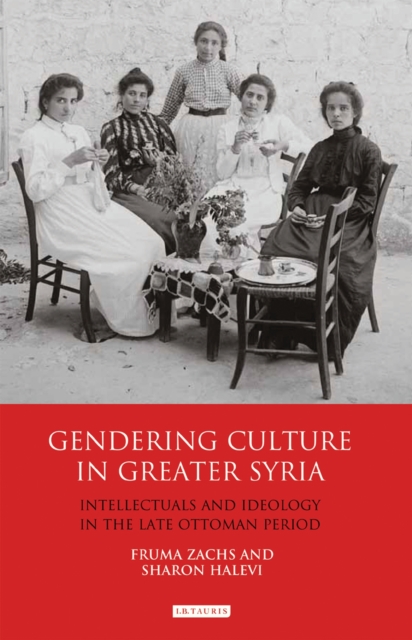
Gendering Culture In Greater Syria
The Nahda (lit. ‘the Awakening’) was one of the most significant cultural movements in modern Arab history. By focusing on the neglected role of women in the intellectual Islamic renaissance of the late Ottoman Period, Fruma Zachs and Sharon Halevi provide a refreshingly interdisciplinary exploration of gender and culture in the Arab World. Focusing mainly on Greater Syria, this book re-examines the cultural by-products of the Nahda - such as scientific debates, journal articles, essays, short stories and novels - and provides a new framework for rethinking the dynamics of cultural and social change in what today we know as Syria and Lebanon. The lasting impact of the Nahda is given an innovative and thoroughly unique interpretation, providing an indispensable perspective to studying the nuanced roles of the construction and development of gender ideologies in the nineteenth century Middle East. The authors explore contemporary ideas concerning modern gender roles in the Middle East, and the extent to which these emerged in nineteenth-century Greater Syria. How were these ideas incorporated into daily lives, consumer patterns and cultural activities?
eBook