
Catalogue Search | MBRL


Are you sure you want to remove the book from the shelf?

{{itemTitle}}
40,975
result(s) for
"Women and war"
Sort by:


Nimo’s War, Emma’s War
Nimo, Maha, Safah, Shatha, Emma, Danielle, Kim, Charlene. In a book that once again blends her distinctive flair for capturing the texture of everyday life with shrewd political insights, Cynthia Enloe looks closely at the lives of eight ordinary women, four Iraqis and four Americans, during the Iraq War. Among others, Enloe profiles a Baghdad beauty parlor owner, a teenage girl who survived a massacre, an elected member of Parliament, the young wife of an Army sergeant, and an African American woman soldier. Each chapter begins with a close-up look at one woman’s experiences and widens into a dazzling examination of the larger canvas of war’s gendered dimensions. Bringing to light hidden and unexpected theaters of operation—prostitution, sexual assault, marriage, ethnic politics, sexist economies—these stories are a brilliant entryway into an eye-opening exploration of the actual causes, costs, and long-range consequences of war. This unique comparison of American and Iraqi women’s diverse and complex experiences sheds a powerful light on the different realities that together we call, perhaps too easily, “the Iraq war.”
eBook


War and Women across Continents
Drawing on family materials, historical records, and eyewitness accounts, this book shows the impact of war on individual women caught up in diverse and often treacherous situations. It relates stories of partisans in Holland, an Italian woman carrying guns and provisions in the face of hostile soldiers, and Kikuyu women involved in the Mau Mau insurrection in Kenya. A woman displaced from Silesia recalls fleeing with children across war-torn Germany, and women caught up in conflicts in Burma and in Rwanda share their tales. War's aftermath can be traumatic, as shown by journalists in Libya and by a midwife on the Cambodian border who helps refugees to give birth and regain hope. Finally, British women on active service in Afghanistan and at NATO headquarters also speak.
eBook

Women and wars
\"Where are the women? In traditional historical and scholarly accounts of the making and fighting of wars, women are often nowhere to be seen. With few exceptions, war stories are told as if men were the only ones who plan, fight, are injured by, and negotiate ends to wars. As the pages of this book tell, though, those accounts are far from complete. Women can be found at every turn in the gendered phenomena of war. Women have participated in the making, fighting, and concluding of wars throughout history, and their participation is only increasing at the turn of the 21st century. Women experience war in multiple ways: as soldiers, as fighters, as civilians, as caregivers, as sex workers, as sexual slaves, refugees and internally displaced persons, as anti-war activists, as community peace-builders, and more. This book at once provides a glimpse into where women are in war, and gives readers the tools to understand women's (told and untold) war experiences in the greater context of the gendered nature of global social and political life\"--P. [4] of cover.
Book

Women, Islam and resistance in the Arab world
No detailed description available for \"Women, Islam, and Resistance in the Arab World\".
eBook


Women and war in antiquity
Women in ancient Greece and Rome played a much more active role in battle than previously assumed.
The martial virtues—courage, loyalty, cunning, and strength—were central to male identity in the ancient world, and antique literature is replete with depictions of men cultivating and exercising these virtues on the battlefield. In Women and War in Antiquity, sixteen scholars reexamine classical sources to uncover the complex but hitherto unexplored relationship between women and war in ancient Greece and Rome. They reveal that women played a much more active role in battle than previously assumed, embodying martial virtues in both real and mythological combat.
The essays in the collection, taken from the first meeting of the European Research Network on Gender Studies in Antiquity, approach the topic from philological, historical, and material culture perspectives. The contributors examine discussions of women and war in works that span the ancient canon, from Homer's epics and the major tragedies in Greece to Seneca's stoic writings in first-century Rome. They consider a vast panorama of scenes in which women are portrayed as spectators, critics, victims, causes, and beneficiaries of war.
This deft volume, which ultimately challenges the conventional scholarly opposition of standards of masculinity and femininity, will appeal to scholars and students of the classical world, European warfare, and gender studies.
eBook

Women and War in the 21st Century : A Country-by-Country Guide
\"This country-by country analysis of the role of women in conflicts provides important background information to help readers to understand the cultural and political contexts in which women have been integrated into their countries' militaries, have engaged in combat during the course of conflict, and have come to positions of political power that affect military decisions.\"--Provided by publisher.
Book
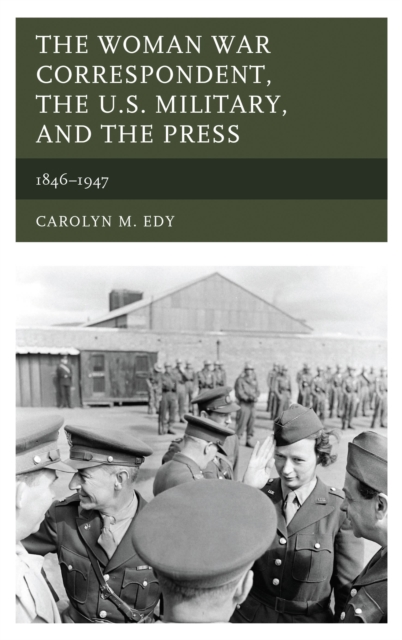
The woman war correspondent, the U.S military, and the press, 1846-1947
This book outlines the rich history of more than 250 women who worked as war correspondents up through World War II, while demonstrating the ways in which the press and the military both promoted and prevented their access to war. Despite the continued presence of individual female war correspondents in news accounts, if not always in war zones, it was not until 1944 that the military recognized these individuals as a group and began formally considering sex as a factor for recruiting and accrediting war correspondents. This group identity created obstacles for women who had previously worked alongside men as “war correspondents,” while creating opportunities for many women whom the military recruited to cover woman’s angle news as “women war correspondents.” This book also reveals the ways the military and the press, as well as women themselves, constructed the concepts of “woman war correspondent” and “war correspondent” and how these concepts helped and hindered the work of all war correspondents even as they challenged and ultimately expanded the public’s understanding of war and of women.
eBook