
Catalogue Search | MBRL


Are you sure you want to remove the book from the shelf?

{{itemTitle}}
178
result(s) for
"Women and war United States History 20th century."
Sort by:

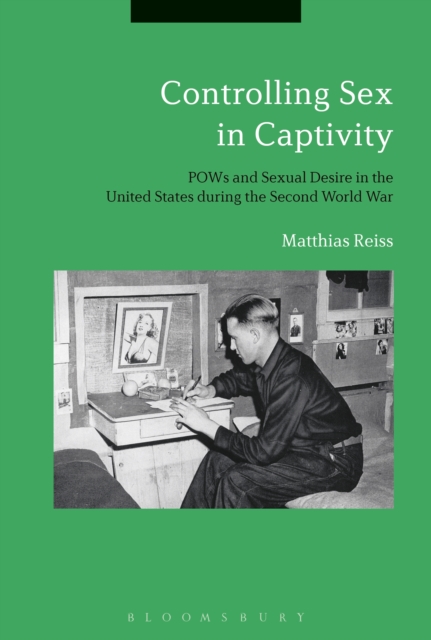
Controlling Sex in Captivity
Controlling Sex in Captivity is the first book to examine the nature, extent and impact of the sexual activities of Axis prisoners of war in the United States during the Second World War. Historians have so far interpreted the interactions between captors and captives in America as the beginning of the post-war friendship between the United States, Germany and Italy. Matthias Reiss argues that this paradigm is too simplistic. Widespread fraternisation also led to sexual relationships which created significant negative publicity, and some Axis POWs got caught up in the U.S. Army’s new campaign against homosexuals. By focusing on the fight against fraternisation and same-sex activities, this study treads new ground. It stresses that contact between captors and captives was often loaded with conflict and influenced by perceptions of gender and race. It highlights the transnational impact of fraternisation and argues that the prisoners’ sojourn in the United States also influenced American society by fuelling a growing concern about social disintegration and sexual deviancy, which eventually triggered a conservative backlash after the war.
eBook

A few good women : America's military women from World War I to the wars in Iraq and Afghanistan
\"The never-before-told story of the U.S. women's military corps: the women who fought for the right to defend their country by serving in our armed forces with full military rank and benefits-- a fight fight that continues today for American military women who want to serve in combat support positions and in frontline combat units. Using interviews, correspondence, and diaries, as well as archival material, [the authors] tell the remarkable story of America's 'few good women' who today make up more than 15 percent of the U.S. armed forces and who serve alongside men in almost every capacity.\"--Book jacket.
Book

College Women In The Nuclear Age
In the popular imagination, American women during the time between the end of World War II and the 1960s-the era of the so-called \"feminine mystique\"-were ultraconservative and passive.College Women in the Nuclear Agetakes a fresh look at these women, showing them actively searching for their place in the world while engaging with the larger intellectual and political movements of the times.
Drawing from the letters and diaries of young women in the Cold War era, Babette Faehmel seeks to restore their unique voices and to chronicle their collective ambitions. She also explores the shifting roles that higher education played in establishing these hopes and dreams, making the case that the GI Bill served to diminish the ambitions of many American women even as it opened opportunities for many American men. A treasure-trove of original research, the book should stimulate scholarly discussion and captivate any reader interested in the thoughts and lives of American women.
eBook


Of Little Comfort
During and especially after World War I, the millions of black-clad widows on the streets of Europe’s cities were a constant reminder that war caused carnage on a vast scale. But widows were far more than just a reminder of the war’s fallen soldiers; they were literal and figurative actresses in how nations crafted their identities in the interwar era. In this extremely original study, Erika Kuhlman compares the ways in which German and American widows experienced their postwar status, and how that played into the cultures of mourning in their two nations: one defeated, the other victorious. Each nation used widows and war dead as symbols to either uphold their victory or disengage from their defeat, but Kuhlman, parsing both German and U.S. primary sources, compares widows’ lived experiences to public memory. For some widows, government compensation in the form of military-style awards sufficed. For others, their own deprivations, combined with those suffered by widows living in other nations, became the touchstone of a transnational awareness of the absurdity of war and the need to prevent it.
eBook


The Color of Success
The Color of Successtells of the astonishing transformation of Asians in the United States from the \"yellow peril\" to \"model minorities\"--peoples distinct from the white majority but lauded as well-assimilated, upwardly mobile, and exemplars of traditional family values--in the middle decades of the twentieth century. As Ellen Wu shows, liberals argued for the acceptance of these immigrant communities into the national fold, charging that the failure of America to live in accordance with its democratic ideals endangered the country's aspirations to world leadership.
Weaving together myriad perspectives, Wu provides an unprecedented view of racial reform and the contradictions of national belonging in the civil rights era. She highlights the contests for power and authority within Japanese and Chinese America alongside the designs of those external to these populations, including government officials, social scientists, journalists, and others. And she demonstrates that the invention of the model minority took place in multiple arenas, such as battles over zoot suiters leaving wartime internment camps, the juvenile delinquency panic of the 1950s, Hawaii statehood, and the African American freedom movement. Together, these illuminate the impact of foreign relations on the domestic racial order and how the nation accepted Asians as legitimate citizens while continuing to perceive them as indelible outsiders.
By charting the emergence of the model minority stereotype,The Color of Successreveals that this far-reaching, politically charged process continues to have profound implications for how Americans understand race, opportunity, and nationhood.
eBook

War against war : the American fight for peace, 1914-1918
In this story of the movement that came close to keeping the United States out of the First World War,...Kazin brings us into the ranks of the largest, most diverse, and most sophisticated peace coalition up to that point in US history. They came from a variety of backgrounds: wealthy and middle and working class, urban and rural, white and black ... They mounted street demonstrations and popular exhibitions, attracted prominent leaders from the labor and suffrage movements, ran peace candidates for local and federal office, and founded new organizations that endured beyond the cause. For almost three years, they helped prevent Congress from authorizing a massive increase in the size of the US army\"-- Provided by publisher.
Book

Women doctors in war
In their efforts to utilize their medical skills and training in the service of their country, women physicians fought not one but two male-dominated professional hierarchies: the medical and the military establishments. In the process, they also contended with powerful social pressures and constraints. Throughout Women Doctors in War, the authors focus on the medical careers, aspirations, and struggles of individual women, using personal stories to illustrate the unique professional and personal challenges female military physicians have faced. Military and medical historians and scholars in women’s studies will discover a wealth of new information in Women Doctors in War.
eBook