
Catalogue Search | MBRL


Are you sure you want to remove the book from the shelf?

{{itemTitle}}
2,608
result(s) for
"Women and war United States History."
Sort by:

A few good women : America's military women from World War I to the wars in Iraq and Afghanistan
\"The never-before-told story of the U.S. women's military corps: the women who fought for the right to defend their country by serving in our armed forces with full military rank and benefits-- a fight fight that continues today for American military women who want to serve in combat support positions and in frontline combat units. Using interviews, correspondence, and diaries, as well as archival material, [the authors] tell the remarkable story of America's 'few good women' who today make up more than 15 percent of the U.S. armed forces and who serve alongside men in almost every capacity.\"--Book jacket.
Book

Women doctors in war
In their efforts to utilize their medical skills and training in the service of their country, women physicians fought not one but two male-dominated professional hierarchies: the medical and the military establishments. In the process, they also contended with powerful social pressures and constraints. Throughout Women Doctors in War, the authors focus on the medical careers, aspirations, and struggles of individual women, using personal stories to illustrate the unique professional and personal challenges female military physicians have faced. Military and medical historians and scholars in women’s studies will discover a wealth of new information in Women Doctors in War.
eBook


Gender, Agency and War
This book traces practices of militarization and resistance that have emerged under the sign of motherhood in US Foreign Policy.
Gender, Agency and War examines this discourse against the background of three key moments of American foreign policy formation: the anti-nuclear movement of the 1980s, the Gulf War of the early 1990s, and the recent invasion of Iraq. For each of these moments the author explores the emergence of a historically specific and emblematic maternalized mode of female embodiment (ranging from the 'hysterical' antinuclear protester to the figure of 'Supermom'), in order to shed light onto the various practices which define and enable expressions of American sovereignty. In so doing, the text argues that the emergence of particular raced, gendered, and maternalized bodies ought not to be read as merely tangential to affairs of state, but as instantiations of global politics. This work urges an approach that rereads the body as an 'event' - with significant implications for the ways in which international politics and gender are currently understood.
This book will be of much interest to students of gender politics, critical security studies, US foreign policy and IR in general.
eBook

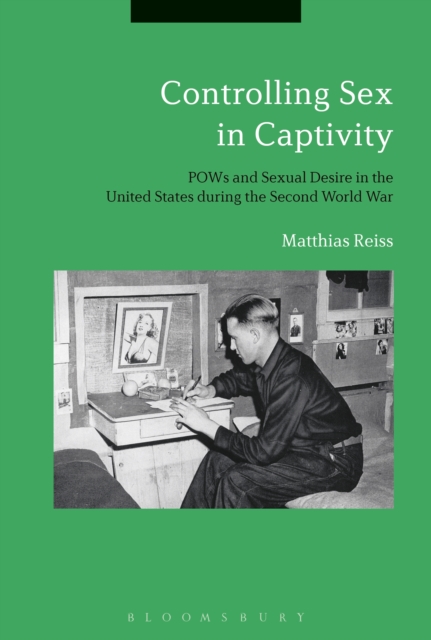
Controlling Sex in Captivity
Controlling Sex in Captivity is the first book to examine the nature, extent and impact of the sexual activities of Axis prisoners of war in the United States during the Second World War. Historians have so far interpreted the interactions between captors and captives in America as the beginning of the post-war friendship between the United States, Germany and Italy. Matthias Reiss argues that this paradigm is too simplistic. Widespread fraternisation also led to sexual relationships which created significant negative publicity, and some Axis POWs got caught up in the U.S. Army’s new campaign against homosexuals. By focusing on the fight against fraternisation and same-sex activities, this study treads new ground. It stresses that contact between captors and captives was often loaded with conflict and influenced by perceptions of gender and race. It highlights the transnational impact of fraternisation and argues that the prisoners’ sojourn in the United States also influenced American society by fuelling a growing concern about social disintegration and sexual deviancy, which eventually triggered a conservative backlash after the war.
eBook


Refugitta of Richmond
In the expansive canon of Civil War memoirs, relatively few accounts from women exist. Among the most engaging and informative of these rare female perspectives is Constance Cary Harrison's Recollections Grave and Gay, a lively, first-person account of the collapse of the Confederacy by the wife of President Jefferson Davis's private secretary. Although equal in literary merit to the well-known and widely available diaries of Mary Boykin Chesnut and Eliza Frances Andrews, Harrison's memoir failed to remain in print after its original publication in 1916 and, as a result, has been lost to all but the most diligent researcher. In Refugitta of Richmond, Nathaniel Cheairs Hughes Jr. and S. Kittrell Rushing resurrect Harrison's work, reintroducing an especially insightful perspective on the Southern high command, the home front, and the Confederate elite.
Born into an old, aristocratic Virginia family in 1843, Constance Cary fled with her family from their estate near Alexandria, Virginia, to Richmond in 1862. There, the nineteen-year-old met Burton Norvell Harrison, a young math professor from the University of Mississippi who had come to the Confederate capital to work for Davis. The pair soon became engaged and joined the inner circle of military, political, and social leaders at the Confederate White House. Under the pen name \"Refugitta,\" Constance also wrote newspaper columns about the war and became a respected member of Richmond's literary community.
Fifty years later, Constance used her wartime diaries and letters to pen her recollections of her years in Richmond and of the confusing months immediately after the war. She offers lucid, insightful, and detailed observations of the Confederate home front even as she reflects on the racial and class biases characteristic of her time and station. With an informative introduction and thorough annotations by Hughes and Rushing, Refugitta of Richmond provides a highly readable, often amusing, occasionally troubling insider's look at the Confederate nerve center and its ultimate demise.
Nathaniel Cheairs Hughes Jr. is the author or editor of twenty books relating to the American Civil War, including The Life and Wars of Gideon J. Pillow; Brigadier General Tyree H. Bell, C.S.A.: Forrest's Fighting Lieutenant; and Yale's Confederates.
S. Kittrell Rushing, Frank McDonald Professor of History at the University of Tennessee at Chattanooga, is the editor of Eliza Frances Andrews's A Family Secret and Journal of a Georgia Woman, 1870-1872. Rushing also edited and annotated Judge Garnett Andrews's Reminiscences of an Old Georgia Lawyer.
eBook

War against war : the American fight for peace, 1914-1918
In this story of the movement that came close to keeping the United States out of the First World War,...Kazin brings us into the ranks of the largest, most diverse, and most sophisticated peace coalition up to that point in US history. They came from a variety of backgrounds: wealthy and middle and working class, urban and rural, white and black ... They mounted street demonstrations and popular exhibitions, attracted prominent leaders from the labor and suffrage movements, ran peace candidates for local and federal office, and founded new organizations that endured beyond the cause. For almost three years, they helped prevent Congress from authorizing a massive increase in the size of the US army\"-- Provided by publisher.
Book

Confederate daughters : coming of age during the Civil War
Confederate Daughters: Coming of Age during the Civil War explores gender, age, and Confederate identity by examining the lives of teenage daughters of Southern slaveholding, secessionist families. These young women clung tenaciously to the gender ideals that upheld marriage and motherhood as the fulfillment of female duty and to the racial order of the slaveholding South, an institution that defined their status and afforded them material privileges. Author Victoria E. Ott discusses how the loyalty of young Southern women to the fledgling nation, born out of a conservative movement to preserve the status quo, brought them into new areas of work, new types of civic activism, and new rituals of courtship during the Civil War. Social norms for daughters of the elite, their preparation for their roles as Southern women, and their material and emotional connections to the slaveholding class changed drastically during the Civil War. When differences between the North and South proved irreconcilable, Southern daughters demonstrated extraordinary agency in seeking to protect their futures as wives, mothers, and slaveholders. From a position of young womanhood and privilege, they threw their support behind the movement to create a Confederate identity, which was in turn shaped by their participation in the secession movement and the war effort. Their political engagement is evident from their knowledge of military battles, and was expressed through their clothing, social activities, relationships with peers, and interactions with Union soldiers. Confederate Daughters also reveals how these young women, in an effort to sustain their families throughout the war, adjusted to new domestic duties, confronting the loss of slaves and other financial hardships by seeking paid work outside their homes. Drawing on their personal and published recollections of the war, slavery, and the Old South, Ott argues that young women created a unique female identity different from that of older Southern women, the Confederate bellehood. This transformative female identity was an important aspect of the Lost Cause mythology—the version of the conflict that focused on Southern nationalism—and bridged the cultural gap between the antebellum and postbellum periods. Augmented by eighteen illustrations, this book offers a generational understanding of the transitional nature of wartime and its effects on women’s self-perceptions. Confederate Daughters identifies the experiences of these teenage daughters as making a significant contribution to the new woman in the New South.       
eBook