
Catalogue Search | MBRL


Are you sure you want to remove the book from the shelf?

{{itemTitle}}
10
result(s) for
"Women civil rights workers -- Southern States -- Biography"
Sort by:

Southern Methodist Women and Social Justice
Highlighting the contributions of Methodist women in
advocating for progressive reform from 1900 to the
present
This book tells the stories of nine southern Methodist
women, who, inspired by their faith, carried forward the spirit
of progressivism. They fought for racial equality, challenged
white male supremacy, and addressed class oppression. The white
and Black women featured here responded to local human rights
violations with compassion, advocating for expanded and more
diverse private and public services in the United States.
Motivated by a modernist interpretation of the Gospel
authorized by the tenets of Methodism, these women expanded
notions of southern identity and womanhood. Their actions
supported the Black freedom struggle and promoted women’s
rights, gaining momentum after the 1939 rise of the
Women’s Society of Christian Service—the largest
Protestant women’s organization in the country. Grounded
in research from church archives and interviews, this book
shows how Methodist traditions provided spiritual, theological,
and doctrinal support for social justice work among laywomen
and female clergy. With Methodism as a case in point, this book
expands the historical narrative of twentieth-century reform
movements to include the South’s progressive religious
traditions.
Contributors: Chelsea Elizabeth Hodge | Fran
Wescott | Janet Lynn Allured | Randall M. Miller | Jeanette
Stokes | M. Kathryn Armistead | Stanley Harrold | Rachel Sauls
| Helen R. Neinast | Jennifer Copeland | Katie W. Powell
A volume in the series Southern Dissent, edited by Stanley
Harrold and Randall M. Miller
eBook


A forgotten sisterhood
Emerging from the darkness of the slave era and Reconstruction, black activist women Lucy Craft Laney, Mary McLeod Bethune, Charlotte Hawkins Brown, and Nannie Helen Burroughs founded schools aimed at liberating African-American youth from disadvantaged futures in the segregated and decidedly unequal South.
eBook

Freedom's teacher
In the mid-1950s, Septima Poinsette Clark (1898-1987), a former public school teacher, developed a citizenship training program that enabled thousands of African Americans to register to vote and then to link the power of the ballot to concrete strategies for individual and communal empowerment. In this vibrantly written biography, Katherine Charron demonstrates Clark's crucial role--and the role of many black women teachers--in making education a cornerstone of the twentieth-century freedom struggle. Using Clark's life as a lens, Charron sheds valuable new light on southern black women's activism in national, state, and judicial politics, from the Progressive Era to the civil rights movement and beyond.
eBook

Freedom Rider Diary
Arrested as a Freedom Rider in June of 1961, Carol Ruth Silver, a twenty-two-year-old recent college graduate originally from Massachusetts, spent the next forty days in Mississippi jail cells, including the Maximum Security Unit at the infamous Parchman Prison Farm. She chronicled the events and her experiences on hidden scraps of paper which amazingly she was able to smuggle out. These raw written scraps she fashioned into a manuscript, which has waited, unread for more than fifty years.Freedom Rider Diaryis that account.
Freedom Riders were civil rights activists who rode interstate buses into the segregated southern United States in 1961 to test the U.S. Supreme Court rulings outlawing segregation in interstate bus and terminal facilities. Brutality and arrests inflicted on the Riders called national attention to the disregard for federal law and the local violence used to enforce segregation. Police arrested Riders for trespassing, unlawful assembly, and violating state and local Jim Crow laws, along with other alleged offenses, but they often allowed white mobs to attack the Riders without arrest or intervention.
Though a number of books recount the Freedom Rides as part of the larger civil rights story, this book offers a heretofore unavailable detailed diary from a woman Freedom Rider along with an introduction by historian Raymond Arsenault, author of the definitive history of the Freedom Rides. In a personal essay detailing her life before and after the Freedom Rides, Silver explores what led her to join the movement and explains how, galvanized by her actions and those of her compatriots in 1961, she spent her life and career fighting for civil rights. Framing essays and personal and historical photographs make the diary an ideal book for the general public, scholars, and students of the movement that changed America.
eBook

Ella Baker and the Black freedom movement : a radical democratic vision
One of the most important African American leaders of the twentieth century and perhaps the most influential woman in the civil rights movement, Ella Baker (1903-1986) was an activist whose remarkable career spanned fifty years and touched thousands of lives. A gifted grassroots organizer, Baker shunned the spotlight in favor of vital behind-the-scenes work that helped power the Black freedom struggle. Making her way in predominantly male circles while maintaining relationships with a vibrant group of women, students, and activists, Baker was a national officer and key figure in the NAACP, a founder of the Southern Christian Leadership Conference, and a prime mover in the creation of the Student Nonviolent Coordinating Committee. In this definitive biography, Barbara Ransby chronicles Bakers long and rich career, revealing her complexity, radical democratic worldview, and enduring influence on group-centered, grassroots activism. Beyond documenting an extraordinary life, Ransby paints a vivid picture of the African American fight for justice and its intersections with other progressive struggles worldwide throughout the twentieth century.
eBook
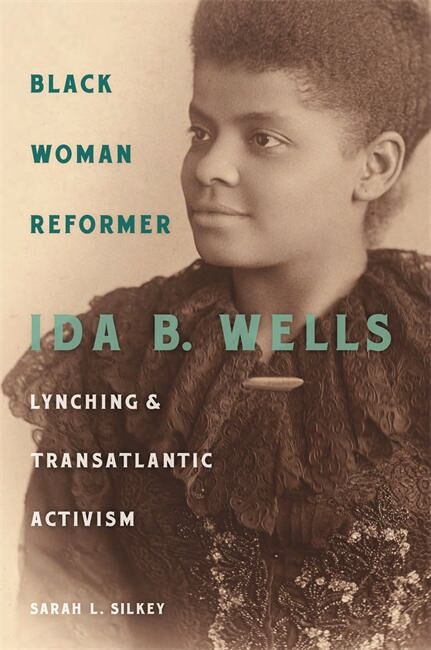
Black Woman Reformer
During the early 1890s, a series of shocking lynchings brought unprecedented international attention to American mob violence. This interest created an opportunity for Ida B. Wells, an African American journalist and civil rights activist from Memphis, to travel to England to cultivate British moral indignation against American lynching. Wells adapted race and gender roles established by African American abolitionists in Britain to legitimate her activism as a “black lady reformer”—a role American society denied her—and assert her right to defend her race from abroad. Based on extensive archival research conducted in the United States and Britain, Black Woman Reformer by Sarah Silkey explores Wells’s 1893–94 antilynching campaigns within the broader contexts of nineteenth-century transatlantic reform networks and debates about the role of extralegal violence in American society. Through her speaking engagements, newspaper interviews, and the efforts of her British allies, Wells altered the framework of public debates on lynching in both Britain and the United States. No longer content to view lynching as a benign form of frontier justice, Britons accepted Wells’s assertion that lynching was a racially motivated act of brutality designed to enforce white supremacy. As British criticism of lynching mounted, southern political leaders desperate to maintain positive relations with potential foreign investors were forced to choose whether to publicly defend or decry lynching. Although British moral pressure and media attention did not end lynching, the international scrutiny generated by Wells’s campaigns transformed our understanding of racial violence and made American communities increasingly reluctant to embrace lynching.
eBook

This bright light of ours: stories from the 1965 Voting Rights fight
This Bright Light of Ours offers a tightly focused insider's view of the community-based activism that was the heart of the civil rights movement. A celebration of grassroots heroes, this book details through first-person accounts the contributions of ordinary people who formed the nonviolent army that won the fight for voting rights.Combining memoir and oral history, Maria Gitin fills a vital gap in civil rights history by focusing on the neglected Freedom Summer of 1965 when hundreds of college students joined forces with local black leaders to register thousands of new black voters in the rural South. Gitin was an idealistic nineteen-year-old college freshman from a small farming community north of San Francisco who felt called to action when she saw televised images of brutal attacks on peaceful demonstrators during Bloody Sunday, in Selma, Alabama.Atypical among white civil rights volunteers, Gitin came from a rural low-income family. She raised funds to attend an intensive orientation in Atlanta featuring now-legendary civil rights leaders. Her detailed letters include the first narrative account of this orientation and the only in-depth field report from a teenage Summer Community Organization and Political Education (SCOPE) project participant.Gitin details the dangerous life of civil rights activists in Wilcox County, Alabama, where she was assigned. She tells of threats and arrests, but also of forming deep friendships and of falling in love. More than four decades later, Gitin returned to Wilcox County to revisit the people and places that she could never forget and to discover their views of the \"outside agitators\" who had come to their community. Through conversational interviews with more than fifty Wilcox County residents and former civil rights workers, she has created a channel for the voices of these unheralded heroes who formed the backbone of the civil rights movement.
eBook