
Catalogue Search | MBRL


Are you sure you want to remove the book from the shelf?

{{itemTitle}}
85,295
result(s) for
"Women domestics"
Sort by:

Intimate encounters
This groundbreaking study explores the recent dramatic changes brought about in Japan by the influx of a non-Japanese population, Filipina brides. Lieba Faier investigates how Filipina women who emigrated to rural Japan to work in hostess bars-where initially they were widely disparaged as prostitutes and foreigners-came to be identified by the local residents as \"ideal, traditional Japanese brides.\"Intimate Encounters, an ethnography of cultural encounters, unravels this paradox by examining the everyday relational dynamics that drive these interactions. Faier remaps Japan, the Philippines, and the United States into what she terms a \"zone of encounters,\" showing how the meanings of Filipino and Japanese culture and identity are transformed and how these changes are accomplished through ordinary interpersonal exchanges. Intimate Encounters provides an insightful new perspective from which to reconsider national subjectivities amid the increasing pressures of globalization, thereby broadening and deepening our understanding of the larger issues of migration and disapora.
eBook

From Servants to Workers
In the past decade, hundreds of thousands of women from poorer countries have braved treacherous journeys to richer countries to work as poorly paid domestic workers. Scholars and activists denounce compromised forms of citizenship that expose these women to at times shocking exploitation and abuse.
InFrom Servants to Workers, Shireen Ally asks whether the low wages and poor working conditions so characteristic of migrant domestic work can truly be resolved by means of the extension of citizenship rights. Following South Africa's \"miraculous\" transition to democracy, more than a million poor black women who had endured a despotic organization of paid domestic work under apartheid became the beneficiaries of one of the world's most impressive and extensive efforts to formalize and modernize paid domestic work through state regulation. Instead of undergoing a dramatic transformation, servitude relations stubbornly resisted change. Ally locates an explanation for this in the tension between the forms of power deployed by the state in its efforts to protect workers, on the one hand, and the forms of power workers recover through the intimate nature of their work, on the other.
Listening attentively to workers' own narrations of their entry into democratic citizenship-rights, Ally explores the political implications of paid domestic work as an intimate form of labor.From Servants to Workersintegrates sociological insights with the often-heartbreaking life histories of female domestic workers in South Africa and provides rich detail of the streets, homes, and churches of Johannesburg where these women work, live, and socialize.
eBook
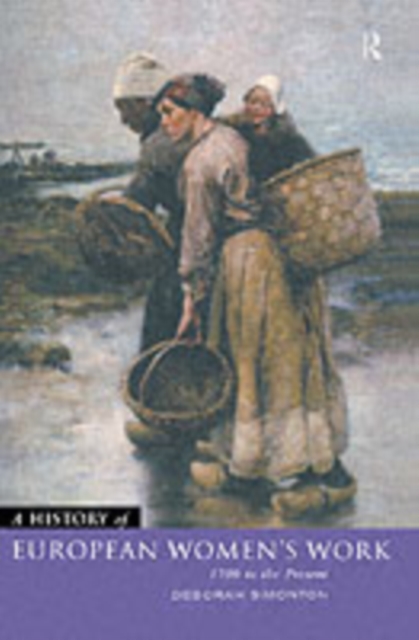
A History of European Women's Work
The work patterns of European women from 1700 onwards fluctuate in relation to ideological, demographic, economic and familial changes. In A History of European Women's Work, Deborah Simonton draws together recent research and methodological developments to take an overview of trends in women's work across Europe from the so-called pre-industrial period to the present.Taking the role of gender and class in defining women's labour as a central theme, Deborah Simonton compares and contrasts the pace of change between European countries, distinguishing between Europe-wide issues and local developments.
eBook

Cooking in Other Women’s Kitchens
As African American women left slavery and the plantation economy behind, many entered domestic service in southern cities and towns. Cooking was one of the primary jobs they performed in white employers' homes, feeding generations of white families and, in the process, profoundly shaping southern foodways and culture.Rebecca Sharpless argues that, in the face of discrimination, long workdays, and low wages, African American cooks worked to assert measures of control over their own lives and to maintain spaces for their own families despite the demands of employers and the restrictions of segregation. Sharpless also shows how these women's employment served as a bridge from old labor arrangements to new ones. As opportunities expanded in the twentieth century, most African American women chose to leave cooking for more lucrative and less oppressive manufacturing, clerical, or professional positions.Through letters, autobiography, and oral history, this book evokes African American women's voices from slavery to the open economy, examining their lives at work and at home. Sharpless looks beyond stereotypes to introduce the real women who left their own houses and families each morning to cook in other women's kitchens.
eBook

Not One of the Family
A collection of original essays by researchers and workers-turned-activists, it documents how citizen and non-citizen workers are treated unequally in the Canadian system and demonstrates how workers can resist exploitation.
eBook

Empowering Migrant Women
Based on insights from Filipina experiences of domestic work in Paris and Hong Kong, this volume breaks through the polarized thinking and migration-centric policy action on the protection of migrant women domestic workers from abuse to link migrants' rights and victimization with livelihood, migration and development. The book contextualizes agency and rights in the workers' capability to secure a livelihood in the global political economy and is instrumental in making the problem of migrant women workers' empowerment both a migration and development agenda. The volume is essential reading for social scientists, bureaucrats and non-governmental political activists interested in the protection of the rights and livelihoods of migrants. It will also appeal to migration and feminist scholars who have yet to adopt the contribution of critical development studies in the analysis of low-skilled female labour migration.
eBook

Towards a Global History of Domestic and Caregiving Workers
Domestic and caregiving work has been at the core of human existence throughout history. A team of international scholars addresses the issues of state, agency, and domestic service in colonizer frames globally in historical perspectives.
eBook
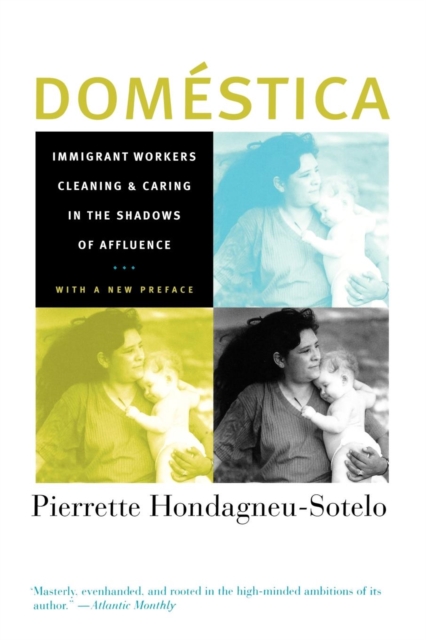
Doméstica
In this enlightening and timely work, Pierrette Hondagneu-Sotelo highlights the voices, experiences, and views of Mexican and Central American women who care for other people's children and homes, as well as the outlooks of the women who employ them in Los Angeles. The new preface looks at the current issues facing immigrant domestic workers in a global context.
eBook

The New maids
The New Maids is a pioneering study, grounded in rich empirical evidence, which expertly addresses the thorny questions surrounding the growing number of migrant cleaners and caregivers who maintain modern Western households. Supported by an ethnographic study of immigrant domestic workers and their German employers, the author argues that domestic work plays the defining role in global ethnic and gender hierarchies. This exciting book not only will enhance the reader's understanding of the new care economy, it also sets a new standard for feminist methodology.
eBook
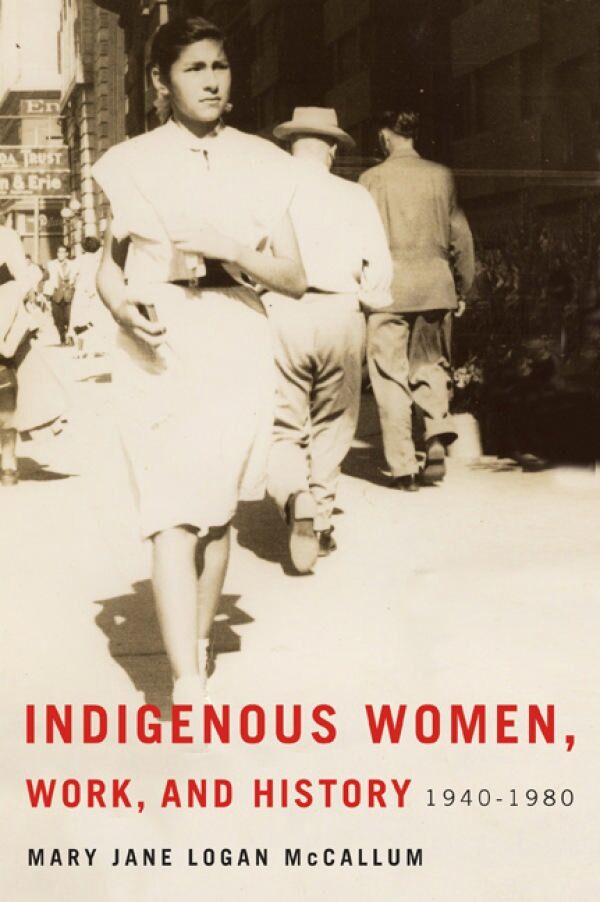
Indigenous Women, Work, and History
When dealing with Indigenous women’s history we are conditioned to think about women as private-sphere figures, circumscribed by the home, the reserve, and the community. Moreover, in many ways Indigenous men and women have been cast in static, pre-modern, and one-dimensional identities, and their twentieth century experiences reduced to a singular story of decline and loss. In Indigenous Women, Work, and History, historian Mary Jane Logan McCallum rejects both of these long-standing conventions by presenting case studies of Indigenous domestic servants, hairdressers, community health representatives, and nurses working in “modern Native ways” between 1940 and 1980. Based on a range of sources, including the records of the Departments of Indian Affairs and National Health and Welfare, interviews, and print and audio-visual media, McCallum shows how state-run education and placement programs were part of Canada’s larger vision of assimilation and extinguishment of treaty obligations. Conversely, she also shows how Indigenous women link these same programs to their social and cultural responsibilities of community building and state resistance. By placing the history of these modern workers within a broader historical context of Aboriginal education and health, federal labour programs, post-war Aboriginal economic and political developments, and Aboriginal professional organizations, McCallum challenges us to think about Indigenous women’s history in entirely new ways.
eBook