
Catalogue Search | MBRL


Are you sure you want to remove the book from the shelf?

{{itemTitle}}
4
result(s) for
"Women football players -- United States -- History"
Sort by:

Women's American Football
Tackle football has been primarily viewed as a male sport, but at a
time when men's participation rates are decreasing, an increasing
number of women are entering the gridiron-and they have a long
history of doing so. Women's American Football is a
narrative history of girls and women participating in American
football in the United States since the 1920s, when a women's team
played at halftime during an early NFL game. The women's game
became more organized in 1974, when the National Women's Football
League was established, with notable teams such as the Dallas
Bluebonnets, Toledo Troopers, Oklahoma City Dolls, and Detroit
Demons. Today there are two main professional leagues in the United
States: the Women's Football Alliance, with nearly seventy teams,
and the Women's National Football Conference, with eighteen, in
addition to a number of smaller leagues. The National Association
of Intercollegiate Athletics and the NFL have recently begun
sponsoring flag football teams at the college level, and the game
is growing for high school girls as well. In 2021 more than two
thousand girls played on mostly boys' teams, and there are
currently four all-girls leagues in the United States and Canada,
in Manitoba, Utah, Indiana, and New Brunswick. In addition to the
rapid growth of women playing football, there have been
advancements in other areas of the game. Beginning with Jennifer
Welter in 2015, several women have earned positions coaching the
professional game. In 2020 ESPN aired Born to Play , a
documentary on the Boston Renegades, the 2019 champion of the
Women's Football Alliance. Based on extensive interviews with women
players and focusing closely on leagues, teams, and athletes since
the passage of Title IX in 1972, Russ Crawford illuminates the rich
history of the women who have played football, breaking barriers on
and off the field.
eBook
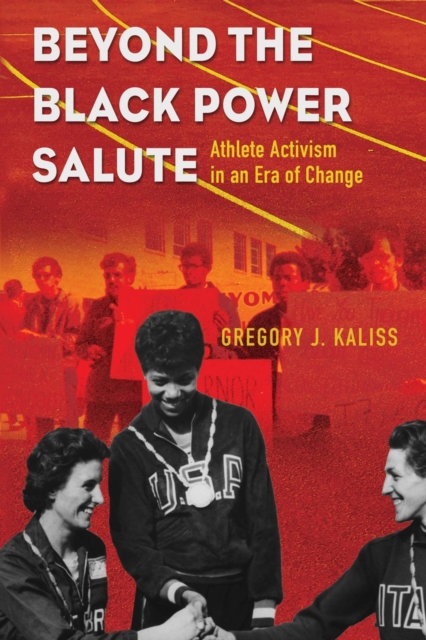
Beyond the Black Power Salute
Unequal opportunity sparked Jim Brown’s endeavors to encourage Black development while Billie Jean King fought so that women tennis players could earn more money and enjoy greater freedom. Gregory J. Kaliss examines these events and others to guide readers through the unprecedented wave of protest that swept sports in the 1960s and 1970s. The little-known story of the University of Wyoming football players suspended for their activism highlights an analysis of protests by college athletes. The 1971 Muhammad Ali–Joe Frazier clash provides a high-profile example of the Black male athlete’s effort to redefine Black masculinity. An in-depth look at the American Basketball Association reveals a league that put Black culture front and center with its style of play and shows how the ABA influenced the development of hip-hop. As Kaliss describes the breakthroughs achieved by these athletes, he also explores the barriers that remained--and in some cases remain today.
eBook
MoneyWatch Report
The family that owns the company that makes OxyContin is calling a Massachusetts' lawsuit false and misleading. This is the Sackler family's first court response to allegations that individual family members helped fuel the deadly opioid epidemic. Attorneys for the Sackler family say the claims must be dismissed. Massachusetts was among the first state government to sue the family as well as the company last year.
Transcript
Say Brother. Hustlers, Drugs and Prison
The program focuses on illegal drugs, and the continued effect they have on the African American community via an exploration of the recent drug-culture film Superfly and discussions with local drug rehabilitation employees. Program includes clips from the recent film, an interview with actor Ron O'Neal conducted by John Slade, a discussion among community members who oppose the film (John Chatterton of the Bay State Banner and David Booker and Fred Smallwood of First Incorporated, a drug rehabilitation program in Roxbury that is among the oldest in the country), 'man on the street' interviews regarding drug use, and a discussion with South End Community Drug Council employees Joseph Nkunta, Rochelle Lee, and Steve Moss about the specific ways they handle drug abuse in the community.
Streaming Video