
Catalogue Search | MBRL


Are you sure you want to remove the book from the shelf?

{{itemTitle}}
661
result(s) for
"Women in higher education -- Canada"
Sort by:

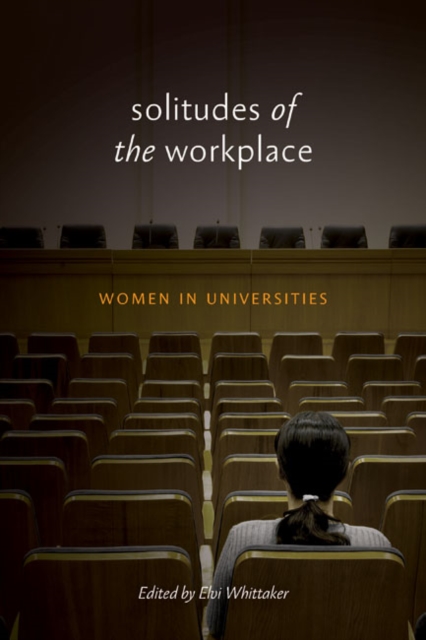
Solitudes of the Workplace
Solitudes of the Workplace focuses on experiences of marginalization, uncertainty and segregation created by the hierarchical structures of categories in universities and by gendered identities. Studying a wider range of women’s roles in universities than prior research, the experiences of support staff, senior administrators, researchers, non-academic administrators, and contract teachers are added to those of faculty and students. The essays show how attempts to introduce new knowledge are manoeuvered and the resistance this process can encounter, as well as the ways in which institutional policies can blur and change identities. Addressing longstanding issues such as the entanglement of gender and the assessment of merit, attention is also given to how new identities are claimed and successfully projected. Essays presenting workers' points of view reveal the confusion that occurs when official policy and everyday knowledge conflict, when processes like tenure and other status changes create troublesome realities, and when it becomes routine to experience status denigration. Within the social order of the university and its existing boundaries, gender issues of past decades sometimes surface, but all too often remain an unspoken presence. Solitudes of the Workplace is a revealing look at the isolating experiences and inequities inherent in these institutional environments.
eBook

Smitten by giraffe : my life as a citizen scientist
\"Boldly documenting widespread sexism in Canadian universities while also discussing Dagg's involvement with important zoological topics such as homosexuality, infanticide, sociobiology, and taxonomy, Smitten by Giraffe offers an inside perspective on the workings of scientific research and debate, the history of Canadian academia, and the rise of second-wave feminism.\"-- Provided by publisher.
Book

The Homecoming of American College Women: The Reversal of the College Gender Gap
Women are currently the majority of U.S. college students and of those receiving a bachelor's degree, but were 39 percent of undergraduates in 1960. We use three longitudinal data sets of high school graduates in 1957, 1972, and 1992 to understand the narrowing of the gender gap in college and its reversal. From 1972 to 1992 high school girls narrowed the gap with boys in math and science course taking and in achievement test scores. These variables, which we term the proximate determinants, can account for 30 to 60 percent of the relative increase in women's college completion rate. Behind these changes were several others: the future work expectations of young women increased greatly between 1968 and 1979 and the age at first marriage for college graduate women rose by 2.5 years in the 1970s, allowing them to be more serious students. The reversal of the college gender gap, rather than just its elimination, was due in part to the persistence of behavioral and developmental differences between males and females.
Journal Article

Not drowning but waving : women, feminism and the liberal arts
\"Not Drowning But Waving...gestures both at the difficulties faced by feminists in the humanities in Canada and at the possibilities of hope, of new 'waves' of feminism.\" Twenty-two essays explore topics such as feminism in the liberal arts disciplines; the relationship of the liberal arts to the larger university; the costs and rewards for women in administration; the corporatization of university campuses; intergenerational and transcultural tensions within feminist communities; balancing personal life with professional aspirations; the relationship of feminism to cultural studies; women, social justice, and the liberal arts. Not Drowning But Waving is a welcome progress report on the variety of feminisms at work in academe and beyond. It provides crucial insights for university administrators, faculty, and literate non-specialists interested in the Arts and Humanities.\"--pub. desc.
Book

Pay transparency and the gender gap
We examine the impact of public sector salary disclosure laws on university faculty salaries in Canada. The laws, which enable public access to the salaries of individual faculty if they exceed specified thresholds, were introduced in different provinces at different times. Using detailed administrative data covering the majority of faculty in Canada, and an event-study research design that exploits within-province variation in exposure to the policy across institutions and academic departments, we find robust evidence that the laws reduced the gender pay gap between men and women by approximately 20–40 percent.
Journal Article

Analyzing the impact of gender on entrepreneurship and innovation: evidence from university graduates
The relationship of gender, educational background, and commercialization is a consequential but an unresolved issue. We address this by examining the ways that educational background influences the propensity of university graduates to commercialize. Our framework emphasizes higher education as an important context in fostering the development of human capital for commercialization. Using data from the University of Toronto survey of graduates, we differentiate: (1) educational background (degree levels, fields), (2) types of entrepreneurship (for profit, not-for-profit firms), and (3) innovation (patents, trademarks, copyrights). The results highlight that in analyzing the role of gender in innovation and entrepreneurship, we need to differentiate the type of firm (for profit and not for profit) as well as type of innovation (patents, copyrights, and trademarks), and examine the impact of education background and age for each. To be specific, women graduates are less likely than men to become entrepreneurs or innovators in general, but no gender differences appear in creating not-for-profit firms and registering trademarks. Certain educational background matters for entrepreneurship and innovation, and influences women graduates creating firms and innovations, and overall, older respondents are more entrepreneurial or innovative than younger ones.
Journal Article

Women in the Canadian Academic Tundra
Recently we have seen a heightened awareness of the unequal treatment of women in the academic community in general and, in particular, of how part-time, sessional, and contract positions are being used to exploit academics. Women in the Canadian Academic Tundra is a timely call for action. It is a brave testimony to the persistence and resilience of women who, against many odds, continue to contribute to the academy with energy and determination. Their touching stories will appeal to all working women as well as to scholars of social sciences and women studies, equity groups, human rights advocates, and agents of governments.
eBook

A qualitative study of how young women in a rural Canadian community plan their futures
Abstract
Education and employment are well-acknowledged social determinants of health. However, little is known about how young women in rural, resource-dependent communities make decisions about postsecondary education, employment, and other aspects of their futures. To address this gap, we conducted a qualitative study with young women (ages 16–19) in a rural, oil and gas town in Alberta, Canada. Our overarching research question was, how do young women living in this town imagine and plan for their futures? We conducted 16 one-on-one interviews in 2022 and analysed them using reflexive thematic analysis. Through this process, we developed two main themes. The first main theme of ‘challenging gendered social and economic relations’ has three subthemes: (i) feeling frustrated with the inattention to girls’ lives, (ii) admiring independent women who defy gender norms, and (iii) desiring financial self-sufficiency in response to economic instability. The second main theme of ‘negotiating ambivalence about belonging’ has three subthemes: (i) facing the double edge of belonging, (ii) transitioning professional, queer, and political identities, and (iii) holding space for ambivalence. Overall, this study generated insight into young women’s experiences of growing up and living in a rural, oil and gas town, which helped us map out how these experiences shaped their future plans. Better understanding the perspectives of young women in resource-dependent communities is important for informing the design of interventions targeting their health and well-being, such as those encouraging the uptake of postsecondary education.
Journal Article

Trends in educational assortative marriage from 1940 to 2003
This paper reports trends in educational assortative marriage from 1940 to 2003 in the United States. Analyses of census and Current Population Survey data show that educational homogamy decreased from 1940 to 1960 but increased from 1960 to 2003. From 1960 to the early 1970s, increases in educational homogamy were generated by decreasing intermarriage among groups of relatively well-educated persons. College graduates, in particular, were increasingly likely to marry each other rather than those with less education. Beginning in the early 1970s, however, continued increases in the odds of educational homogamy were generated by decreases in intermarriage at both ends of the education distribution. Most striking is the decline in the odds that those with very low levels of education marry up. Intermarriage between college graduates and those with \"some college \" continued to decline but at a more gradual pace. As intermarriage declined at the extremes of the education distribution, intermarriage among those in the middle portion of the distribution increased. These trends, which are similar for a broad cross section of married couples and for newlyweds, are consistent with a growing social divide between those with very low levels of education and those with more education in the United States.
Journal Article