
Catalogue Search | MBRL


Are you sure you want to remove the book from the shelf?

{{itemTitle}}
58,776
result(s) for
"Women in literature"
Sort by:


Romantic Women's Life Writing
This book explores how the publication of women's life writing influenced the reputation of its writers and of the genre itself during the long nineteenth century. It provides case studies of Frances Burney, Mary Wollstonecraft, Mary Robinson and Mary Hays, four writers whose names were caught up in debates about the moral and literary respectability of publishing the 'private'. Focusing on gender, genre and authorship, this study examines key works of life writing by and about these women, and the reception of these texts. It argues for the importance of life writing-a crucial site of affective and imaginative identification-in shaping authorial reputation and afterlife. The book ultimately constructs a fuller picture of the literary field in the long nineteenth century and the role of women writers and their life writing within it.
eBook

Embodied shame : uncovering female shame in contemporary women's writings
\"How does physical, emotional, and sexual abuse shape women's perceptions of their bodies and identities? How are women's psyches affected by the sexual, racial, and cultural denigration that occurs when women's bodies are represented as defective, spoiled, damaged, or dirtied? Embodied Shame skillfully explores these questions in the context of recent writings by North American women, contributing to work in shame theory and to feminist analyses of the intersections of theories of the body, affect, emotions, narrative, and trauma. By examining popular contemporary fictional - and nonfictional - texts, including Alice Munro's Lives of Girls and Women, Dorothy Allison's Bastard Out of Carolina, Toni Morrison's The Bluest Eye, Edwidge Danticat's Breath, Eyes, Memory, and Lucy Grealy's Autobiography of a Face, J. Brooks Bouson illuminates how deeply entrenched bodily shame continues to operate in contemporary culture, even as we celebrate the supposed freeing of the female body from the social and cultural constraints that have long bound it.\"--BOOK JACKET.
Book

The Female Baroque in Early Modern English Literary Culture
This is a contribution to the revival of early modern women's writings and cultural production in English that began in the 1980s. Its originality is twofold: it links women's writing in English with the wider context of Baroque culture, and it introduces the issue of gender into discussion of the Baroque.
eBook

Galaxy girls : 50 amazing stories of women in space
Filled with beautiful full-color illustrations, a groundbreaking compendium honoring the amazing true stories of fifty inspirational women who helped fuel some of the greatest achievements in space exploration from the nineteenth century to today--including Hidden Figure's Mary Jackson and Katherine Johnson as well as former NASA Chief Astronaut Peggy Whitson, the record-holding American biochemistry researcher who has spent the most cumulative time in space. When Neil Armstrong stepped off the ladder of the lunar module, Eagle, he famously spoke of \"one small step for man.\" But Armstrong would not have reached the moon without the help of women. Today, females across the earth and above it--astronauts and mathematicians, engineers and physicists, test pilots and aerospace psychophysiologists--are pushing the boundaries of human knowledge, helping us to understand the universe and our place in it. Galaxy Girls celebrates more than four dozen extraordinary women from around the globe whose contributions have been fundamental to the story of humankind's quest to reach the stars. From Ada Lovelace in the nineteenth century to the \"colored computers\" behind the Apollo missions, from the astronauts breaking records on the International Space Station to the scientific pioneers blazing the way to Mars, Galaxy Girls goes boldly where few books have gone before, celebrating this band of heroic sisters and their remarkable and often little known scientific achievements. Written by Libby Jackson, a leading British expert in human space flight, and illustrated with striking artwork from the students of London College of Communication, Galaxy Girls will fire the imaginations of trailblazers of all ages.
Book

The Ideas of Man and Woman in Renaissance France
The Ideas of Man and Woman in Renaissance France provides the first comprehensive comparison of the printed debates in the 1500s over the superiority or inferiority of woman - the Querelle des femmes - and the dignity and misery of man. Analysing these writings side by side, Lyndan Warner reveals the extent to which Renaissance authors borrowed commonplaces from both traditions as they praised or blamed man or woman and habitually considered opposite and contrary points of view. In the law courts reflections on the virtues and vices of man and woman had a practical application-to win cases-and as Warner demonstrates, Parisian lawyers employed this developing rhetoric in family disputes over inheritance and marriage, and amplified it in the published versions of their pleadings. Tracing these ideas and modes of thinking from the writer's quill to the workshops and boutiques of printers and booksellers, Warner uses probate inventories to follow the books to the households of their potential male and female readers. Warner reveals the shifts in printed discussions of human nature from the 1500s to the early 1600s and shows how booksellers adapted the ways they marketed and sold new genres such as essays and lawyers' pleadings.
eBook

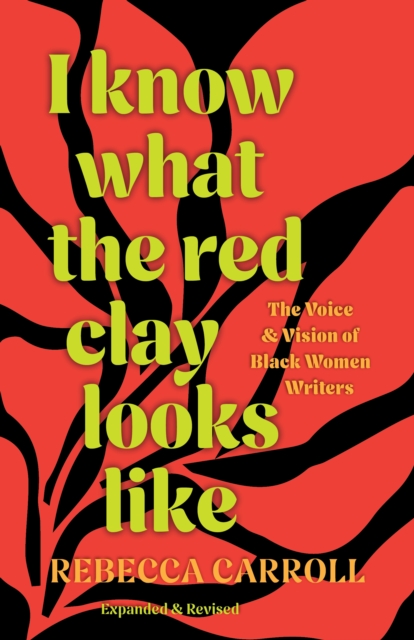
I Know What the Red Clay Looks Like
Thirty years after its original publication, this newly imagined edition brings the work and musings of fifteen Black literary luminaries in conversation with a new generation of writers and readers.The first edition of I Know What the Red Clay Looks Like, published in 1994, remains an essential text for readers of Black feminist literature in all genres. Featuring interviews with and excerpts by writers like Rita Dove, Pearl Cleage, Barbara Neely, June Jordan, and others, this indispensable work speaks to the intersections of politics and art-making along the lines of race, gender, sexuality, and class.Now, writer and cultural critic Rebecca Carroll presents the original conversations alongside personalized introductions by some of the brightest voices in today s literary world, including Donika Kelly, Safiya Sinclair, Diamond Sharp, and Chanda Prescod-Weinstein, among others. This new edition also includes an introductory poem by Morgan Parker, a foreword by Salamishah Tillet, and a new author s note. The new contributors carry the torch of the original interviewees lives and words with heart, rigor, gratitude, and radical imagination, illuminating how these conversations are about more than just writing they are about life, relationships, joy, gratitude, wellness, and self-preservation.I Know What the Red Clay Looks Like is a book unbound by time, lifting up a chorus of past and present voices. Paying homage to a historic lineage of Black feminist writers and their impact on our current literary landscape, it is a book by and for the storytellers, the poets, the playwrights, the dreamers, and all readers interested in what it means to make art within and from marginalized spaces.
eBook

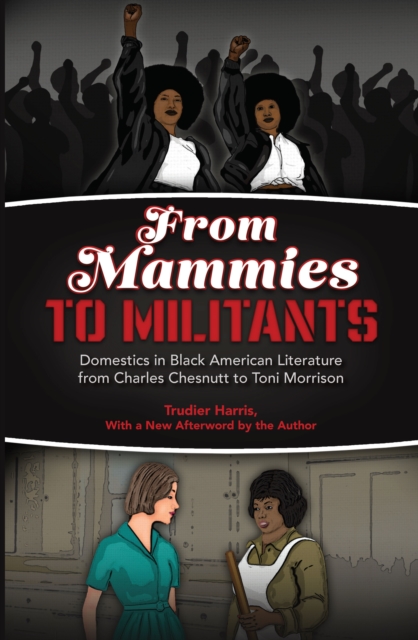
From Mammies to Militants
Welfare queen, hot momma, unwed mother: these stereotypes of Black women share their historical conception in the image of the Black woman as domestic. Focusing on the issue of stereotypes, the new edition of Trudier Harris's classic 1982 study From Mammies to Militants examines the position of the domestic in Black American literature with a new afterword bringing her analysis into the present. From Charles Chesnutt's The Marrow of Tradition to Toni Morrison's The Bluest Eye, Black writers, some of whom worked as maids themselves, have manipulated the stereotype in a strategic way as a figure to comment on Black-white relations or to dramatize the conflicts of the Black protagonists. In fact, the characters themselves, like real-life maids, often use the stereotype to their advantage or to trick their oppressors. Harris combines folkloristic, sociological, historical, and psychological analyses with literary ones, drawing on her own interviews with Black women who worked as domestics. She explores the differences between Northern and Southern maids and between \"mammy\" and \"militant.\" Her invaluable book provides a sweeping exploration of Black American writers of the twentieth century, with extended discussion of works by Charles Chesnutt, Kristin Hunter, Toni Morrison, Richard Wright, Ann Petry, William Melvin Kelley, Alice Childress, John A. Williams, Douglas Turner Ward, Barbara Woods, Ted Shine, and Ed Bullins. Often privileging political statements over realistic characterization in the design of their texts, the authors in Harris's study urged Black Americans to take action to change their powerless conditions, politely if possible, violently if necessary. Through their commitment to improving the conditions of Black people in America, these writers demonstrate the connectedness of art and politics. In her new afterword, \"From Militants to Movie Stars,\" Harris looks at domestic workers in African American literature after the original publication of her book in 1982. Exploring five subsequent literary treatments of Black domestic workers from Ernest J. Gaines's A Lesson Before Dying to Lynn Nottage's By the Way, Meet Vera Stark, Harris tracks how the landscape of representation of domestic workers has broken with tradition and continues to transform into something entirely new.
eBook