
Catalogue Search | MBRL


Are you sure you want to remove the book from the shelf?

{{itemTitle}}
105
result(s) for
"Women in literature-20th century"
Sort by:


Unsettling the Bildungsroman
What kinds of uncertainties and desires do generic issues evoke? How can we account for the continuing hold of the Bildungsroman as a model of analysis? Unsettling the Bildungsroman: Reading Contemporary Ethnic American Women's Fiction combines genre and cultural theory and offers a cross-ethnic comparative approach to the tradition of the female novel of development and the American coming-of-age narrative. Examining closely the work of Jamaica Kincaid, Sandra Cisneros, Maxine Hong Kingston, and Audre Lorde, the chapters foreground processes of constructing an alternative \"art of living\" which challenges the Bildungsroman's drive for either assimilation or ethnic homogeneity and pushes for new configurations of ethnic and American female identity. Drawing on feminist/gender studies, psychoanalytic theory, translation theory, queer theory, and disability studies, the book provides a theoretically engaged rethinking of the Bildungsroman's form and function. Addressing questions of aesthetics and politics, freedom and belonging, betrayal and responsibility, and tracing the Bildungsroman's links with life-writing forms such as immigrant narrative, mother-daughter story, biomythography, and illness narrative, the study outlines the various ways in which the novel of individual development becomes an appropriate site for the negotiation of several enduring and contentious tensions in ethnic American writing. Of potential interest to scholars of American literature, but also ethnic, feminist and postcolonial literatures, and to students of American literature and culture, the book demonstrates the Bildungsroman's ongoing relevance and expanded capacity of representation in an ethnic American and postcolonial context.
eBook

The female suffering body : illness and disability in modern Arabic literature
Examines the absence of representations of female illness in Arab literature, exploring how both literary and cultural perspectives on female sickness and disability have transformed in the modern period and finds that over the course of 60 years women with physical ailments have moved from the margins to the center of Arabic literature.
Book
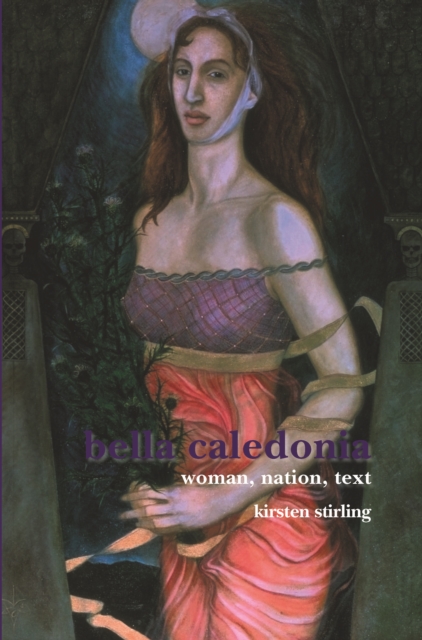
Bella Caledonia
Bella Caledonia: Woman, Nation, Text looks at the widespread tradition of using a female figure to represent the nation, focusing on twentieth-century Scottish literature. The woman-as-nation figure emerged in Scotland in the twentieth century, but as a literary figure rather than an institutional icon like Britannia or France's Marianne. Scottish writers make use of familiar aspects of the trope such as the protective mother nation and the woman as fertile land, which are obviously problematic from a feminist perspective. But darker implications, buried in the long history of the figure, rise to the surface in Scotland, such as woman/nation as victim, and woman/nation as deformed or monstrous. As a result of Scotland's unusual status as a nation within the larger entity of Great Britain, the literary figures under consideration here are never simply incarnations of a confident and complete nation nurturing her warrior sons. Rather, they reflect a more modern anxiety about the concept of the nation, and embody a troubled and divided national identity. Kirsten Stirling traces the development of the twentieth-century Scotland-as-woman figure through readings of poetry and fiction by male and female writers including Hugh MacDiarmid, Naomi Mitchison, Neil Gunn, Lewis Grassic Gibbon, Willa Muir, Alasdair Gray, A.L. Kennedy, Ellen Galford and Janice Galloway.
eBook

Home and the World in Slovak Writing
Home and the World in Slovak Writing brings Slovak literature out of isolation and tells the story of how a nation's literature can survive and thrive despite a small domestic audience and limited circulation in English translation.
eBook

Occupying our space : the mestiza rhetorics of Mexican women journalists and activists, 1875-1942
\"Rhetorical impact that pioneering and revolutionary Mexican female journalists had in shaping a new direction for women in Mexico during the late nineteenth and early twentieth century\"--Provided by publisher.
Book
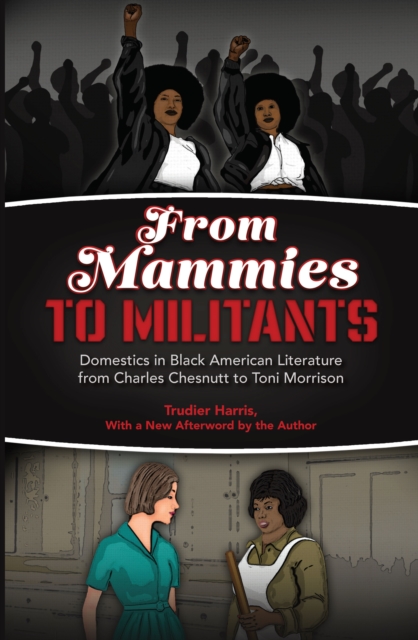
From Mammies to Militants
Welfare queen, hot momma, unwed mother: these stereotypes of Black women share their historical conception in the image of the Black woman as domestic. Focusing on the issue of stereotypes, the new edition of Trudier Harris's classic 1982 study From Mammies to Militants examines the position of the domestic in Black American literature with a new afterword bringing her analysis into the present. From Charles Chesnutt's The Marrow of Tradition to Toni Morrison's The Bluest Eye, Black writers, some of whom worked as maids themselves, have manipulated the stereotype in a strategic way as a figure to comment on Black-white relations or to dramatize the conflicts of the Black protagonists. In fact, the characters themselves, like real-life maids, often use the stereotype to their advantage or to trick their oppressors. Harris combines folkloristic, sociological, historical, and psychological analyses with literary ones, drawing on her own interviews with Black women who worked as domestics. She explores the differences between Northern and Southern maids and between \"mammy\" and \"militant.\" Her invaluable book provides a sweeping exploration of Black American writers of the twentieth century, with extended discussion of works by Charles Chesnutt, Kristin Hunter, Toni Morrison, Richard Wright, Ann Petry, William Melvin Kelley, Alice Childress, John A. Williams, Douglas Turner Ward, Barbara Woods, Ted Shine, and Ed Bullins. Often privileging political statements over realistic characterization in the design of their texts, the authors in Harris's study urged Black Americans to take action to change their powerless conditions, politely if possible, violently if necessary. Through their commitment to improving the conditions of Black people in America, these writers demonstrate the connectedness of art and politics. In her new afterword, \"From Militants to Movie Stars,\" Harris looks at domestic workers in African American literature after the original publication of her book in 1982. Exploring five subsequent literary treatments of Black domestic workers from Ernest J. Gaines's A Lesson Before Dying to Lynn Nottage's By the Way, Meet Vera Stark, Harris tracks how the landscape of representation of domestic workers has broken with tradition and continues to transform into something entirely new.
eBook


The Selected Works of Ora Eddleman Reed
The Selected Works of Ora Eddleman Reed collects the
writings of Ora Eddleman Reed with an introduction that
contextualizes her as an author, a publishing pioneer, a New Woman,
and a person with a complicated lineage. \"Little Writer\" Ora V.
Eddleman (pseudonym Mignon Schreiber) was only eighteen when she
published her first work in the Indian Territory newspaper Twin
Territories , which she edited for much of its brief run. This
publication promoted the literary works of Muskogee Creek poet
Chinnubbie Harjo (Alexander Posey), Cherokee historian Joshua Ross,
and Muskogee Creek chief Pleasant Porter. In the advice column
\"What the Curious Want to Know,\" Eddleman Reed answered readers
from around the country who had ignorant impressions of Indian
Territory (and whose questions, notably, she did not include). Such
columns were accompanied by pieces that amount to some of the
earliest Native historiography by an American woman claiming
Indigenous heritage. Twin Territories was directed at both
Natives and non-Natives and had a national readership. The
heterogeneous form of the newspaper gave room for healthy internal
debate on controversial ideas like Indigenous sovereignty and
assimilation, affirming Native Americans as a significant, diverse
collective. In this first book of Eddleman Reed's work, Cari M.
Carpenter and Karen L. Kilcup revive the writings of an important
author, publisher, and activist for Cherokee rights.
eBook