
Catalogue Search | MBRL


Are you sure you want to remove the book from the shelf?

{{itemTitle}}
386
result(s) for
"Women in the theater 20th century."
Sort by:

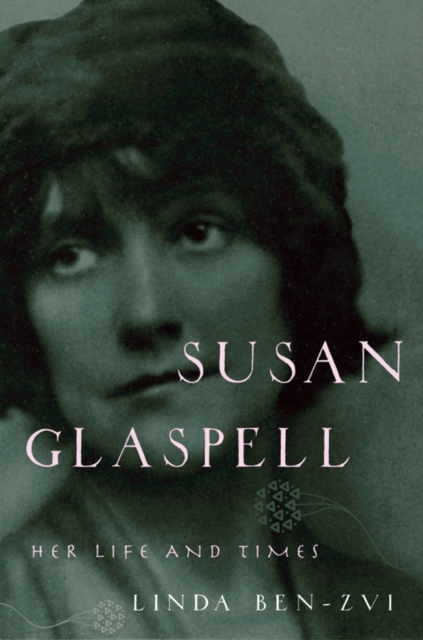
Susan Glaspell
The biography of Susan Glaspell traces the development of the first important American female playwright and illustrates the ways in which her fascinating, avant-garde life provided the model and materials for her groundbreaking dramas and fiction.
eBook


The Women of Provincetown, 1915-1922
Black examines the roles a remarkable group of women played in one of the most influential theatre groups in America, demonstrating their influence on 20th-century dramaturgy and culture. Perhaps most notable for its discovery of two significant American playwrights--Eugene O'Neill and Susan Glaspell--and for its role in developing an American tradition of non-commercial theatre, the Provincetown Players collective has long been appreciated for its meaningful contributions to American drama. An outgrowth of the Greenwich Village community of politically minded artists and intellectuals, the group became convinced that theatre was essential to America's spiritual and social regeneration. The company ultimately produced nearly 100 plays by more than 50 American writers. In this thoroughly engaging work, Cheryl Black argues that Provincetown has another, largely unacknowledged claim to fame: it was one of the first theatre companies in America in which women achieved prominence in every area of operation. At a time when women playwrights were rare, women directors rarer, and women scenic designers unheard of, Provincetown's female members excelled in all these functions, making significant contributions to the development of modern American drama and theatre. In addition to playwright Glaspell, the company's female membership included the likes of poets Edna St. Vincent Millay, Mina Loy, and Djuna Barnes; journalists Louise Bryant and Mary Heaton Vorce; novelists Neith Boyce and Evelyn Scott; and painter Marguerite Zorach. A solidly researched and engagingly written piece of social history, this book offers new insight into the relationship between gender and theatre and will attract a broad readership, including students and scholars of theatre, women's studies, feminism, and American Studies, and members of the general public interested in any of these issues.
eBook


Rehearsing revolutions : the labor drama experiment and radical activism in the early twentieth century
Choice Outstanding Academic Title, 2019 George Freedley Memorial Award Finalist, 2020 Between the world wars, several labor colleges sprouted up across the U.S. These schools, funded by unions, sought to provide members with adult education while also indoctrinating them into the cause. As Mary McAvoy reveals, a big part of that learning experience centered on the schools' drama programs. For the first time, Rehearsing Revolutions shows how these left-leaning drama programs prepared American workers for the \"on-the-ground\" activism emerging across the country. In fact, McAvoy argues, these amateur stages served as training grounds for radical social activism in early twentieth-century America. Using a wealth of previously unpublished material such as director's reports, course materials, playscripts, and reviews, McAvoy traces the programs' evolution from experimental teaching tool to radically politicized training that inspired overt—even militant—labor activism by the late 1930s. All the while, she keeps an eye on larger trends in public life, connecting interwar labor drama to post-war arts-based activism in response to McCarthyism, the Cold War, and the Civil Rights movement. Ultimately, McAvoy asks: What did labor drama do for the workers' colleges and why did they pursue it? She finds her answer through several different case studies in places like the Portland Labor College and the Highlander Folk School in Tennessee.
eBook

Stage women, 1900-50 : female theatre workers and professional practice
This book presents a collection of cutting-edge historical and cultural essays in the field of women, theatre and performance. The chapters explore women's networks of professional practice in the theatre and performance industries between 1900 and 1950, with a focus on women's sense and experience of professional agency in an industry largely controlled by men. The book is divided into two sections: 'Female theatre workers in the social and theatrical realm' looks at the relationship between women's work - on and off stage - and autobiography, activism, technique, touring, education and the law. 'Women and popular performance' focuses on the careers of individual artists, once household names, including Lily Brayton, Ellen Terry, radio star Mabel Constanduros and Oscar-winning film star Margaret Rutherford.
Book

Acts of authority/acts of resistance
Despite its importance to literary and cultural texts of resistance, theater has been largely overlooked as a field of analysis in colonial and postcolonial studies. Acts of Authority/Acts of Resistance seeks to address that absence, as it uniquely views drama and performance as central to the practice of nationalism and anti-colonial resistance. Nandi Bhatia argues that Indian theater was a significant force in the struggle against oppressive colonial and postcolonial structures, as it sought to undo various schemes of political and cultural power through its engagement with subjects derived from mythology, history, and available colonial models such as Shakespeare. Bhatia's attention to local histories within a postcolonial framework places performance in a global and transcultural context. Drawing connections between art and politics, between performance and everyday experience, Bhatia shows how performance often intervened in political debates and even changed the course of politics. One of the first Western studies of Indian theater to link the aesthetics and the politics of that theater, Acts of Authority/Acts of Resistance combines in-depth archival research with close readings of dramatic texts performed at critical moments in history. Each chapter amplifies its themes against the backdrop of specific social conditions as it examines particular dramatic productions, from The Indigo Mirror to adaptations of Shakespeare plays by Indian theater companies, illustrating the role of theater in bringing nationalist, anticolonial, and gendered struggles into the public sphere.
eBook

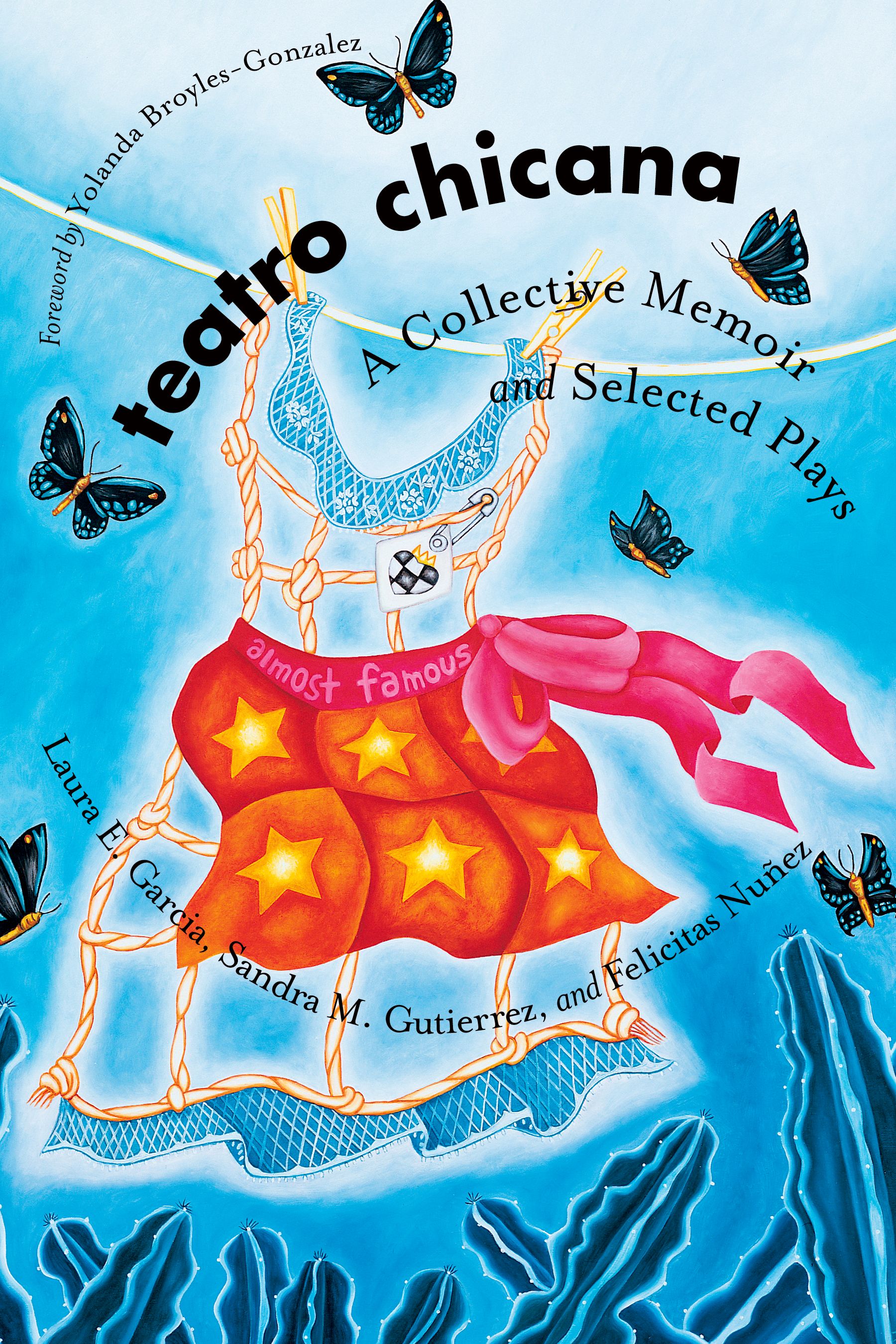
Teatro Chicana
Winner, Susan Koppelman Award, Best Edited Volume in Women's Studies in Popular and American Culture, 2008 The 1970s and 1980s saw the awakening of social awareness and political activism in Mexican-American communities. In San Diego, a group of Chicana women participated in a political theatre group whose plays addressed social, gender, and political issues of the working class and the Chicano Movement. In this collective memoir, seventeen women who were a part of Teatro de las Chicanas (later known as Teatro Laboral and Teatro Raíces) come together to share why they joined the theatre and how it transformed their lives. Teatro Chicana tells the story of this troupe through chapters featuring the history and present-day story of each of the main actors and writers, as well as excerpts from the group's materials and seven of their original short scripts.
eBook