
Catalogue Search | MBRL


Are you sure you want to remove the book from the shelf?

{{itemTitle}}
213
result(s) for
"Women journalists Fiction."
Sort by:

Seeing red
When her interview with Major Franklin Trapper, who led survivors of a bombing to safety twenty-five years earlier, goes wrong, Kerra Bailey joins forces with his estranged son John to uncover the truth about the event.
Book

Between the Novel and the News
While American literary history has long acknowledged the profound influence of journalism on canonical male writers, Sari Edelstein argues that American women writers were also influenced by a dynamic relationship with the mainstream press. From the early republic through the turn of the twentieth century, she offers a comprehensive reassessment of writers such as Catharine Maria Sedgwick, Harriet Jacobs, and Charlotte Perkins Gilman. Drawing on slave narratives, sentimental novels, and realist fiction, Edelstein examines how advances in journalism-including the emergence of the penny press, the rise of the story-paper, and the birth of eyewitness reportage-shaped not only a female literary tradition but also gender conventions themselves.
Excluded from formal politics and lacking the vote, women writers were deft analysts of the prevalent tropes and aesthetic gestures of journalism, which they alternately relied upon and resisted in their efforts to influence public opinion and to intervene in political debates. Ultimately,Between the Novel and the Newsis a project of recovery that transforms our understanding of the genesis and the development of American women's writing.
eBook
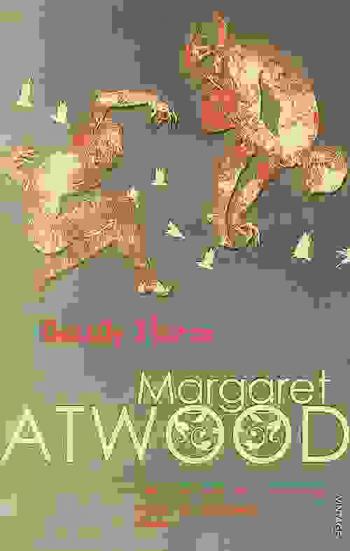
Bodily harm
Rennie Wilford, a young journalist running from her life, takes an assignment to a Caribbean island and tumbles into a world where no one is what they seem. When the burnt-out Yankee Paul (does he smuggle dope or hustle for the CIA?) offers her a no-hooks, no strings affair, she is caught up in a lethal web of corruption.

Italian Women Writers
Post-Unification Italy saw an unprecedented rise of the middle classes, an expansion in the production of print culture, and increased access to education and professions for women, particularly in urban areas. Although there was still widespread illiteracy, especially among women in both rural and urban areas, there emerged a generation of women writers whose domestic fiction and journalism addressed a growing female readership. This study looks at the work of three of the most significant women writers of the period: La Marchesa Colombi, Neera, and Matilde Serao. These writers, whose works had been largely forgotten for much of the last century, only to be rediscovered by the Italian feminist movement of the 1970s, were widely read and received considerable critical acclaim in their day. In their realist fiction and journalism, these professional women writers documented and brought to light the ways in which women participated in everyday life in the newly independent Italy, and how their experiences differed profoundly from those of men.
Katharine Mitchell shows how these three authors, while hardly radical emancipationists, offered late-nineteenth-century readers an implicit feminist intervention and a legitimate means of approaching and engaging with the burning social and political issues of the day regarding “the woman question” – women’s access to education and the professions, legal rights, and suffrage. Through close examinations of these authors and a selection of their works – and with reference to their broader artistic, socio-historical, and geo-political contexts – Mitchell not only draws attention to their authentic representations of contemporary social and historical realities, but also considers their important role as a cultural medium and catalyst for social change.
eBook

Westwind
After his friend suspects something strange going on at the launch facility where they both work - and then goes missing - Martin Hepton doesn't believe the official line of \"long-term sick leave\"... Refusing to stop asking questions, he leaves his old life behind, aware that someone is shadowing his every move. The only hope he has is his ex-girlfriend Jill Watson - the only journalist who will believe his story. But neither of them can believe the puzzle they're piecing together - or just how shocking the secret is that everybody wants to stay hidden.

“Like Home”: Gerrymandering the Physical Public Sphere in Female Journalist Narratives
The cultural figure of the female journalist most clearly embodies the opportunities given to, and the anxieties caused by, the period’s working women. As writers, they fought for rhetorical space in the pages of newspapers and periodicals, and as women, they faced social pressure to avoid the male-dominated physical public sphere or move within it under specific conditions. Even the increasing number of female journalists at the turn of the century could not guarantee their place within the newsroom itself, let alone the world beyond its walls. Instead, their struggle to stake a claim in physical public spaces manifested in fiction and nonfiction narratives as a search for “home,” or a place of belonging. This article explores the exclusively white-woman fiction and nonfiction narratives by and about nonwhite and nonmainstream women through a human geography lens, arguing that their shared central issue is the social “gerrymandering” of women and other overlapping marginalized groups out of physical public spaces, as well as the efforts of women to “redistrict” the social spheres into a comfortable public place in which everyone could thrive.
Journal Article

300 days of sun
\"Traveling to Faro, Portugal, journalist Joanna Millard hopes to escape an unsatisfying relationship and a stalled career ... But Joanna soon realizes that behind the crumbling facades of Moorish buildings Faro has a seedy underbelly ...\"--Inside front cover.
Book

Sisters of tomorrow : the first women of science fiction
For nearly half a century, feminist scholars, writers, and fans have successfully challenged the notion that science fiction is all about “boys and their toys,” pointing to authors such as Mary Shelley, Clare Winger Harris, and Judith Merril as proof that women have always been part of the genre. Continuing this tradition, Sisters of Tomorrow: The First Women of Science Fiction offers readers a comprehensive selection of works by genre luminaries, including author C. L. Moore, artist Margaret Brundage, and others who were well known in their day, including poet Julia Boynton Green, science journalist L. Taylor Hansen, and editor Mary Gnaedinger. Providing insightful commentary and context, this anthology documents how women in the early twentieth century contributed to the pulp-magazine community and showcases the content they produced, including short stories, editorial work, illustrations, poetry, and science journalism. Yaszek and Sharp’s critical annotation and author biographies link women’s work in the early science fiction community to larger patterns of feminine literary and cultural production in turn-of-the-twentieth-century America. In a concluding essay, the award-winning author Kathleen Ann Goonan considers such work in relation to the history of women in science and engineering and to the contemporary science fiction community itself.
eBook

'Angry Young Women' Disrupting the Canon in Late Soviet Latvian Literature: Andra Neiburga's Early Prose Fiction
In the late phase of 'developed socialism', shortly before Mikhail Gorbachev's reforms of perestroika or reconstruction in the Soviet Union in 1985 had reached Latvian cultural establishment, a young generation of poets, writers, playwrights, journalists, musicians, cinema and theatre artists throughout the socialist bloc countries and the Soviet Union initiated new trends in culture. In Soviet Latvia, the new trends in prose fiction produced by young writers were labelled the 'new wave'. Among them - emerged a group of women writers called 'angry young women' who challenged the established canon of socialist realism by addressing new themes including the negative sides of Soviet reality and everyday life, silenced pages of Latvian history under the Soviet regime, issues of sexuality, etc., as well as introducing new poetic features in the prose narrative. The representatives of the 'new wave' produced short prose fiction works that were published in the monthly journal Avots and thus were circulated among broad readership, arousing quick reaction. Andra Neiburga (1957-2019) is one of the 'angry young women' who entered the scene of Latvian literature in 1985 with the publication of short stories in Avots and other press periodicals; her first collection of stories Izbāzti putni un putni būros (Stuffed Birds and Birds in Cages) was published in 1988. The present paper regards the narrative peculiarities of A. Neiburga's early short stories in a gender perspective that reflects the specific ambiguous characteristics of the late Soviet epoch as a time anticipating change in discourse and expression. Along with other young generation writers of the late Soviet period, A. Neiburga distanced herself from the canon of socialist realism and executed what Alice Jardine termed gyn sis by introducing a new voice that expressed indignation, frustration, uncertainty and inscribed a radically different vision of reality that saw the subversive potential of accepted structures and forms of expression.
Journal Article