
Catalogue Search | MBRL


Are you sure you want to remove the book from the shelf?

{{itemTitle}}
14
result(s) for
"Women medical students Fiction."
Sort by:

A history of present illness
A young student doctor discovers the long hours and heartbreaking work at the hospital begin to blur the lines between her new life as a physician and the traumas she's tried to flee from her past.
BOOK

Women’s Introduction to Alternative Sexual Behaviors through Erotica and Its Association with Sexual and Relationship Satisfaction
Women’s interests in bondage, discipline, dominance/submission, and sadism/masochism (BDSM) behaviors are one of the most poorly understood research topics, even though erotica novels—typically read by women—are increasingly including these activities. The present study explored potential links between women’s engagement in BDSM behaviors, consumption of erotica literature, relationship communication and satisfaction, and overall well-being using a multi-study approach. Results from three exploratory studies using multiple methodologies revealed a positive association between erotica, BDSM behaviors, and physical satisfaction, but brought attention to the relatively little information available for women who are interested in practicing alternative sexual behaviors. Practical suggestions for social scientists and mental health professionals are provided.
Journal Article
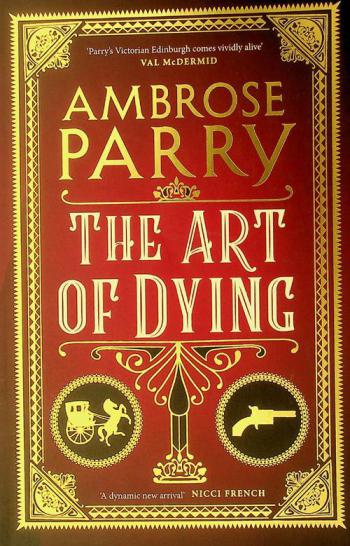
The art of dying
\"Edinburgh, 1850. Despite being at the forefront of modern medicine, hordes of patients are dying all across the city, with doctors finding their remedies powerless. But it is not just the deaths that dismay the esteemed Dr James Simpson - a whispering campaign seeks to blame him for the death of a patient in suspicious circumstances. Simpson's protégé Will Raven and former housemaid Sarah Fisher are determined to clear their patron's name. But with Raven battling against the dark side of his own nature, and Sarah endeavouring to expand her own medical knowledge beyond what society deems acceptable for a woman, the pair struggle to understand the cause of the deaths. Will and Sarah must unite and plunge into Edinburgh's deadliest streets to clear Simpson's name. But soon they discover that the true cause of these deaths has evaded suspicion purely because it is so unthinkable.\"--Provided by publisher.

Who are you?
On August 4, 2020, Lebanon witnessed a second Hiroshima-like explosion of 2,750 tons of ammonium nitrate. It killed and injured thousands of people, destroying most of Beirut. Compounding Lebanon's misery, the coronavirus has taken its toll, as in the rest of the world, with thousands of deaths. There are no more vacant hospital beds and not enough medical supplies. For the last two years, Lebanon has been experiencing economic and political instability. The country is badly in debt and the banks have gone bankrupt and confiscated people's life savings. The Lebanese Lira is pegged to the dollar and two years ago, every dollar was worth 1500 Lebanese Lira; recently, it reached 15000 Lebanese Lira. Half of the population is suffering from poverty and the price of basic food supplies is the highest in the MENA region. The government has resigned but the politicians cannot decide on who to form a new government. Domestic violence has been on the rise because of patriarchy but spouses are mainly fighting over insufficient salaries. Many Lebanese are immigrating, in search of a better living. The poet is dismayed at all this suffering and she resorted to sublimating her anger into writing fiction, memoirs and poetry, playing the piano, singing and drawing. She attended a drawing lesson online. The teacher showed the students how to draw a certain image of a woman. However, the woman who the poet actually drew turned out totally different. When she showed it to her friends, everybody was wondering who it was. So, she was inspired to write a poem answering their questions.
Journal Article

Ever since we loved
To Qiu Shui, a young lad in his most hungry, curious, and restless 20s, the whole world feels a little erotic. Studying at China's top medical college, he can break down men's carnal impulses with solid human anatomy knowledge but can't grasp the inner desire that draws him to three disparate romantic interests - the fairy-like hometown first love, the marriageable college girlfriend, and the sensuous working woman. It's the 1990s when China just opened up to exciting opportunities and risks. Unprecedented social fluidity provokes individuals' materialist and romantic appetites. This cruel new world eventually crushes Qiu Shui's burning passion and takes each of his lovers away. As he looks back at his chaotic youth as a grownup years later, he's rewarded with a deeper understanding of what it means to live and love. Adapting the best-selling novel \"Everything Grows\", China's prominent woman director Li Yu reunites with idol Fan Bingbing to bring female gaze to a male protagonist's story for the first time.
Streaming Video

The art of dying
\"Edinburgh, 1850. Despite being at the forefront of modern medicine, hordes of patients are dying all across the city, with doctors finding their remedies powerless. But it is not just the deaths that dismay the esteemed Dr James Simpson - a whispering campaign seeks to blame him for the death of a patient in suspicious circumstances. Simpson's protégé Will Raven and former housemaid Sarah Fisher are determined to clear their patron's name. But with Raven battling against the dark side of his own nature, and Sarah endeavouring to expand her own medical knowledge beyond what society deems acceptable for a woman, the pair struggle to understand the cause of the deaths. Will and Sarah must unite and plunge into Edinburgh's deadliest streets to clear Simpson's name. But soon they discover that the true cause of these deaths has evaded suspicion purely because it is so unthinkable.\"--Provided by publisher.
BOOK

African American Nurse Leaders and the American Public: Do We Really Understand the Healthcare Law?
Nurses make significant contributions to the American healthcare system and should have knowledge of major healthcare policies such as the Patient Protection and Affordable Care Act (PPACA), particularly those nurses in leadership. More nurse leaders of African descent need an understanding of PPACA to advocate for the policy provisions in the law as it relates to social determinants of health (SDH). This paper illustrates a need for a better understanding of PPACA among nurses of African descent to promote health equity. Keywords Patient protection and affordable care act; Social determinants of health; African American nurse leaders; Health equity; Health disparities. Introduction Nurses are the most trusted healthcare providers[1] and are ideally positioned to play an integral role in moving the U.S. healthcare system forward. With the passage into law, the Patient Protection and Affordable Care Act (PPACA) have provided opportunities that may help achieve health equity. Communicating aspects of the law with patients, families, and communities is a major objective of nursing leaders[2]. Fellows of the Leadership Institute for Black Nurses (LIBN) have a duty, as healthcare providers, to be equipped with the tools that promote health equity. LIBN Fellows were immersed in healthcare both professionally and educationally, and it was expected that they would have more knowledge of PPACA than those of the general public who were surveyed by Kaiser[3] in 2010. Understanding provisions in the law is fundamental to healthcare leadership, and nurse leaders have a mandate to remain current in policy and practice[2]. Kaiser[4] reported that by the end of 2015, the number of uninsured nonelderly adults had decreased by nearly 13 million since 2013 due to PPACA. The decrease was due, in part, to the removal of barriers such as pre-existing conditions and healthcare insurance coverage for dependent children up to age 26. In addition, the Department of Health and Human Services5 (DHHS) reported that PPACA has improved the quality of healthcare along with lowering the cost. For example, the cost of prescriptions for seniors has been reduced, and there are now tax credits for small business owners[5]. However, provisions in PPACA that improved access to care such as the health insurance exchanges remain a mystery to many. Moreover, awareness of the benefits of the law still eludes many currently including nurses and more importantly, those who it is intended to help the most. Therefore, this topic remains an issue and more education is needed among nurses as they advocate for healthcare consumers. Knowing fact from fiction is essential to effective leadership. It is necessary that nurses understand new and exciting programs in the U.S. healthcare system regardless of whether the nurse is: • providing direct patient care as a staff nurse, • directing patients’ care as an Advance Practice Nurse (APN), • overseeing a nursing department as a healthcare administrator, • preparing future nurses as a nurse educator, or • Generating nursing science as a scholar. Moreover, since many African American nurses work in urban settings and care for large minority populations, an understanding of PPACA is essential. Purpose The purpose of this paper is to (1) highlight policy provisions in PPACA; (2) discuss the link between social determinants of health (SDH) and PPACA; (3) compare knowledge levels of the American public in December, 2010 to nurses of African descent in December, 2013; and (4) recommend strategies to identify and improve areas of PPACA knowledge deficit. Summary of PPACA PPACA consists of two bills that were signed into law by President Barack Obama on March 23, 2010. The two bills consisted of the Patient Protection and Affordable Care Act (H.R. 3590) and Education Reconciliation Act of 2010 (H.R. 4872). Once signed by President Obama, the bills became Public Law 111-148[6] (Table 1) and Public Law 111-152[7] respectively (Table 2). Approximately two years later, on June 28, 2012, the Supreme Court rendered a final decision to uphold the healthcare law[8]. However, there are still efforts to repeal the law. PPACA focuses on provisions to expand coverage, control healthcare costs, and improve the healthcare delivery system. One key provision of PPACA bans discrimination against preexisting conditions[9]. There are ten titles in the law6 which address various areas in healthcare that contribute to the improvement of the U.S. healthcare delivery system (Table 1). The focus of the provisions of PPACA are quality of healthcare, affordable healthcare for all Americans, improved efficiency of healthcare, prevention of chronic disease, and improvement of public health. Title V of PPACA focuses on improving workforce training and development, and encompasses several areas targeting nursing education and training aimed at adequately preparing nurses at all levels to serve the population. Public Law 111-1527 adjusted revenue and financing schedules for private insurance coverage, Medicare, Medicaid; and reduced fraud, waste, and abuse in healthcare financing. In addition, key components of this law addressed investing in students and families through student loan reform, modifying financial assistance for higher education, and eligibility criteria for dependent children (Table 2). Together, Public Laws 111- 148 and 111-152 are referred to as the Patient Protection and Affordable Care Act. Quality Affordable Health Care for All Americans a.Eliminates lifetime annual limits on benefits. b.Prohibits rescissions of health insurance policies. c.Provides assistance for those who are uninsured because of a pre-existing condition. d.Prohibits pre-existing condition exclusions for children. e.Provides coverage of preventative services and immunizations. f.Extends dependent coverage up to age 26. g.Develops uniform coverage documents to help consumers better compare policies. h.Limits insurance company non-medical administrative expenditures. i.Ensures consumers have access to an effective appeals process. j.Creates a temporary re-insurance program to support coverage for early retirees. k.Establishes an internet portal to assist in identifying coverage options. l.Facilitates administrative simplification to lower health system costs. Role of Public Programs a.Expands Medicaid availability to consumers previously ineligible. b.Requires states to maintain eligibility levels for the Children’s Health Insurance Program (CHIP) through September 2019. c.Simplifies enrollment through state-run Web sites. d.Creates the availability of the Community First Choice Option. e.Reduces states’ Disproportionate Share Hospital Allotments (DSH). f.Improves federal and state coordination for individuals enrolled in Medicare and Medicaid. Quality and Efficiency of Health Care a.Links payment to quality performance on common, high-cost conditions. b.Establishes national strategy to improve service delivery, patient outcomes, and population health. c.Encourages development of new patient care, payment, and delivery models. d.Ensures beneficiary access to physician care. e.Offers rural protections. f.Improves payment accuracy. g.Rearranges Medicare Advantage (Part C) payment schedules. h.Reduces Medicare Prescription Drug Plan (Part D) costs. i.Ensures Medicare sustainability. j.Improves quality of community health care. Chronic Disease and Public Health a.Modernizes disease prevention and public health systems. b.Increases access to clinical preventive services. c.Creates healthier communities. d.Offers supports for prevention and public health innovation. Health Care Workforce a.Encourages innovative review of the workforce. b.Increases the supply of health care workers. c.Enhances health care workforce education and training. d.Supports the existing health care workforce. e.Strengthens primary care and other workforce improvements. f.Improves access to health care services. Transparency and Program Integrity a.Encourages physician ownership and transparency. b.Improves nursing home transparency. c.Targets enforcement. d.Improves staff training. e.Institutes nationwide program for background checks on direct patient access employees of long term care facilities and providers. f.Establishes patient-centered outcomes research. g.Establishes integrity provisions for Medicare, Medicaid, and CHIP. h.Enhances integrity provisions for Medicare and Medicaid. i.Encourages additional Medicaid program integrity provisions. j.Encourages additional program integrity provisions. k.Encourages enforcement of the Elder Justice Act. l.Expresses the sense of the Senate regarding medical malpractice. Access to Innovative Medical Therapies a.Establishes biologics price competition and innovation. b.Provides more affordable medicines for children and underserved communities. Community Living Assistance Services and Supports a.Establishes national voluntary insurance program for purchasing Community Living Assistance Services and Support (CLASS). Revenue Provisions a.Levies excise tax on high cost employer-sponsored health coverage. b.Increases transparency in employer W-2 reporting of health benefits values. c.Supports distributions for medicine qualified only if for prescribed drugs or insulin. d.Increases additional tax on distributions from HSAs and Archer MSAs not used for qualified medical expenses. e.Limits health-care related FSA contributions. f.Institutes requirement of corporate information reporting. g.Establishes new requirement for non-profit hospitals. h.Imposes a pharmaceutical manufacturer’s fee. i.Imposes a medical device manufacturer’s fee. j.Imposes an insurance provider fee. k.Instates requirement of Department of Veterans Affairs report. l.Eliminates the deduction for employer Part D subsidy. m.Modifies the threshold for claiming the itemized deduction for medical expenses. n.Limits executive compensation. o.Imposes additional hospital insurance tax for high-wag
Journal Article

Beyond Politics: Authoritarianism and the Pursuit of Leisure
Psychologists know a lot about the political ands ideological correlates of people scoring high on authoritarianism. However, psychologists have less knowledge about such people's everyday pursuits. In the present study, the authors examined authoritarian interest in film, live events, music, and reading. A predictable pattern of correlates emerged. For example, authoritarians enjoyed activities in which physical conflict was prominent, whereas authoritarians tended not to like entertainment that offered introspection. In general, the present results were consistent across 2 samples (N = 120, N = 90). Although men and women had significantly different preferences on over 0.5 of the leisure pursuits (e.g., men enjoyed action films more than did women), there were no significant gender differences in the magnitudes of correlates with authoritarianism. In general, leisure interests appeared to be partly manifestations or expressions of authoritarian tendencies.
Journal Article
Of human bondage
A young man finds himself attracted to a cold and unfeeling waitress who may ultimately destroy them both.
Streaming Video