
Catalogue Search | MBRL


Are you sure you want to remove the book from the shelf?

{{itemTitle}}
4,536
result(s) for
"Women mediums"
Sort by:
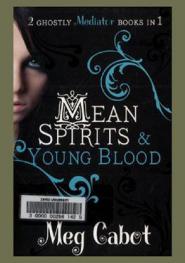
Mean spirits : & Young blood
Mean spirits: School is definitely out! And Suze is set to spend the summer down at the beach with her best friend, Gina. Then she runs into the vengeful ghosts of four high-school students. They're out to wreak some seriously dangerous havoc - and only Suze has the mediating skills to stop them. But she'd better act fast, before the mean spitrits turn on her.

Writing Double
Although Roland Barthes and Michel Foucault announced the death of the author several decades ago, critics have been slow to abandon the idea of the solitary writer. Bette London maintains that this notion has blinded us to the reality that writing is seldom an individual activity and that it has led us to overlook both the frequency with which women authors have worked together and the significance of their collaborative undertakings as a form of professional activity. InWriting Double, the first full-length treatment of women's literary partnerships, she goes to the heart of issues surrounding authorial identity.
What is an author? Which forms of authorship are sanctioned and which forms marginalized? Which of these forms have particularly attracted women? Such questions are central to London's analysis of the challenge that women's literary collaboration presents to accepted notions of authorship. Focusing on British texts from the nineteenth and twentieth centuries, she considers a fascinating variety of works by largely noncanonical, and in some instances highly unconventional, authors-from the enormously popular novels composed by writing teams at the turn of the century, to the Brontë juvenilia and the occult scripts of Georgie Yeats and W. B. Yeats, to automatic writings produced by mediums purporting to be in communication with the spirit world.
eBook

First grave on the right
Using her ability to see ghosts in her work as a private investigator, Charley Davidson begins experiencing intense sensual dreams about a mysterious entity that has been following her throughout her life.
Book

The Sympathetic Medium
The nineteenth century saw not only the emergence of the telegraph, the telephone, and the typewriter but also a fascination with séances and occult practices like automatic writing as a means for contacting the dead. Like the new technologies, modern spiritualism promised to link people separated by space or circumstance; and like them as well, it depended on the presence of a human medium to convey these conversations. Whether electrical or otherworldly, these communications were remarkably often conducted-in offices, at telegraph stations and telephone switchboards, and in séance parlors-by women.
InThe Sympathetic Medium, Jill Galvan offers a richly nuanced and culturally grounded analysis of the rise of the female medium in Great Britain and the United States during the Victorian era and through the turn of the century. Examining a wide variety of fictional explorations of feminine channeling (in both the technological and supernatural realms) by such authors as Henry James, George Eliot, Arthur Conan Doyle, Bram Stoker, Marie Corelli, and George Du Maurier, Galvan argues that women were often chosen for that role, or assumed it themselves, because they made at-a-distance dialogues seem more intimate, less mediated. Two allegedly feminine traits, sympathy and a susceptibility to automatism, enabled women to disappear into their roles as message-carriers.
Anchoring her literary analysis in discussions of social, economic, and scientific culture, Galvan finds that nineteenth- and early twentieth-century feminization of mediated communication reveals the challenges that the new networked culture presented to prevailing ideas of gender, dialogue, privacy, and the relationship between body and self.
eBook

Second grave on the left
Awakened in the middle of the night by a friend who has been texted by a missing woman, Charley Davidson discovers clues linking the disappearance to the murder of a woman two weeks earlier.
Book

Little Victorian Cottages
This chapter discusses the specific boundaries of Lily Dale through an exploration of the home and femininity in both Spiritualism and Victorian culture. Since the founding of the Spiritualist religious movement, mediums have made private homes into public spaces. Strangers were invited into the inner sanctum of the domestic sphere, the one place in the Victorian era where women were granted some modicum of authority, where women spoke and were heard. Lily Dale’s Victorian cottages and houses, then, are more than quaint remnants of an architectural moment. They are the heart and soul of the town’s religious character. The chapter then considers the practice of physical mediumship and the significance of the mediums of Lily Dale conducting séances in their homes. The Spiritualist séance as public spectacle and Victorian entertainment was both a manifestation and a corruption of domesticity in a way that empowered women mediums. When the movement became a formal organization, however, the feminist identity of Spiritualism waned.
Book Chapter

The light between us : stories from heaven, lessons for the living
\"Laura Lynne Jackson is a wife, a mother, a high school English teacher-and a psychic medium. Where most believe an impenetrable wall divides the world between the living and the dead, Jackson sees bright, brilliant cords of light that pass through a barrier as thin as a sheet of paper. Her gifts tested and verified by some of the most prominent scientific organizations studying paranormal phenomena, Jackson has dedicated her life to exploring our connection to the Other Side, conversing with departed loved ones, and helping people come to terms with loss. In The Light Between Us, she shares her remarkable journey and the lessons in love she's learned along the way. Jackson is just a child when she first realizes she is different from her peers. She has tremendous empathy and often finds herself overcome by the emotions of those around her. She has premonitions about friends and family members that leave her feeling helpless, sad, and confused. She confides in her mother-and learns that the gift runs in the family. For twenty years Jackson leads a double life. By day, she teaches literature to Long Island high school students. At night, in private, she conducts readings that connect people with loved ones who have passed and imparts information with shocking accuracy and insight. And then one day, her two worlds become one and she comes to fully embrace her gift and her purpose. Jackson writes with clarity and grace, using her unique perspective to address the eternal questions that vex us all: Why are we here? What happens when we die? How do we find our true path in this life? Here too are deeply affecting accounts of ordinary people reunited with their departed friends and family members-true stories of forgiveness and reconciliation that transcend the barrier between life and death.\"--Publisher's website.
Book

Factors associated with inadequate urinary iodine concentration among pregnant women in Mbeya region Tanzania. version 5; peer review: 1 approved, 1 approved with reservations
Background
Insufficient and above WHO-recommended levels of iodine intake during pregnancy can lead to serious health outcomes. This study aimed to assess median urine iodine concentration and its associated risk factors among pregnant women in the Mbeya region, Tanzania.
Method
A cross sectional survey involving 420 pregnant women (n=420) aged 15-49, registered in Reproductive and Child Health Clinics was conducted. Socio-demographic and dietary factors were assessed by structured questionnaire and the urine samples were analyzed using the ammonium persulfate digestion method.
Results
Median urinary iodine concentration (mUIC) was 279.4μg/L and it ranged from 26.1 to 1915μg/L. Insufficient mUIC (below 150μg/L) was observed in 17.14% of participants, sufficient mUIC was 24.29% and 58.57% had mUIC above the recommended level (>250μg/L). Sample women who reported consuming fish in the last 24 hours had an increased risk of insufficient mUIC [Adjusted OR= 2.60 (95%CI 1.31-5.15)] while the risk was lower for those who attended at least primary education [AOR= 0.29 (CI 0.08-0.99)]. Further, sample women resident in Mbarali district, in the oldest age group (35-49) and having a higher socio-economic status were associated with an increased risk of having MUIC above recommended level [AOR=4.09 (CI 1.85-9.010], [AOR=2.51 (CI 0.99-6.330] and, [AOR=2.08 (CI 0.91-4.71) respectively.
Conclusion
This study demonstrated a significant association between geographical, age and socio-economic factors and median urine iodine concentration above the WHO-recommended level. Further, this study found association between inadequate iodine in diet and insufficient median urine iodine concentration. Therefore, educational programs on iodine intake should be strengthened.
Journal Article

Summoned to thirteenth grave
\"Charley Davidson, Grim Reaper extraordinaire, is pissed. She's been kicked off the earthly plane for eternity--which is exactly the amount of time it takes to make a person stark raving mad. But someone's looking out for her, and she's allowed to return after a mere hundred years in exile. Is it too much to hope for that not much has changed? Apparently it is. Bummer. She's missed her daughter. She's missed Reyes. She's missed Cookie and Garrett and Uncle Bob. Now that she's back on earth, it's time to put to rest burning questions that need answers. What happened to her mother? How did she really die? Who killed her? And are cupcakes or coffee the best medicine for a broken heart?\"-- Provided by publisher.
Book
Remaining Anonymous
Communities of Turkish, Moroccan, Surinamese, Indonesian, and Chinese immigrants who are considered, officially, allochtoon—born in another country or having a parent from another country—have long settled in the Netherlands. Pooja Pant, a Nepalese media activist, and I were curious about their experience of becoming Dutch since we had both just arrived to live and work in Amsterdam so we co-founded Voices of Women (VOW) Media in 2007 and we partnered with various community-based organizations working in the area of migrant women’s rights1 to run participatory media workshops.
Book Chapter