
Catalogue Search | MBRL


Are you sure you want to remove the book from the shelf?

{{itemTitle}}
5
result(s) for
"Women political prisoners -- Soviet Union -- Biography"
Sort by:
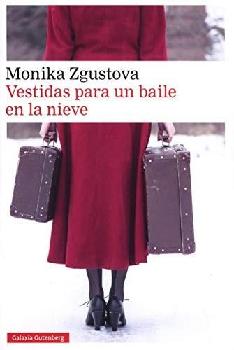
Vestidas para un baile en la nieve
A través de los recuerdos y los objetos, libros y cuadernos que perviven de ese tiempo, Vestidas para un baile en la nieve,(la policía secreta soviética se llevaba a sus víctimas en cualquier momento, también cuando estaban a punto de acudir a un baile) traza el retrato de nueve mujeres y su tiempo en el gulag pero también su regreso a la vida cotidiana. Nueve mujeres, científicas, actrices, maestras, matemáticas, poetas, que son otros tantos ejemplos de superación y de profunda humanidad.
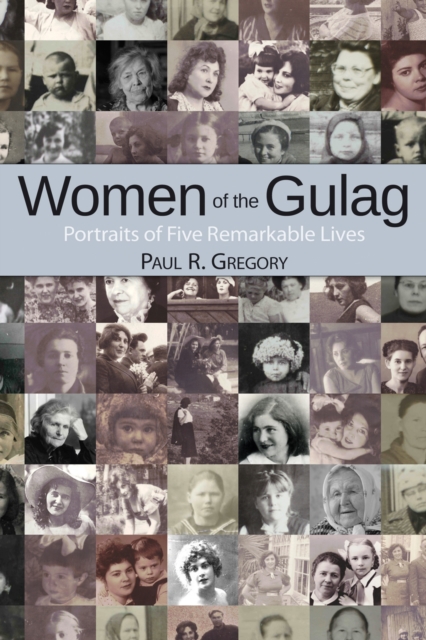
Women of the gulag : portraits of five remarkable lives
During the course of three decades, Joseph Stalin's Gulag, a vast network of forced labor camps and settlements, held many millions of prisoners. People in every corner of the Soviet Union lived in daily terror of imprisonment and execution. In researching the surviving threads of memoirs and oral reminiscences of five women victimized by the Gulag, author Paul R. Gregory has stitched together a collection of stories from the female perspective, a view in short supply. Capturing the fear, paranoia, and unbearable hardship that were hallmarks of Stalin's Great Terror, Gregory relates the stories of five women from different social strata and regions in vivid prose, from their pre-Gulag lives, through their struggles to survive in the repressive atmosphere of the late 1930s and early 1940s, to the difficulties facing the four who survived as they adjusted to life after the Gulag. These firsthand accounts illustrate how even the wrong word could become a crime against the state. The book begins with a synopsis of Stalin's rise to power, the roots of the Gulag, and the scheming and plotting that led to and persisted in one of the bloodiest, most egregious dictatorships of the 20th century.
eBook

Surviving the gulag : a German woman's memoir
\"Surviving the Gulag is the first-person account of a complex woman who survived five horrifying years in Russian prison camps: starved, beaten, and worked nearly to death. A story like Ilse Johansen's is rarely told--of a woman caught in the web of fascism and communism at the end of the Second World War and beginning of the Cold War. Her candid account of her time as a prisoner, written soon after her release, provides startling insight into the trials of a German female prisoner under Soviet rule. Readers of memoir and history, and students of feminism and war studies, will learn more about women's experience of the Soviet gulag through the eyes of Ilse Johansen.\"-- Provided by publisher.
Book

Memoir of a Gulag Actress
In an abridged translation that retains the grace and passion of the original, Klots and Ufberg present the stunning memoir of a young woman who became an actress in the Gulag. Tamara Petkevich had a relatively privileged childhood in the beautiful, impoverished Petrograd of the Soviet regime's early years, but when her father—a fervent believer in the Communist ideal—was arrested, 17-year-old Tamara was branded a \"daughter of the enemy of the people.\" She kept up a search for her father while struggling to support her mother and two sisters, finish school, and enter university. Shortly before the Russian outbreak of World War II, Petkevich was forced to quit school and, against her better judgment, she married an exiled man whom she had met in the lines at the information bureau of the NKVD (People's Commissariat of Internal Affairs). Her mother and one sister perished in the Nazi siege of Leningrad, and Petkevich was herself arrested. With cinematic detail, Petkevich relates her attempts to defend herself against absurd charges of having a connection to the Leningrad terrorist center, counter-revolutionary propaganda, and anti-Semitism that resulted in a sentence of seven years' hard labor in the Gulag. While Petkevich became a professional actress in her own right years after her release from the Gulag, she learned her craft on the stages of the camps scattered across the northern Komi Republic. The existence of prisoner theaters and troupes of political prisoners such as the one Petkevich joined is a little-known fact of Gulag life. Petkevich's depiction not only provides a unique firsthand account of this world within a world but also testifies to the power of art to literally save lives. As Petkevich moves from one form of hardship to another she retains her desire to live and her ability to love. More than a firsthand record of atrocities committed in Stalinist Russia, Memoir of a Gulag Actress is an invaluable source of information on the daily life and culture of the Soviet Union at the time. Russian literature about the Gulag remains vastly underepresented in the United States, and Petkevich's unforgettable memoir will go a long way toward filling this gap. Supplemented with photographs from the author's personal archive, Petkevich's story will be of great interest to general readers, while providing an important resource for historians, political scientists, and students of Russian culture and history.
eBook
Women of the Gulag
During the course of three decades, Joseph Stalin's Gulag, a vast network of forced labor camps and settlements, held many millions of prisoners. People in every corner of the Soviet Union lived in daily terror of imprisonment and execution. In researching the surviving threads of memoirs and oral reminiscences of five women victimized by the Gulag, author Paul R. Gregory has stitched together a collection of stories from the female perspective, a view in short supply. Capturing the fear, paranoia, and unbearable hardship that were hallmarks of Stalin's Great Terror, Gregory relates the stories of five women from different social strata and regions in vivid prose, from their pre-Gulag lives, through their struggles to survive in the repressive atmosphere of the late 1930s and early 1940s, to the difficulties facing the four who survived as they adjusted to life after the Gulag. These firsthand accounts illustrate how even the wrong word could become a crime against the state. The book begins with a synopsis of Stalin's rise to power, the roots of the Gulag, and the scheming and plotting that led to and persisted in one of the bloodiest, most egregious dictatorships of the 20th century.
eBook