
Catalogue Search | MBRL


Are you sure you want to remove the book from the shelf?

{{itemTitle}}
131
result(s) for
"Women public officers United States."
Sort by:


Political Black girl magic : the elections and governance of Black female mayors
Political Black Girl Magic explores black women's experiences as mayors in American cities.The editor and contributors to this comprehensive volume examine black female mayoral campaigns and elections where race and gender are a factor--and where deracialized campaigns have garnered candidate support from white as well as Hispanic and Asian.
eBook

There is nothing for you here : finding opportunity in the twenty-first century
\"A celebrated foreign-policy expert and key impeachment witness reveals how declining opportunity has set America on the grim path of modern Russia - and draws on her personal journey out of poverty, and her unique perspectives as a historian and policy maker, to show how we can return hope to our forgotten places
BOOK

Who Takes the Floor and Why: Gender, Power, and Volubility in Organizations
Although past research has noted the importance of both power and gender for understanding volubility—the total amount of time spent talking—in organizations, to date, identifying the unique contributions of power and gender to volubility has been somewhat elusive. Using both naturalistic data sets and experiments, the present studies indicate that while power has a strong, positive effect on volubility for men, no such effect exists for women. Study 1 uses archival data to examine the relationship between the relative power of United States senators and their talking behavior on the Senate floor. Results indicate a strong positive relationship between power and volubility for male senators, but a non-significant relationship for female senators. Study 2 replicates this effect in an experimental setting by priming the concept of power and shows that though men primed with power talk more, women show no effect of power on volubility. Mediation analyses indicate that this difference is explained by women's concern that being highly voluble will result in negative consequences (i.e., backlash). Study 3 shows that powerful women are in fact correct in assuming that they will incur backlash as a result of talking more than others—an effect that is observed among both male and female perceivers. Implications for the literatures on volubility, power, and previous studies of backlash are discussed.
Journal Article

Term Limits and Their Consequences
Legislative term limits remain a controversial feature of the
American political landscape. Term Limits and Their
Consequences provides a clear, comprehensive, and nonpartisan
look at all aspects of this contentious subject. Stanley M. Caress
and Todd T. Kunioka trace the emergence of the grassroots movement
that supported term limits and explain why the idea of term limits
became popular with voters. At the same time, they put term limits
into a broader historical context, illustrating how they are one of
many examples of the public's desire to reform government.
Utilizing an impressive blend of quantitative data and interviews,
Caress and Kunioka thoughtfully discuss the impact of term limits,
focusing in particular on the nation's largest state, California.
They scrutinize voting data to determine if term limits have
altered election outcomes or the electoral chances of women and
minority candidates, and reveal how restricting a legislator's time
in office has changed political careers and ambitions. Designed to
transform American politics, term limits did indeed bring change,
but in ways ranging far beyond those anticipated by both their
advocates and detractors.
eBook
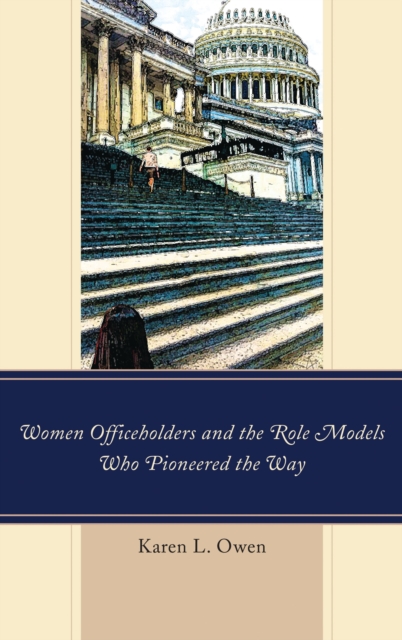
Women officeholders and the role models who pioneered the way
Recent electoral seasons in American politics demonstrate women’s keen interest, involvement, and influence as candidates and officeholders. Women possess political ambition, albeit in varying degrees, and as such, women seek opportunities to be politically engaged and affect America's representative institutions. This book analyzes why American women run for political office, and explores how political role models, identified as publicly elected officials and/or those who have served in the political arena, have greatly motivated women to run for higher political office, including seats in the U.S. Congress and state governorships. Evidence from personal interviews with ten congresswomen and fifty-five female state legislators reveals the ambitious nature of female politicians, the encouragement of political factors in their decisions to advance in politics, and their perceived responsibility to be role models to other women. Moreover, in studying thirty-five years of elections data, I find substantial support for how female political role models influence female state legislators’ candidacies and electoral outcomes to higher office. This work highlights the importance of women as symbolic representatives; female politicians are instrumental in emboldening a new generation of women to engage in politics. Role models in politics indeed have a purpose and an influential nature.
eBook

The Relationship Between US Military Officer Leadership Behaviors and Risk of Sexual Assault of Reserve, National Guard, and Active Component Servicewomen in Nondeployed Locations
Objectives. To determine if military leader behaviors are associated with active component and Reserve–National Guard servicewomen’s risk of sexual assault in the military (SAIM) for nondeployed locations. Methods. A community sample of 1337 Operation Enduring Freedom and Operation Iraqi Freedom–era Army and Air Force servicewomen completed telephone interviews (March 2010–December 2011) querying sociodemographic and military characteristics, sexual assault histories, and leader behaviors. We created 2 factor scores (commissioned and noncommissioned) to summarize behaviors by officer rank. Results. A total of 177 servicewomen (13%) experienced SAIM in nondeployed locations. Negative leader behaviors were associated with increased assault risk, at least doubling servicewomen’s odds of SAIM (e.g., noncommissioned officers allowed others in unit to make sexually demeaning comments; odds ratio = 2.7; 95% confidence interval = 1.8, 4.1). Leader behavior frequencies were similar, regardless of service type. Negative leadership behavior risk factors remained significantly associated with SAIM risk even after adjustment for competing risk. Noncommissioned and commissioned officer factor scores were highly correlated (r = 0.849). Conclusions. The association between leader behaviors and SAIM indicates that US military leaders have a critical role in influencing servicewomen’s risk of and safety from SAIM.
Journal Article

Hillary Clinton in the News
The charge of inauthenticity has trailed Hillary Clinton from the moment she entered the national spotlight and stood in front of television cameras. Hillary Clinton in the News: Gender and Authenticity in American Politics shows how the U.S. news media created their own news frames of Clinton's political authenticity and image-making, from her participation in Bill Clinton's 1992 presidential campaign through her own 2008 presidential bid. Using theories of nationalism, feminism, and authenticity, Parry-Giles tracks the evolving ways the major networks and cable news programs framed Clinton's image as she assumed roles ranging from surrogate campaigner, legislative advocate, and financial investor to international emissary, scorned wife, and political candidate. This study magnifies how the coverage that preceded Clinton's entry into electoral politics was grounded in her earliest presence in the national spotlight, and in long-standing nationalistic beliefs about the boundaries of authentic womanhood and first lady comportment. Once Clinton dared to cross those gender boundaries and vie for office in her own right, the news exuded a rhetoric of sexual violence. These portrayals served as a warning to other women who dared to enter the political arena and violate the protocols of authentic womanhood.
eBook

Examining the Role of Safety Planning and Firearms in Community Professional’s Advice and Perceived Helpfulness for Female IPV Victims
When IPV victims contact justice system or victim service professionals they are often advised on safety actions. Yet, there is limited research on what advice victims receive and how that advice might differ depending on where one lives (e.g., a rural versus urban area) or who is giving the advice (e.g., law enforcement versus victim advocates). The current study surveyed 133 justice system and victim service professionals who work with IPV victims in rural and urban communities. Three primary research questions were analyzed: (1) what advice do professionals give IPV victims with protective orders that had been violated?; (2) how helpful do professionals perceive six different safety strategies for IPV victims?; and (3) what role do firearms play in safety advice and perceived helpfulness among professionals? Contacting the criminal justice system was overwhelmingly the most common safety advice reported by all professionals. In comparison, less than one third of professionals mentioned safety planning and less than 20% mentioned seeking help from victim services despite these two responses being rated as the most helpful in the close-ended questions. Although obtaining a firearm was advised by few professionals and was perceived as unhelpful by most professionals, rural and justice system professionals were more likely than their counterparts to mention firearms in their advice and rate firearm-related protective behaviors as helpful. The results highlight the need to focus on improving first responder advice to victims and maximize training on the importance of safety planning in high-risk IPV circumstances.
Journal Article

“It’s gotta be really hard to be a mom inside right now:” a qualitative analysis on the impacts of COVID-19 on perinatal support programs for people in prison
Background
Prisons are well understood to be hotspots of the COVID-19 pandemic. Yet, little is known about the impacts the COVID-19 pandemic has had on pregnant and postpartum people in prison. We conducted a secondary analysis of 63 semi-structured qualitative interviews (December 2021—May 2023) with subject matter experts, primarily perinatal program staff working in prisons, to better understand how perinatal support programs for people in prison were impacted by the COVID-19 pandemic.
Results
We identified nine themes in interviews as impacting perinatal support programming for incarcerated pregnant and postpartum people during the COVID-19 pandemic: 1) prison COVID-19 preventative practices and their influences on perinatal support programs; 2) COVID-19 quarantine and confinement of pregnant and postpartum people; 3) changes in the pregnant and postpartum population and reentry support; 4) changes to birth support during incarceration; 5) lack of communication and inconsistency between the DOC and perinatal support programs; 6) DOC staffing and staff turnover; 7) lack of access to volunteer-led programming and visiting; 8) relationships between perinatal support programs and DOC healthcare providers; and 9) relationships between perinatal support programs and hospitals. Results were organized into a modified socioecological model, allowing us to view different spheres of influence, how they interact and overlap, and as we describe in the discussion section, where practitioners and policy-makers might intervene. In particular, we focused on the organizational, relational, and structural levels, with multiple themes organized into each level. All of these themes, together, help provide information on how the COVID-19 pandemic impacted perinatal support programs in prisons.
Conclusions
The COVID-19 pandemic had drastic impacts on prison operations and perinatal support programs, with cascading influences on the health and wellbeing of pregnant and postpartum people who are incarcerated. We conclude with a series of recommendations, developed by the research team and a community research council of formerly incarcerated individuals, that aim to address pandemic-related health disparities and promote health equity among those disproportionately impacted by the COVID-19 pandemic.
Journal Article