
Catalogue Search | MBRL


Are you sure you want to remove the book from the shelf?

{{itemTitle}}
10,798
result(s) for
"Women scientists"
Sort by:


Breaking into the Lab
Why are there so few women in science? In Breaking into the Lab, Sue Rosser uses the experiences of successful women scientists and engineers to answer the question of why elite institutions have so few women scientists and engineers tenured on their faculties. Women are highly qualified, motivated students, and yet they have drastically higher rates of attrition, and they are shying away from the fields with the greatest demand for workers and the biggest economic payoffs, such as engineering, computer sciences, and the physical sciences. Rosser shows that these continuing trends are not only disappointing, they are urgent: the U.S. can no longer afford to lose the talents of the women scientists and engineers, because it is quickly losing its lead in science and technology. Ultimately, these biases and barriers may lock women out of the new scientific frontiers of innovation and technology transfer, resulting in loss of useful inventions and products to society.
eBook

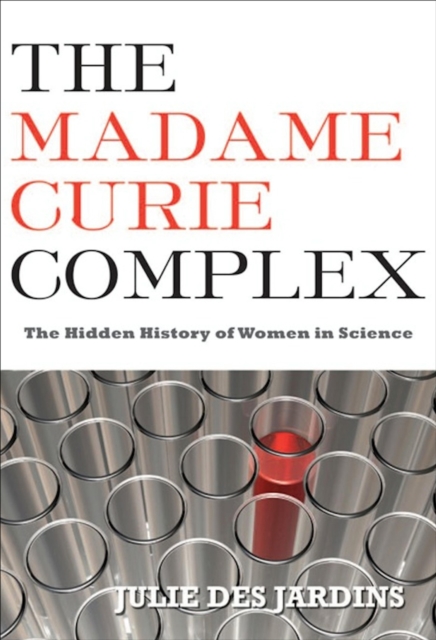
The Madame Curie Complex
The historian and author of Lillian Gilbreth examines the \"Great Man\" myth of science with profiles of women scientists from Marie Curie to Jane Goodall.
Why is science still considered to be predominantly male profession? In The Madame Curie Complex, Julie Des Jardin dismantles the myth of the lone male genius, reframing the history of science with revelations about women's substantial contributions to the field.
She explores the lives of some of the most famous female scientists, including Jane Goodall, the eminent primatologist; Rosalind Franklin, the chemist whose work anticipated the discovery of DNA's structure; Rosalyn Yalow, the Nobel Prize-winning physicist; and, of course, Marie Curie, the Nobel Prize-winning pioneer whose towering, mythical status has both empowered and stigmatized future generations of women considering a life in science.
With lively anecdotes and vivid detail, The Madame Curie Complex reveals how women scientists have changed the course of science—and the role of the scientist—throughout the twentieth century. They often asked different questions, used different methods, and came up with different, groundbreaking explanations for phenomena in the natural world.
eBook


Motherhood, the Elephant in the Laboratory
About half of the undergraduate and roughly 40 percent of graduate degree recipients in science and engineering are women. As increasing numbers of these women pursue research careers in science, many who choose to have children discover the unique difficulties of balancing a professional life in these highly competitive (and often male-dominated) fields with the demands of motherhood. Although this issue directly affects the career advancement of women scientists, it is rarely discussed as a professional concern, leaving individuals to face the dilemma on their own.
To address this obvious but unacknowledged crisis-the elephant in the laboratory, according to one scientist-Emily Monosson, an independent toxicologist, has brought together 34 women scientists from overlapping generations and several fields of research-including physics, chemistry, geography, paleontology, and ecology, among others-to share their experiences.
From women who began their careers in the 1970s and brought their newborns to work, breastfeeding them under ponchos, to graduate students today, the authors of the candid essays written for this groundbreaking volume reveal a range of career choices: the authors work part-time and full-time; they opt out and then opt back in; they become entrepreneurs and job share; they teach high school and have achieved tenure.
The personal stories that compriseMotherhood, the Elephant in the Laboratorynot only show the many ways in which women can successfully combine motherhood and a career in science but also address and redefine what it means to be a successful scientist. These valuable narratives encourage institutions of higher education and scientific research to accommodate the needs of scientists who decide to have children.
eBook

Women in science
Profiles female pioneers in the fields of science, technology, architecture, and mathematics, tracing their backgrounds and world-changing contributions.
Book

The Unconventional Career of Muriel Bell
Whether or not you have heard of pioneering nutritionist Muriel Bell, she has had a profound effect on your health.Appointed New Zealand's first state nutritionist in 1940, Muriel Bell was behind ground-breaking public health schemes such as milk in schools, iodised salt, and water fluoridation.
eBook

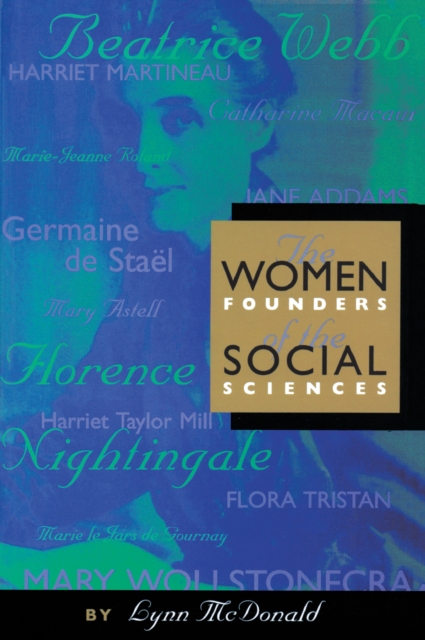
Women Founders of the Social Sciences
Ground-breaking and original, this book debunks the myth that empirical social science has been dominated by its male founders and methodologists. The author re-analyses the critical role British, French and American women played in creating the field from the 16th through the early 20th centuries. Included are Mary Astell, Mary Wollstonecraft, Harriet Martineau, Beatrice Webb, Catharine Macauley, Florence Nightingale, Madame de Staël and Jane Addams.
eBook