
Catalogue Search | MBRL


Are you sure you want to remove the book from the shelf?

{{itemTitle}}
16
result(s) for
"Women scientists -- Family relationships -- United States"
Sort by:

Motherhood, the Elephant in the Laboratory
About half of the undergraduate and roughly 40 percent of graduate degree recipients in science and engineering are women. As increasing numbers of these women pursue research careers in science, many who choose to have children discover the unique difficulties of balancing a professional life in these highly competitive (and often male-dominated) fields with the demands of motherhood. Although this issue directly affects the career advancement of women scientists, it is rarely discussed as a professional concern, leaving individuals to face the dilemma on their own.
To address this obvious but unacknowledged crisis-the elephant in the laboratory, according to one scientist-Emily Monosson, an independent toxicologist, has brought together 34 women scientists from overlapping generations and several fields of research-including physics, chemistry, geography, paleontology, and ecology, among others-to share their experiences.
From women who began their careers in the 1970s and brought their newborns to work, breastfeeding them under ponchos, to graduate students today, the authors of the candid essays written for this groundbreaking volume reveal a range of career choices: the authors work part-time and full-time; they opt out and then opt back in; they become entrepreneurs and job share; they teach high school and have achieved tenure.
The personal stories that compriseMotherhood, the Elephant in the Laboratorynot only show the many ways in which women can successfully combine motherhood and a career in science but also address and redefine what it means to be a successful scientist. These valuable narratives encourage institutions of higher education and scientific research to accommodate the needs of scientists who decide to have children.
eBook

Work and family conflict in academic science: Patterns and predictors among women and men in research universities
This article addresses work-family conflict as reported among women and men academic scientists in data systematically collected across fields of study in nine US research universities. Arguing that academic science is a particularly revealing case for studying work-family conflict, the article addresses: (1) the bi-directional conflict of work with family, and family with work, reported among the scientists; (2) the ways that higher, compared with lower, conflict, is predicted by key features of family, academic rank, and departments/institutions; and (3) patterns and predictors of workfamily conflict that vary, as well as converge, by gender. Results point to notable differences, and commonalties, by gender, in factors affecting interference in both directions of work-family conflict reported by scientists. These findings have implications for understandings of how marriage and children, senior compared with junior academic rank, and departmental climates shape workfamily conflict among women and men in US academic science.
Journal Article
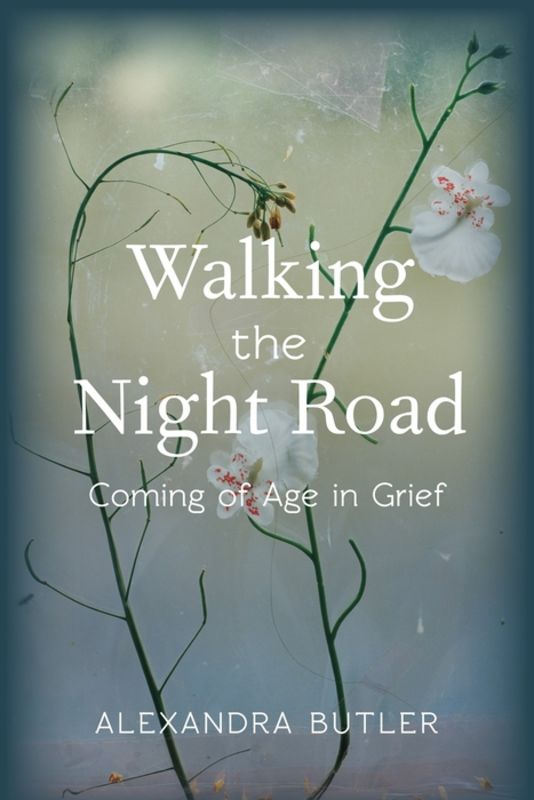
Walking the night road
The house looked as if she'd brushed it over with a hurried hand. Things were open—drawers, cans, and closets. A pile of newspapers fanned out across the floor by the front door, and still I did not wonder. She must have dropped them as she ran, I thought. My mother was often late. But had I stopped to look, I would have seen the fear in the way the house had settled—a footstool that lay on its side, several books that had fallen from their shelves. When you count back, you can see a story from the end. I like that—the seemingly natural narrative that forms this way. With the end in my hand, the story becomes mine. I can have it all make sense, or I can lose my mind like she lost hers—like I lost her. But I can have my story. Walking the Night Road speaks to the experience of caring for a loved one with a terminal illness and the difficulties of encountering death. Alexandra Butler, daughter of the Pulitzer Prize–winning gerontologist Robert N. Butler and respected social worker and psychotherapist Myrna Lewis, composes a lyrical yet unsparing portrait of caring for her mother during her sudden, quick decline from brain cancer. Her rich account shares the strains of caregiving on both the provider and the person receiving care and recognizes the personal and professional sacrifices caregivers must make to fulfill the role. More than a memoir of dying and grief, Butler's account also tests many of the theories her parents pioneered in their work on healthy aging. Authors of such seminal works as Love and Sex After Sixty, Butler's parents were forced to rethink many of the tenets they lived by while Myrna was incapacitated, and Butler's father found himself relying heavily on his daughter to provide his wife's care. Butler's poignant and unflinching story is therefore a rare examination of the intimate aspects of aging and death experienced by practitioners who suddenly find themselves in the difficult position of the clients they once treated.
eBook

\Everything's There Except Money\: How Money Shapes Decisions to Marry Among Cohabitors
Cohabitation is now the modal path to marriage in the United States. Drawing on data from 115 in-depth interviews with cohabitors from the working and lower middle classes, this paper explores how economics shape marital decision making. We find that cohabitors typically perceive financial issues as important for marriage, and we delineate several key themes. Whereas some social scientists speculate that cohabitors must think that marriage will change their lives in order to motivate marriage, our findings suggest that cohabitors believe marriage should occur once something has already changed--in this case, their financial status. Our results also imply that political and scientific discourse on financial problems as deterrents to marriage should be broadened beyond a focus on poor unmarried parents.
Journal Article

They Raised Me Up
At the height of the cocaine-fueled 1980s, Carolyn Wilkins left a disastrous marriage in Seattle and, hoping to make it in the music business, moved with her four-year-old daughter to a gritty working-class town on the edge of Boston. They Raised Me Up is the story of her battle to succeed in the world of jam sessions and jazz clubs--a man’s world where women were seen as either sex objects or doormats. To survive, she had to find a way to pay the bills, overcome a crippling case of stage fright, fend off a series of unsuitable men, and most important, find a reliable babysitter. Alternating with Carolyn’s story are the stories of her ancestors and mentors--five musically gifted women who struggled to realize their dreams at the turn of the twentieth century: Philippa Schuyler, whose efforts to “pass” for white inspired Carolyn to embrace her own black identity despite her “damn near white” appearance and biracial child; Marjory Jackson, the musician and single mother whose dark complexion and flamboyant lifestyle raised eyebrows among her contemporaries in the snobby, color-conscious world of the African American elite; Lilly Pruett, the daughter of an illiterate sharecropper whose stunning beauty might have been her only ticket out of the “Jim Crow” South; Ruth Lipscomb, the country girl who dreamed, against all odds, of becoming a concert pianist and realized her improbable ambition in 1941; Alberta Sweeney, who survived a devastating personal tragedy by relying on the musical talent and spiritual stamina she had acquired growing up in a rough-and-tumble Kansas mining town. They Raised Me Up interweaves memoir with family history to create an entertaining, informative, and engrossing read that will appeal to anyone with an interest in African American or women’s history or to readers simply looking for an intriguing story about music and family.
eBook

Jean Paton and the Struggle to Reform American Adoption
Jean Paton (1908-2002) fought tirelessly to reform American adoption and to overcome prejudice against adult adoptees and women who give birth out of wedlock. Paton wrote widely and passionately about the adoption experience, corresponded with policymakers as well as individual adoptees, promoted the psychological well-being of adoptees, and facilitated reunions between adoptees and their birth parents. E. Wayne Carp's masterful biography brings to light the accomplishments of this neglected civil-rights pioneer, who paved the way for the explosive emergence of the adoption reform movement in the 1970s. Her unflagging efforts over five decades helped reverse harmful policies, practices, and laws concerning adoption and closed records, struggles that continue to this day.
eBook
Gender, Status, and Domestic Violence: An Integration of Feminist and Family Violence Approaches
Family violence researchers suggest that sociodemographic indicators of structural inequality influence propensities for domestic assaults. Feminist scholars argue that domestic violence is rooted in gender and power and represents men's active attempts to maintain dominance and control over women. This article integrates both approaches by proposing that elements of structural inequality influence violent behavior differently for women and men. Using self- and partner-reported data from Wave 1 of the National Survey of Families and Households, this study examines the relationships among sociodemographic characteristics, gender, status (in)compatibility, and domestic assaults. Results indicate that incompatibilities in income and educational status are differentially associated with domestic violence perpetrated by women and men. Discrepancies between self- and partner-reported violence are examined to determine correlates of reporting differences. The findings suggest that future research would benefit from an integration of family violence and feminist approaches.
Journal Article

Does Marriage Matter?
Demographers have a rare opportunity and obligation to analyze the costs and benefits of individual decisions regarding marriage and family . Waite examines trends in marriage over the last four decades and investigates the relationship between marriage and longevity, wealth and earnings. As individual researchers, demographers investigate the relationship between marriage and longevity, wealth, earnings, or children's achievements. Rarely, however, does anyone try to pull all this evidence together. To do this, trends in marriage and cohabitation from 1950 to 1993 are examined. On average, marriage seems to produce substantial benefits for men and women in the form of better health, longer life, more and better sex, greater earnings (at least for men), greater wealth, and better outcomes for children. The institutions of cohabitation and marriage are defined. A comparison is made between divorce, widowed, married, and never been married people in the following areas: 1. healthy behaviors, 2. mortality, 3. partnered sex, 4. assets and wealth, 5. children's well-being, and 6. labor force and career. It is argued that social scientists have a responsibility to weigh the evidence on the consequences of social behavior in the same way as medical researches evaluate the evidence on the consequences of (say) cigarette smoking or exercise.
Journal Article

Black Eye
Seventeen years after she married, Judith Strasser escaped her emotionally and physically abusive husband and sought a better way to live. In the process, Strasser rediscovered what she had suppressed through that long span of time: exceptional strength and a passion for writing.
Black Eye includes excerpts from a journal Strasser kept from 1985 to1986, the year she made the decision to leave her marriage, and present-day commentary on the journal passages and her family history. Strasser works like a detective investigating her own life, drawing clarity and power from journal passages, dreams, and memories that originally emerged from confusion and despair. With language that is both insightful and poetic, she reveals the psychological and social circumstances that led a \"strong\" woman, an intelligent and politically active feminist, to become an emotionally dependent, abused wife. Not coincidentally, the same year that Strasser finally found the courage to leave her husband, she also reclaimed her creative voice. Newly empowered and energized by this enormous life change, Strasser began writing again after twenty-five silent years dominated by her mother’s illness and death, her own cancer, and her painful, fearful marriage.
Black Eye is one of the fruits of this creative reawakening. Strasser’s writing is refreshingly honest and instantly engrossing. Not shy of wretchedness or beauty, Strasser’s story is bitterly personal, ultimately triumphant, and inspiring to all who deal with the adversity that is part of human life.
eBook

The Relationship between Family Responsibilities and Employment Status among College and University Faculty
This study uses data from the 1993 National Study of Postsecondary Faculty to examine the extent to which the concentration of women among part-time and nontenure-track faculty is related to family responsibilities. Descriptive and multinomial logistic regression analyses are used to examine the research questions.
Journal Article