
Catalogue Search | MBRL


Are you sure you want to remove the book from the shelf?

{{itemTitle}}
113
result(s) for
"Women scientists United States Biography."
Sort by:

To the stars! : the first American woman to walk in space
\"Kathy liked fishing and swimming; flying planes and studying science. That's what she liked and that's what she decided to do with her life. She followed her heart and eventually became a NASA astronaut and the first woman to walk in space. Kathy wanted to see the whole world and so she did: from space! Backmatter includes further information about Dr. Sullivan and her career, as well as other famous firsts made by women astronauts.\"--Provided by publisher.
Book

Motherhood, the Elephant in the Laboratory
About half of the undergraduate and roughly 40 percent of graduate degree recipients in science and engineering are women. As increasing numbers of these women pursue research careers in science, many who choose to have children discover the unique difficulties of balancing a professional life in these highly competitive (and often male-dominated) fields with the demands of motherhood. Although this issue directly affects the career advancement of women scientists, it is rarely discussed as a professional concern, leaving individuals to face the dilemma on their own.
To address this obvious but unacknowledged crisis-the elephant in the laboratory, according to one scientist-Emily Monosson, an independent toxicologist, has brought together 34 women scientists from overlapping generations and several fields of research-including physics, chemistry, geography, paleontology, and ecology, among others-to share their experiences.
From women who began their careers in the 1970s and brought their newborns to work, breastfeeding them under ponchos, to graduate students today, the authors of the candid essays written for this groundbreaking volume reveal a range of career choices: the authors work part-time and full-time; they opt out and then opt back in; they become entrepreneurs and job share; they teach high school and have achieved tenure.
The personal stories that compriseMotherhood, the Elephant in the Laboratorynot only show the many ways in which women can successfully combine motherhood and a career in science but also address and redefine what it means to be a successful scientist. These valuable narratives encourage institutions of higher education and scientific research to accommodate the needs of scientists who decide to have children.
eBook

Mathematician and computer scientist Grace Hopper
\"Have you ever wondered where the term debugging comes from? Learn about Grace Hopper, a computer scientist and U.S. Navy Rear Admiral, known for her contributions to the early development of computer programming.\"--Provided by publisher.
Book
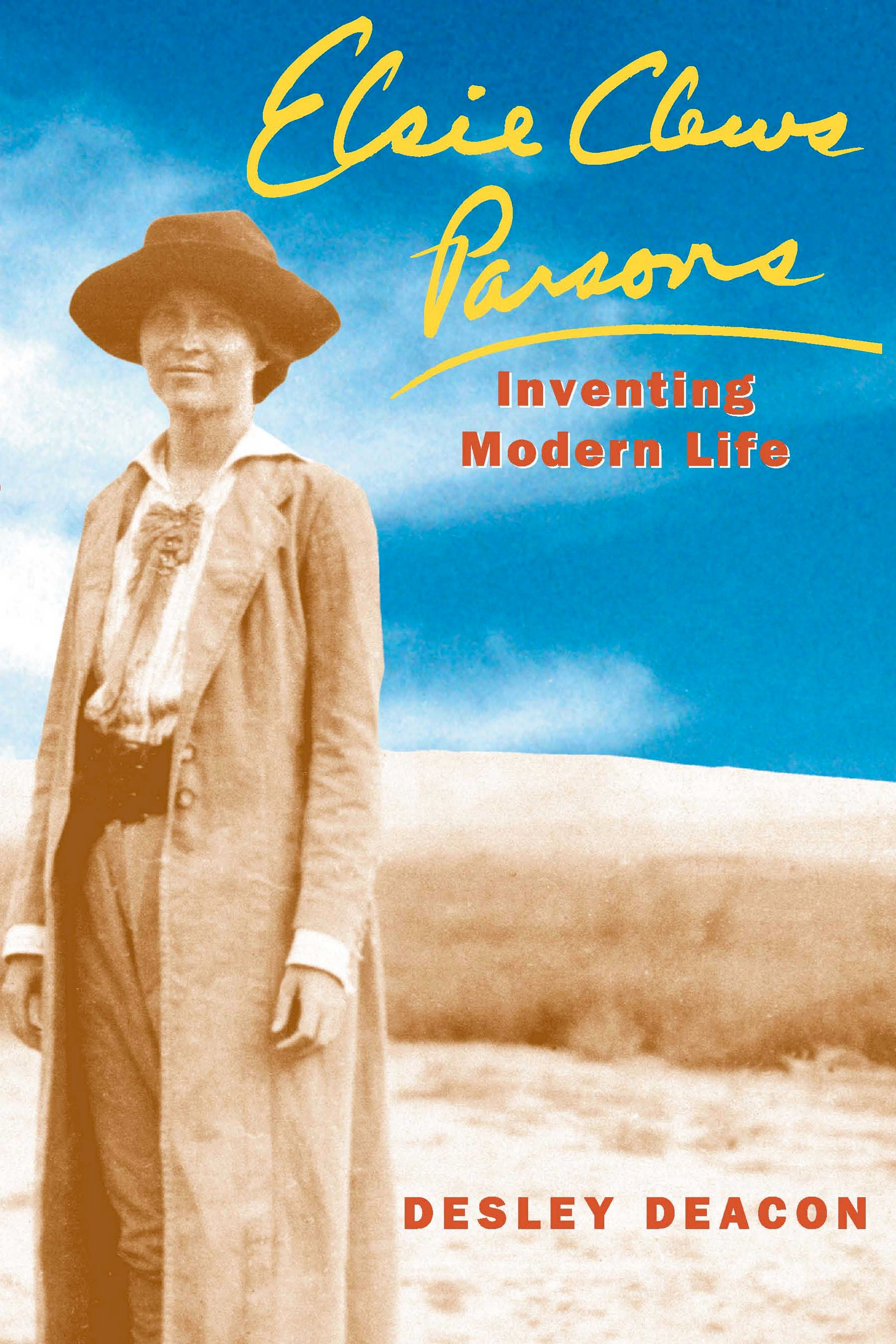
Elsie Clews Parsons
Elsie Clews Parsons was a pioneering feminist, an eminent anthropologist, and an ardent social critic. In Elsie Clews Parsons, Desley Deacon reconstructs Parsons's efforts to overcome gender biases in both academia and society.
eBook

Computer scientist Jean Bartik
\"Jean Bartik was one of the first programmers of the Electronic Numeric Integrator and Computer (ENIAC). Learn how her love of math led her to work for the Army and then help develop the ENIAC.\"-- Provided by publisher.
Book
Elsie Clews Parsons
Elsie Clews Parsons was a pioneering feminist, an eminent anthropologist, and an ardent social critic. In Elsie Clews Parsons, Desley Deacon reconstructs Parsons's efforts to overcome gender biases in both academia and society.
eBook

Women who launched the computer age
The story of Jean Jennings, Kay McNulty, Frances Bilas, Ruth Lichterman, Betty Snyder, and Marlyn Wescoff, who were chosen to work on the ENIAC computer as part of a secret WWII mission.
Book
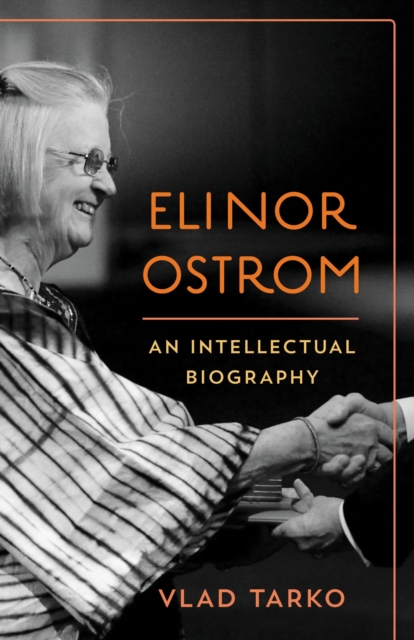
Elinor Ostrom
Elinor Ostrom was the first woman to win the Nobel Prize in economics. She has been at the forefront of New Institutional Economics and Public Choice revolutions, discovering surprising ways in which communities around the world have succeed in solving difficult collective problems. She first rose to prominence by studying the police in metropolitan areas in the United States, and showing that, contrary to the prevailing view at the time, community policing and smaller departments worked better than centralized and large police departments. Together with her husband, Vincent, they have set up the Bloomington Workshop in Political Theory and Policy Analysis, which has grown into a global network of scholars and practitioners. Throughout her career, she was interested in studying ecological problems, and understanding how people manage communal properties. Her most famous discovery is that communities often find ingenious ways of escaping the “tragedy of the commons”. Analysing a wide-variety of successes and failures, and working together with many other scholars, she was able to uncover a series of institutional “design principles”: a set of criteria which, if followed, societies are more likely to be productive and resilient to shocks. Some of her most important theoretical insights, about polycentricity and institutional evolution, arose from this synthesizing effort. Furthermore, this led her to develop a framework for the study of the relationship between societies and their natural environment which brought institutional insights into the field of environmental studies.
eBook

Just a girl : growing up female and ambitious
\"Just A Girl is the sensitive, personal story of the author's ambition to become and succeed as a scientist during the \"white man in power\" era of the 1950s to 2010s. In the male-dominated science world, she struggles from girlhood unworthiness to sexist battles in jobs on the farms and in the restaurants of America, in academia's laboratories and field research communities, and in the executive corner office. Jackson overcomes pain, shame, and self-blame, learns to believe in herself when others don't, and becomes a champion for others. The turbulent legal and social background of sexual harassment and sexism in America over seven decades is delivered as \"history with emotion.\" Just a Girl is also a call to action: it identifies the court cases and lawsuits that helped advance the cultural changes we see today; outlines the pressing need for a Boys and Men Liberation (BAML) movement; highlights new approaches by parents; advocates for changes in our universities; and suggests a different direction for corporate America to take to stop the cycle of sexual harassment. Eye-opening and inspiring, it points the way to a brighter future for women everywhere\"--Amazon.
Book
