
Catalogue Search | MBRL


Are you sure you want to remove the book from the shelf?

{{itemTitle}}
54
result(s) for
"Women superheroes in literature."
Sort by:

Wonder Woman : warrior for justice
Join the Amazon princess on her quest to protect Earth from evil. Discover her amazing superpowers, read about her dangerous enemies, and meet brave allies, including the Justice League--Cover.
Book
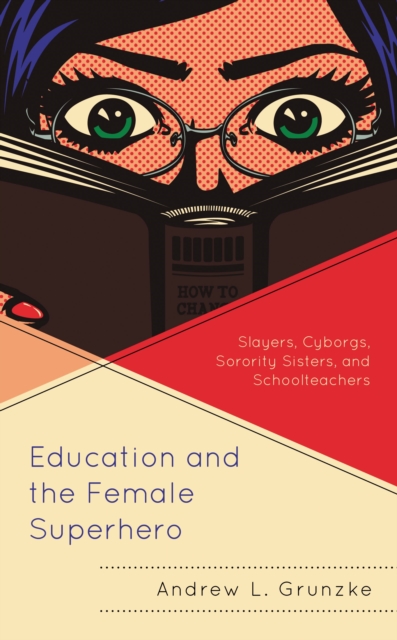
Education and the Female Superhero
Considering a variety of female superhero narratives, including World War II-era Wonder Woman comics, the 1970s television programs The Secrets of Isis and The Bionic Woman , and the more recent Buffy the Vampire Slayer , Education and the Female Superhero: Slayers, Cyborgs, Sorority Sisters, and Schoolteachers argues that they share a vision of.
eBook

Be a star, Wonder Woman!
A young girl faces her greatest challenge, one that will require all her courage and kindness: school and a spelling test.
Book

Comic connections
With the popularity of comic adaptations on television and at the movies, these current topics can be a great way to engage students by bringing characters and stories they connect with into the classroom to help them build the skills that they need to be successful. Comic Connections: Reflecting on Women in Popular Culture is designed to help teachers from middle school through college find exciting new strategies that they can use right away as part of their curricular goals. Each chapter has three pieces: comic relevance, classroom connections, and concluding thoughts; this format allows a reader to pick-and-choose where to start. Some readers might want to delve into the history of a comic to better understand characters and their usefulness, while other readers might want to pick up an activity, presentation, or project that they can fold into that day’s lesson. This volume in Comic Connections series focuses on female characters—Wonder Woman, Peggy Carter, and Lois Lane, to name a few—with each chapter deconstructing a specific character to help students engage in meaningful conversations, writing projects, and other activities that will complement and enhance their literacy skills.
eBook

Wonder Woman : ambassador of truth
\"Created by William Moulton Marston and introduced at the beginning of America's involvement in World War II, Wonder Woman--the fierce warrior and diplomat armed with bulletproof Bracelets of Victory, a golden tiara, and a Lasso of Truth--has been a pop-culture icon and one of the most enduring symbols of feminism for more than seventy-five years...Signe Bergstrom examines Wonder Woman's diverse media representations from her wartime comic book origins to today's feature films, and explores the impact she has had on women's rights and empowerment and the fight for peace, justice, and equality across the globe.\"-- From the publisher.
Book

Heroines of comic books and literature
Despite the growing importance of heroines across literary culture—and sales figures that demonstrate both young adult and adult females are reading about heroines in droves, particularly in graphic novels, comic books, and YA literature—few scholarly collections have examined the complex relationships between the representations of heroines and the changing societal roles for both women and men. In Heroines of Comic Books and Literature: Portrayals in Popular Culture, editors Maja Bajac-Carter, Norma Jones, and Bob Batchelor have selected essays by award-winning contributors that offer a variety of perspectives on the representations of heroines in today’s society. Focused on printed media, this collection looks at heroic women depicted in literature, graphic novels, manga, and comic books. Addressing heroines from such sources as the Marvel and DC comic universes, manga, and the Twilight novels, contributors go beyond the account of women as mothers, wives, warriors, goddesses, and damsels in distress. These engaging and important essays situate heroines within culture, revealing them as tough and self-sufficient females who often break the bounds of gender expectations in places readers may not expect. Analyzing how women are and have been represented in print, this companion volume to Heroines of Film and Television will appeal to scholars of literature, rhetoric, and media as well as to broader audiences that are interested in portrayals of women in popular culture.
eBook

Wonder Woman : the ultimate guide to the Amazon warrior
A guide to the world of Wonder Woman includes seventy-five years of iconic characters, major story arcs, and key issues, along with information on locations, enemies, and allies.
Book

Comic Book Women
The history of comics has centered almost exclusively on men.
Comics historians largely describe the medium as one built by men
telling tales about male protagonists, neglecting the many ways in
which women fought for legitimacy on the page and in publishers'
studios. Despite this male-dominated focus, women played vital
roles in the early history of comics. The story of how comic books
were born and how they evolved changes dramatically when women like
June Tarpé Mills and Lily Renée are placed at the center rather
than at the margins of this history, and when characters such as
the Black Cat, Patsy Walker, and Señorita Rio are analyzed.
Comic Book Women offers a feminist history of the
golden age of comics, revising our understanding of how numerous
genres emerged and upending narratives of how male auteurs built
their careers. Considering issues of race, gender, and sexuality,
the authors examine crime, horror, jungle, romance, science
fiction, superhero, and Western comics to unpack the cultural and
industrial consequences of how women were represented across a wide
range of titles by publishers like DC, Timely, Fiction House, and
others. This revisionist history reclaims the forgotten work done
by women in the comics industry and reinserts female creators and
characters into the canon of comics history.
eBook

Enter the superheroes
Ever since the first appearances of Superman and Batman in comic books of the late 1930s, superheroes have been a staple of the popular culture landscape. Though initially created for younger audiences, superhero characters have evolved over the years, becoming complex figures that appeal to more sophisticated readers. While superhero stories have grown ever more popular within broader society, however, comics and graphic novels have been largely ignored by the world of academia. In Enter the Superheroes:American Values, Culture, and the Canon of Superhero Literature, Alex S. Romagnoli and Gian S. Pagnucci argue that superheroes merit serious study, both within the academy and beyond. By examining the kinds of graphic novels that are embraced by the academy, this book explains how superhero stories are just as significant. Structured around key themes within superhero literature, the book delves into the features that make superhero stories a unique genre. The book also draws upon examples in comics and other media to illustrate the sociohistorical importance of superheroes—from the interplay of fans and creators to unique narrative elements that are brought to their richest fulfillment within the world of superheroes. A list of noteworthy superhero texts that readers can look to for future study is also provided. In addition to exploring the important roles that superheroes play in children’s learning, the book also offers an excellent starting point for discussions of how literature is evolving and why it is necessary to expand the traditional realms of literary study. Enter the Superheroes will be of particular interest to English and composition teachers but also to scholars of popular culture and fans of superhero and comic book literature.
eBook

Veiled superheroes
Veiled Superheroes: Islam, Feminism, and Popular Culture focuses on female Muslim superheroes in graphic narratives such as the comic Ms. Marvel, the animated television series BurkaAvenger, and the webcomic Qahera.
eBook